
Interview ·
Douglas Boneparth exclusive: how Pokémon cards compare to investing in crypto, why investors hate scalpers, and the magic of finding a fortune in lost cards in your attic
Wealth management expert Douglas Boneparth has warned people not to dive into Pokémon cards as a get-rich-quick scheme, in an exclusive interview with UltraBall.
The New York-based investment adviser compared collecting Pokémon cards and similar trends to NFTs and the crypto boom, and gave his view on some recent headline-grabbing auctions.
Could a fortune be hiding among the old Pokémon cards stashed away somewhere in your house? Boneparth also gave some perspective on what to expect if you go rummaging through your old collectibles.
By Josh Lingenfelter, Editor
How unusual is it to discuss Pokémon cards as an asset class?
It’s not every day I get to talk about collecting things, let alone Pokémon cards. But I’m not so high status yet that I can’t get into the discourse!
My Instagram algorithm has no problem serving up plenty of Pokémon content when it comes to cracking packs open or taking a look at these huge collections. As a 90s kid, I collected everything. I remember my grandfather went to the electronic expo CES in New York in the 90s and sent back a wax box of Pokémon cards. I probably had some early cards at some point unaware, but sports cards like baseball cards were obvious.
Personally, for me, I gravitated towards Magic: The Gathering and cards that had art on them where you could play a game, as I was a big video game kid, so I always gravitated that way.
To see this stuff spanning the test of time is incredible to me. So I have FOMO, right? I feel left out. I felt like I should have held on to some stuff. I’m happy to see it, and now that it’s becoming so valuable, we’re having this conversation here today. Where does this actually fit into people’s net worth and their finances? I’m going to give you some base takes and explain how we make sense of this.
Can Pokémon TCG be considered a legitimate investment?
I was talking about this with my friend and his son, who is a big collector and does live streaming, selling of cards, and trading. I actually really wanted to understand it from the perspective of a 13-year-old who is making money.
He’s 13 and already, with the supervision of his parents, going to these conventions and streaming, he’s building confidence, learning to sell. It’s great. Look at what’s happening around the edges: here is a young man, a boy, who’s learning all of these amazing things about business, trading, and markets. His father is a pretty good trader when it comes to stocks, so he’s learning all the right things and maybe understanding a specific asset class: collectibles.
When I was talking to him, I said I can see it from the fact that with Pokémon cards, sports cards, or Magic, you can go back decades. It’s not new. Same with Magic, same with Pokémon. You have three decades of editions, and that means there’s rare stuff out there and coveted things, making demand easier. The market is much more flooded with actual product, and I think that’s a good thing when we’re talking about proven assets.
My daughter came to me the other day. We’re a big SpongeBob household, my girls love SpongeBob. I was a little too old when SpongeBob came around as a kid, but I love cartoons, so I got to enjoy that with them as an adult. We sat down season after season during COVID when we couldn’t go anywhere. Now she told me, “Dad, did you know SpongeBob cards are all the rage? There are $40,000 SpongeBob cards out there.”
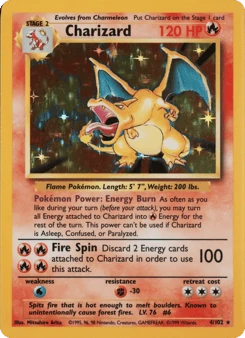
I looked at this the other day. Getting a box of SpongeBob cards now costs a silly amount of money. I say this because here is my point: you have Topps cards that are 40 years old with player stats, then you have Pokémon and Magic: The Gathering cards like Alpha and Beta sets, Mox Emeralds, Rubies, or a misprinted foil Charizard from 1999 that are worth money. My question is: how do we assess the risk that in 10, 20, or 30 years from now, we don’t get caught up in a moment where nobody cares about this?
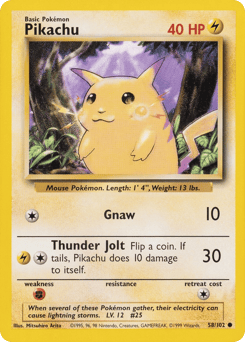
What I think is really happening is you’re seeing waves of revival for something that has stood the test of time. To synthesize the scene, I worry about the rare Patrick Star card going for $10,000 today versus a Mox Emerald or a rare Pikachu. Is that going to come out with a PSA grade 10 that I’m going to hold in a vault? In 15 years, what if there’s a shift?
We’re talking collectibles, trends, and things people have their attention on today. You do see in frothier markets where asset prices have gone up across the board, the tendency to look for additional asset appreciation in alts and collectibles. It’s cyclical, which is my point. That’s what I would have someone be mindful of.
I always think there’s a space for opportunity in collectibles. Putting on my very boring financial planner hat, the question is: how much concentration of that asset do we want relative to other assets in our investable portfolio? I was on a show earlier this morning talking about concentration risk. I would find it very difficult to navigate 80% of your investable net worth being in rare Pokémon cards.
I’m not trying to criticize someone; I want you to understand that the relationship of risk and reward will never go away, and volatility is a feature, not a bug, of this particular asset. The fool thinks it’s up and to the right forever, but if you zoom out to a 30-year chart of that Pokémon card, you realize what’s happening.
“Volatility is a feature, not a bug, of this particular asset.”
Same with Apple or Amazon, but what you’re not seeing is that there are the two or three 90% plus drawdowns that you have to survive to get to today’s price. Those Pokémon cards are going to have 60%, 70%, or 80% drawdowns during times where nobody wants to talk about Pokémon cards. People will talk about their house value going down or 30% of their investable portfolio in the S&P 500 suffering a 30% drawdown. That’s nasty. Those don’t happen too often, but they do, and you’re talking about the 500 biggest companies in America. So did Pikachu break his leg and can’t perform in the next Pokémon tournament with Ash?
Look at the asset itself and look at what’s going on around you. If you say, ‘I have a 10% to 15% cap relative to the actual fair market value of these cards compared to all my other investable assets,’ you accept that this could lose 50% or 60% of its value for a span of five years until maybe a big resurgence happens when your kids grow up. I have a 10-year-old and a 7-year-old; what if there’s a resurgence when they’re in their thirties? You’ll wish you bought that $25,000 card that’s now worth $100,000 accounting for inflation because ‘it’s so back!’
That’s my whole thesis: you need to accept volatility, you need to know what concentration you want of this.
If you feel like your whole net worth, time, and existence are caught up in cards, wow, what a time to be alive today. But I have a lot of questions. There’s a lot of planning we can do from a financial planner’s perspective. What are the goals here? Is the goal just to build a $50 million Pokémon portfolio that’s illiquid and might get absolutely rocked in five or six years? Or do you want to have a couple million dollar portfolio because you did an amazing job collecting, curated an amazing binder, and graded everything, while being smart about concentration risk and having liquidity?
You have a 12-month cash reserve to handle any economic environment. You have a pile of taxable investments, whether ETFs or your favorite stocks, and are diversified enough to say, ‘I can deal with a 50% drawdown or worse on my Pokémon cards while I’m down 10% on tradable securities.’ It doesn’t matter because you have a year’s worth of cash to deal with emergencies and opportunities.
If you still believe in the card trade, you’ve put yourself in a position to use liquidity to go buy gems for your collection: that card you’ve always wanted that went from $10,000 down to $2,000. That is no different than having high conviction in a stock position you’re willing to hold for 20 years that just went on sale by 50% and you buy some shares of that. So again, what’s the allocation, how much, and what’s the conviction, what are the goals, and how do we plan around that?
Pokémon cards are seeing a massive price hike, partly because of the 30th anniversary collection. Some investors are worried Pokémon collecting could be a bubble. What is the key warning sign that this isn’t normal volatility, but a bubble popping?
Look at the rate at which prices are going up and look at the historical trend. If you see a slow increase, then a pop, and then a drop for the last time. You can see it visually. The good part about Pokémon cards is they have been around a long time, so you can visually see moments taking place where you want to consider if it’s a frothy environment or top-heavy risk-on scenario.
A little bit of macroeconomics also goes a long way. What’s going on in the economy around us? You get into themes like the K-shaped economy: who are the people concentrating their wealth into Pokémon cards, and how tenable is it? I read yesterday that a million-dollar collection got thieved and made headlines. How practical is it for someone to have millions of dollars worth of Pokémon cards?
Looking at a bubble, I like this from an investment strategies professor back in grad school when I was getting my MBA. It’s called the elevator test. You go into an elevator and ask a stranger what they think about the economy. If they say, ‘It couldn’t be better, I’m going to buy my second home,’ or everyone is saying it’s great, you’re in the late cycle. If they say, ‘It’s really tough out there, I’m not feeling so great…’ It’s a sentimental check.
If we are pushing up the price of Pokémon cards in a way unlike any other environment we’ve been in, buyer beware, especially with collectibles. Remember that as an asset, the ask and bid spread is wide relative to Apple stock, where trillions of dollars of outstanding shares are traded every day. That’s simply not the market of collectibles, let alone Pokémon cards. That’s why you get volatility and why things can collapse quickly. If you’re seeing crazy high price appreciation in thinly traded markets, there you go.
“If you’re seeing crazy high price appreciation in thinly traded markets, there you go.”
Does that translate to a card spiking in price overnight, where one or two sales double its value and then it happens to several cards? Is that probably a warning sign?
Look at car collections. I’m seeing the same thing there. Getting an allocation to a Porsche Turbo S or Ferraris requires being a very wealthy collector to get your hands on Number One and Two. A handful of years ago, a GT3 wasn’t $499,000. Now, the second cars come off the truck, they’re double their value. These are things you see late-cycle.
I say that with a grain of salt because folks have been saying it’s been late-cycle last year, and the year before…
Logan Paul sold the most expensive Pikachu card ever for $16.5 million. Neymar has got involved in the scene. What message does money from outside the Pokémon community send to people who want to invest, or have been investing for years?
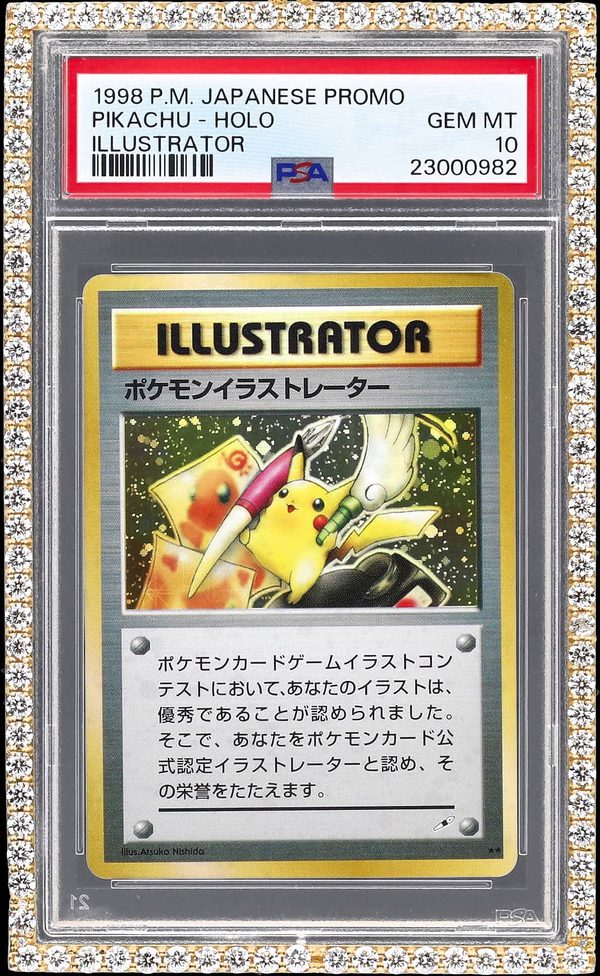
It can be a slippery slope. Getting the attention of celebrities and influencers who feed into the noise social media creates can certainly pique a lot of interest. It could go down two roads: are these insiders pumping a market? It’s easier to pump a market that has a big spread. Could Logan Paul go out there with his clout and pump Nvidia higher? It depends on how much clout, but I doubt he could do that compared to Jensen running the company or Wall Street.
However, he is certainly going to command the attention of a younger demographic that knows and loves Pokémon. If you tell a kid, ‘Do you love Nvidia microprocessors?’ they’ll say, ‘What? I love to play games.’ Collecting chips? Not that kind of chips.
Getting interest into it is good for prices in the short term, but what’s the long-term outcome? Someone sells the rarest Pokémon today, and a couple of years from now we’re in a Pokémon winter where prices collapse. They’re still rich and arguably sold at the top.
How does this compare to NFTs and how celebrities became involved in that trend?
Look at CryptoPunks and Bored Apes. I’m glad you brought up NFTs because I had a lot of fun experimenting with them in 2021 and 2022. My favorite one is a Cryptoadz, a PFP project by Gremplin, an awesome and cool artist. I love the vibe and got most of my knowledge of the space through his projects. Even to this day, I ordered a print of a Cryptoadz to put on the wall behind me; you link your MetaMask wallet, prove you have a toad, and get a 20% discount. I experimented with that and did the same with coffee, which was super cool and fun.
Back to Cryptoadz: I remember getting it, and it was a $50,000 NFT at one point. I spent maybe $1,200 and thought, ‘Oh my God, I just dropped $1,200 on a pixelated toad as a financial advisor.’ But I had more than $1,200 worth of fun from a community perspective and learning. I turned that $1,200 learning lesson into an incredible amount of learning as a financial advisor.
Looking back, I remember telling my wife and friend, ‘Look at this pixelated toad, it’s worth $50,000.’ I thought to myself, ‘This is it, NFTs are here and will never go down in price.’ Looking back, what the hell was I thinking? $50,000? I should have bought 50 of them and sold all of them at 50 grand to buy a house. My cope is that I learned so much and had fun.
There are plenty of people who picked a stock and watched it go up and then down. Peloton is a great example: people thought we were never going back to work and gyms were dead forever, so Zoom and Peloton went through the roof. Then Peloton absolutely crashed because that whole thesis was insanely wrong.
You see this in capital markets as well as collection markets. You’re right that it’s not a bullish indicator when all the celebs pile in and show off their PSA grade 10, $2.1 million cards. I think it’s a net negative, unfortunately, but super positive for grabbing attention and throwing people into the pool, and too many into the deep end of the pool.
Is there anything fundamental about Pokémon cards and collectibles in general that makes them more or less of a viable investment compared to Bitcoin and NFTs?
That Venn diagram has a lot of overlap. We have to pick and choose where those differences lie. Being crypto-native, specifically Bitcoin-native as an early adopter, I have bias, but also more understanding and education around Bitcoin than collectibles or crypto as a whole.
The main overlap is being speculative, with ask and bid spreads being wide, and scarcity. There just isn’t a lot of it, if we’re talking about Bitcoin. What is behind it? With Pokémon cards, it’s someone’s idea that it’s worth a certain amount, that it looks cool, is rare, and has a trading market where someone will pay more or less than what you bought it for. It’s a market.
Tokens, meme coins, and NFT projects more or less do the exact same thing. With Pokémon cards, there is art. With NFTs, you can say it’s digital art. My neighbor and best friend is obsessed and has a beautiful collection of real NFT art in his house that is worth something because real artists put real work out there. That part of crypto and NFTs was super cool: proof of work for an artist. We got lost in the sauce on PFP projects with roadmaps to nowhere, but that was the time.
Moving over to Bitcoin, where people ask about utility and the underlying blockchain technology, I still view it very much as a commodity. You can go as far as calling it a currency, though no one is buying and selling everyday items with Bitcoin while the price action is like that. But there is utility in a secure, fast, decentralized way to send money. It’s the only thing really out there doing it. It’s the leader on the market cap table doing that. Ethereum has also shown its utility.
I’m waiting to see more spotlight cast on internal blockchains that organizations use to create better workflows, efficiencies, and bottom lines. That’s real, boring stuff nobody wants to talk about; we want to talk about pixelated monkeys, not saving 10% on margins by using stablecoins for treasury operations.
That is where the Venn diagram does not overlap with crypto, unless Pokémon cards can unlock doors or do something that isn’t cardboard.
Would you say that makes Pokémon cards riskier, or less of a recommended general investment, compared to crypto or NFTs?
Consider the market itself. You can trade cards online, but this is a physical good where people want to see and inspect it with their own eyes. There’s a whole grading process, which is cool, but that’s very different from a trillion-dollar market cap in Bitcoin where you can buy it on exchanges or get a spot ETF without holding coins yourself on a ledger.
Fractional investment platforms like Rally Rd have certainly made this possible. Just wait, I guess, the S-1 will be filed for the Pokémon ETF at some point under the ticker POKE? We’ll see. That’s probably not happening, which is why there’s Rally Rd with fractional investments. Masterworks does the same with art, and other purveyors do it for collectibles and fractionalization of owning expensive stuff.
A home decorator recently sold their collection of Pokémon cards at auction for £1.5 million, with no idea it was that valuable. It had been in the attic for 15 years. Could other people have a fortune hiding in their old collections?
My wife, who works with me at our firm, wrote a chapter in a new book by my friend Brian Portnoy called How I Invest My Money (Volume 2). Heather tells our Bitcoin story.
Heather’s chapter is about leaving room for magic, and not Magic: The Gathering! It’s a bit like the lottery-ticket-in-your-hand moment. You’ve got a dollar, you’ve got a daydream for the next few hours, which is super fun. Forget the dopamine hit; consider the daydream of what you’d do if you won a $400 million Powerball.
We were early adopters and mined Bitcoin, not enough to buy a yacht, but it makes up a reasonable portion of our net worth. Post-2008, we were figuring out how to get our careers going as older millennials facing financial hills in the wake of a recession. Randomly, my friend called me one day, rambling about Bitcoin and buying a miner in 2013. I had never heard those words before, but Heather said, ‘Give him the money, let’s go halves on a miner.’ I thought she was going to tell me to get him off the phone because we didn’t have two nickels to rub together.
Leaving the door open for magic in a responsible, controlled way sometimes leads to magical results. But that is harder than being a consistent and disciplined investor. At the end of the day, your ability to consistently put money into appreciating assets that have demonstrated their ability to appreciate over the long term is the superpower and skill you’re looking for.
Is dollar-cost averaging into rare Pokémon cards your pathway to financial independence? Maybe. You’ve got to have consistency and discipline. But probably not. The boring fiduciary inside me wants to tell most people there’s a place for it in tandem with the rest of your portfolio. It’s a discipline and consistency game.
The magic component, the luck of finding Pokémon cards in your attic… When I drive around town and see yard or estate sales, I wonder whose kid abandoned their card collection in the attic and has no idea. Someone buys it for $10 and off they go. It’s great for YouTube or Instagram channels monetizing content around searching yard sales for baseball cards. I love it, it’s so entertaining, but is that what you’re going to do with your life? That’s really hard. Choose which difficulty mode you want to live life on.
“Choose which difficulty mode you want to live life on.”
Could some people see this as an easy way to get quick money, and start buying Pokémon cards without knowing what Pokémon is?
If you’re in it for quick money, we have a problem right there. Nothing worth doing is easy. One of the issues with noise is that we filter life pretty good through social media and content. It’s so easy to filter away all the bad and focus only on the good, making it seem like everyone is getting rich but you. ‘That guy is worth $50 million? Enough, I’ll trade meme coins or jump headfirst into Pokémon cards.’
This is not to tilt my nose up at people who have perfected this craft. They know how to grade cards with their eyes, have amazing collections, manage risk and cash, and know their business P&L inside out, and they’ve done it for over a decade. Tip of the hat to everyone taking a professional-grade approach to this market, which is legit. No one’s casting doubt on that. But what they are doing is rare. They are the exception, not the rule. New entrants need to realize these collectors dedicated their whole lives and time to that.
We’re not even talking about how they came up with the capital. You hear stories about starting with one card, flipping, and selling, and here they are, a 10-year overnight success story. I love those stories. I won’t take it away from someone who started their collection with a parent giving them $50,000 as a seed investor, learned the craft, learned what they were doing, took some losses, and turned $50,000 into $3 million worth of cards now with the knowledge and pedigree, with a community and reputation, hopefully a good one. That’s a real business. And maybe they gave their dad his $50,000 back, or bought them a car.
But there’s also sh*theads who took a stupid amount of money buying all these rare cards. That exists too. Just like there are people who took $1,000, or their life savings, went into it, and lost all their money. And there are infinitely more stories of that than building a successful business or collection around Pokémon cards or any collectible. Don’t lose sight of risk and reward.
Is it a golden rule to aim for 10% to 15% of your wealth if you want to invest?
This is all subjective. I’m not talking about Pokémon cards specifically, but the percentage of one’s investable net worth concentrated in a singular asset class that isn’t the S&P 500 or the general U.S. economy. Allocating 30%, 40%, or 50% plus in the S&P is fine, but allocating 10%, 20%, or 30% plus in company stock, gold, silver, or Pokémon cards: we’re talking about that when we think of concentration risk.
Because this is subjective, a client might say they believe in their company and want a 40% allocation down from 80%. Others might want just a little skin in the game at 5%. These are rules of thumb. I’m not saying everyone should have a 10% allocation to Pokémon cards; you need to be mindful of concentration risk because volatility dictates what your overall portfolio looks like.
To put that into words: you want enough exposure to feel like you’re meaningfully participating so that if things take off, you don’t feel like you’re kicking yourself for not having enough, while positioning yourself so that if the asset sells off 50%, 60%, or 70%, you aren’t curled up in a ball under your desk because you got crushed. The subjective part is determining what that number is for you.
As a rule of thumb, that’s how you don’t shoot your own foot off.
Do scalpers pose a risk to investing in Pokémon cards, or are they good for collectors?
It’s a net negative. You’re talking about market manipulation where asset prices are finagled by outside influence rather than what’s in the pack or how the market is supposed to function. Asking if it’s good that people can manipulate a market gets a flat-out no. I don’t know specifically about this issue with Pokémon cards, but now there’s more volatility that need not be there. That’s a net negative.
Considering Logan Paul’s $16.5 million card, does this raise the bar for collectible values? Is there a cap on how high a Pokémon card could sell for?
It’s America, baby. No, this is capitalism. There is no technical limit as long as someone is willing to pay and believes the price is fair or will go higher. Two things can be true: there can be no limit while also being completely irrational. That is indicative of collectibles. There’s more emotion behind collectibles compared to other assets.
“It’s America, baby. No, this is capitalism.”
I’m sure there are people who get really excited about stocks and real estate, but I don’t think in the same way as Pokémon cards. They don’t pull the heartstrings of 13-year-old Doug waking up on Saturday morning singing the intro song and playing Game Boy.
This collection market reaches deep into the nostalgia cortex of a specific demographic. Kids who enjoyed Pokémon now have disposable income and can say, ‘I want a fifth-generation dual land from Magic: The Gathering to put on my wall because I couldn’t afford it as a kid.’
When I checked a few years ago, PSA 9 or 10 dual lands were $600 a card. I considered buying one to frame, not because I thought it would be worth $10,000, but because it’s awesome, because I can, and to tap into something I enjoy. I’m not sure that was a good expression of what a lot of this is for a lot of people. Maybe not for young collectors, but certainly for adults with money living their collector dreams. For sure, I feel that.
Your view of Pokémon cards as an investment seems to come down to two rules: be aware of the risks, and have fun. If you aren’t having fun with it, it’s probably not worth it over other assets with similar risk and volatility. Is that a fair summary?
You nailed it. Imagine doing this and not having fun. It offers enjoyment in a way other investments don’t. There’s a game and lore behind it. Pokémon is awesome. As a 90s kid who grew up around it, I’m jealous and want to collect. Now I collect tequila, which is tasty but far less fun. I want to get back into Magic because it’s cool.
It’s also a function of time. As an adult with money, you can buy and sell cards, but you might not have time to play the game. The Magic community is different, though I’m sure there are people playing Pokémon as well.
One headline comparison says Pokémon cards have returned 3,800% since 2004, beating the S&P 500 in certain quarters. How do you square that number with the risk of alternative assets? Are these headlines accurate, or a disservice to the public?
They are very different things.
When we think about alternative investments, we have to acknowledge how massive that umbrella is. Card collections fit in there alongside private equity, long-short funds, real estate, and digital assets. There are indices and benchmarks for alts, but you have to take them with a grain of salt because correlation across alts is much wider than across the 500 largest companies in the S&P 500. Although, take a look at the correlation and risk profiles of company number 499 versus Meta. Very different there, too, but an order of magnitude greater when you start looking at a benchmark that’s made up of this massive universe of alternative investments.
It’s hard to benchmark, so I take an extreme view: it’s either going to zero or turning into a five-bagger, because volatility dictates that. You could buy a booster pack for $4.99 or a rare card for $100 years ago that is now worth $180,000. Not many assets or companies let you turn $10, $100, or $1,000 into a million dollars. That’s the magic and appeal. That’s why a financial advisor is on an interview talking about Pokémon cards. It’s fun.
As long as you remember to have fun with asset classes like this, you’re doing it right. These were made for fun. They are cute cartoon creatures. Even if there is a time and place to take it seriously, Jigglypuff is out there getting jiggly.
What would you recommend to someone looking to invest?
Look at the casino analogy: ripping open a pack provides that lottery ticket moment and dopamine hit. You can make the same argument of going to an expo, seeing your favorite card that you want to buy at the price you want to buy it for, or you haggled your way and got what you thought was a great deal. It’s a dopamine hit. They are two different ways of getting excited and getting your mind happy in that moment.
But I think there’s validity to say cracking packs open without knowing what’s in it is a kind of controlled bet. You know what the pack is worth, even for a 10-year-old pack. Again, it’s ask and bid. Paying $200 to crack a pack in hopes of hitting one specific card versus having this current pack that could have plenty of rare cards, and maybe none of them have the $20,000 Raichu.
On a new pack, what are you gambling on? Maybe in 10 years you learn there was a misprint there everyone wanted, or a Snorlax everyone wanted for whatever reason.
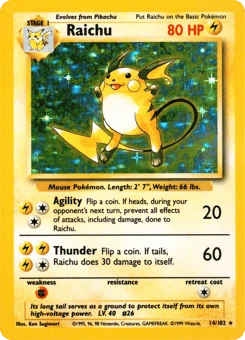
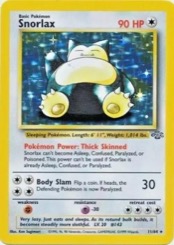
People quickly learn the exact chance of pulling a card out of a pack, similar to the odds of making money at the roulette table. One is a game designed to beat probabilities, while Pokémon can be that too, but has a lot more going for it. Both have entertainment. I’m not a big gambler when I go to Vegas or Atlantic City, but when I go, I want to play long enough to have fun and feel like it was worth my time.
I love that we live in a world where touching on nostalgia and being a collector… It’s become so popular in this cycle of card collecting that we’re having conversations that allow me to educate people on investing fundamentals, personal finance, and responsible fun while giving yourself the opportunity to achieve your financial goals.
In the collectible space, it’s harder because of the surrounding hype and excitement. It’s a blessing and a curse.
It’s funny how often we take the things we’re supposed to enjoy for fun too seriously, isn’t it?
So did crypto, NFTs, real estate, course sellers, and options traders.
Card prices in this piece are UltraBall’s, as of the day you read it; the views are Douglas Boneparth’s own and are not financial advice.