
UltraBall Research · Report · October 2026 edition
How much more does a PSA 9 sell for than a raw near-mint Pokémon card? And how far below a PSA 10?
Across 1,152 cards and printings (880 of them from Sun & Moon onward) with 3+ sales of each a side, a PSA 9 sold for a median 1.9 times a raw near-mint copy, but 1.5 times on the 680 cards with 5+ sales a side; a PSA 10 sold for 4.3 times a PSA 9.
Scope and full summary
A PSA 9 sold for less than raw near mint on 89 of the 1,152 (7.7%, a low end: 11% at 5+ sales a side), all from Sun & Moon onward, though only 9 stay wholly below once sampling noise is allowed for. Fixed-price eBay sales only, 15 Jul to 14 Oct 2026.
Published · 88,391 fixed-price eBay sales (55,465 raw near mint, 13,263 PSA 9, 19,663 PSA 10) across 1,152 cards and printings with 3+ sales of each, 15 Jul to 14 Oct 2026
This is the October 2026 edition of a study UltraBall reruns on fresh data, kept at this address with its figures fixed. The latest edition is always at ultraball.com/news/data/psa-9-penalty.
- 1.9×
- PSA 9 price as a multiple of raw near mint
- median of 1,152 cards
- 89
- Cards where a PSA 9 sold for less than raw
- 7.7% of 1,152 compared
- 4.3×
- PSA 10 price as a multiple of a PSA 9
- median of 1,152 cards
- 88,391
- Sales compared
- 55,465 raw near mint, 13,263 PSA 9, 19,663 PSA 10
Key findings
In UltraBall’s analysis of 1,152 cards and printings with 3+ fixed-price eBay sales a side (15 July to 14 October 2026), the median PSA 9 sold for 1.9 times the raw near-mint price (weighted by sales, 1.7 times).
In the same UltraBall data, a PSA 9 sold for less than raw near mint on 89 of 1,152 cards (7.7%), all from Sun & Moon onward; the share is 11% at 5+ sales a side.
In UltraBall’s resampling tests, only 9 of the 89 cards with a PSA 9 below raw have a 95% interval wholly below raw, and 56 stay below when sales are matched by date.
On better-traded cards in UltraBall’s data (15 July to 14 October 2026) the multiple shrinks: 1.5 times on the 680 cards with 5+ sales a side and 1.3 on the 299 with 10+.
In UltraBall’s analysis (15 July to 14 October 2026), a PSA 10 sold for a median 4.3 times a PSA 9 (3.9 times weighted by sales) and 9.6 times the raw near-mint price.
Weighted by sales, UltraBall’s PSA 9 multiple falls with every price band, from 4.0 times under $25 to 1.0 at $750 or more; unweighted medians fall to 1.4 then rise to 2.4 in the top band.
Cite this study
Free to quote and chart with a link to this page
UltraBall Research, ‘What a PSA 9 sells for against raw near mint and a PSA 10’ (October 2026). https://ultraball.com/news/data/psa-9-penalty-october-2026
How much more does a PSA 9 sell for than a raw near-mint copy?
The typical PSA 9 sold for 1.9 times a raw near-mint copy, and the middle half of 1,152 cards ran from 1.2 to 3.5 times.
- 1.9×
- Median PSA 9 over raw near mint
- 1,152 cards
- 1.2× to 3.5×
- Middle half of cards
- 427
- Cards with a PSA 9 under 1.5 times raw
- 37% of cards
- 1.7×
- Weighted by sales
- other weights 1.4× to 2.0×
For each of 1,152 cards (a card and a printing, such as Unlimited or Reverse Holo), this report took the median price paid for a raw near-mint copy, a PSA 9 and a PSA 10, from fixed-price eBay sales Jul 15, 2026 to Oct 14, 2026, and divided the PSA 9 figure by the raw one.
- The sample leans recent: 880 of the 1,152 cards are from Sun & Moon, Sword & Shield, Scarlet & Violet or Mega Evolution, and 368 are Illustration Rare or Special Illustration Rare cards.
- A card needs at least 3 sales of each of the three, so it describes cards that trade often, not the market as a whole.
- Prices are what the buyer paid for the item on eBay.
- Grading costs money and takes time; this report does not model either and makes no statement about whether grading a particular card pays.
How the weighted figure is counted
Counting each card once per sale behind it on all three sides, the median is 1.7. Other weights give 1.4 to 2.0; see the method below.
Does a PSA 9 ever sell for less than a raw near-mint copy?
The 7.7% of cards with a PSA 9 below raw is the low end of the share: 9 are clearly below once sampling noise is allowed for, and 56 stay below when sales are matched by date.
- 89
- PSA 9 median below raw median
- 7.7% of 1,152, compared before rounding
- 9
- 95% interval wholly below 1
- 1,000 resamples
- 56
- Still below when matched by date
- 30 do not, 3 have no third with enough sales
- 11%
- Below raw at 5+ sales a side
- 16% at 10+
- By era: Sun & Moon 9 of 180, Sword & Shield 19 of 188, Scarlet & Violet 42 of 377, Mega Evolution 19 of 135.
- 0 of the 272 cards from earlier eras were below raw.
- Each median rests on a handful of sales, so the count is noisy.
How the count was tested
Resampling each card’s raw and PSA 9 sales 1,000 times (fixed seed), 9 of the 89 have a 95% interval wholly below 1.
Recomputing each card within each third of the window (07-15 to 08-13; 08-14 to 09-12; 09-13 to 10-14), where a third needs 2+ sales of raw and of PSA 9, 56 of the 89 stay below, 30 do not and 3 have no third with enough sales.
Among cards with 5+ raw near-mint and PSA 9 sales, 3+ PSA 10 sales and a tight price range (the highest sale no more than 3 times the lowest on each side), 52 of 392 (13.3%) had a PSA 9 below raw, and 3 of those have an interval wholly below 1. Only those are named in the table below.
| Card | Raw near mint | PSA 9 | PSA 10 | PSA 9 against raw | Matched by date |
|---|---|---|---|---|---|
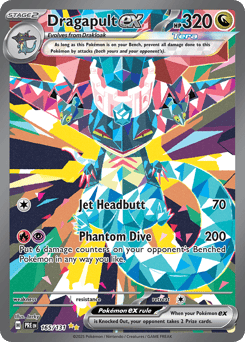 Dragapult exPrismatic Evolutions · No. 165 · 2025 | $12826 sales | $1059 sales | $23517 sales | 82%18% below95% interval 0.69 to 0.93 | 0.82× |
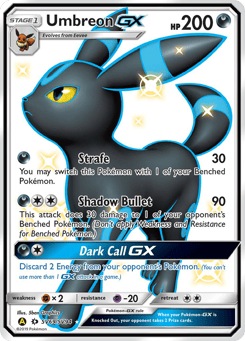 Umbreon-GXHidden Fates Shiny Vault · No. SV69 · 2019 | $28011 sales | $2509 sales | $70017 sales | 89%11% below95% interval 0.83 to 0.93 | 0.92× |
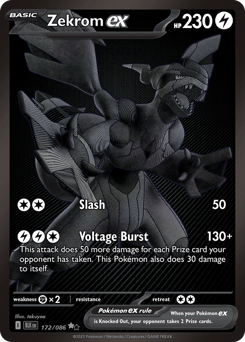 Zekrom exBlack Bolt · No. 172 · 2025 | $60029 sales | $57049 sales | $1,49953 sales | 95%5% below95% interval 0.89 to 0.99 | 0.95× |
Does the minimum number of sales change the PSA 9 multiple?
Better-traded cards show a smaller multiple and a larger share below raw: 1.9 times and 7.7% below at 3+ sales a side, 1.3 times and 15.7% at 10+.
The headline asks for 3+ sales of each of raw, PSA 9 and PSA 10. It is therefore the figure for cards that trade at least 3 times a side, not a fixed property of the market.
| Minimum sales a side | Cards | PSA 9 ÷ raw, median | Weighted by total sales | PSA 9 below raw |
|---|---|---|---|---|
| 3+ | 1,152 | 1.9× | 1.7× | 89 (7.7%) |
| 5+ | 680 | 1.5× | 1.5× | 75 (11.0%) |
| 8+ | 397 | 1.3× | 1.3× | 59 (14.9%) |
| 10+ | 299 | 1.3× | 1.3× | 47 (15.7%) |
How much more is a PSA 10 worth than a PSA 9?
The step from PSA 9 to PSA 10 (4.3 times) is much larger than the step from raw to PSA 9 (1.9 times).
- 4.3×
- PSA 10 over PSA 9
- median of 1,152 cards
- 3.9×
- PSA 10 over PSA 9, weighted by sales
- 1.9×
- PSA 9 over raw near mint
- 9.6×
- PSA 10 over raw near mint
Does the PSA 9 multiple change with the card’s price?
Weighted by sales, the PSA 9 multiple falls with every price band, from 4.0 to 1.0; the unweighted medians do not.
- Under $254.3×117 cards · 4.0× weighted
- $25 to $752.1×353 cards · 2.0× weighted
- $75 to $2001.4×353 cards · 1.3× weighted
- $200 to $7501.6×251 cards · 1.2× weighted
- $750 or more2.4×78 cards · 1.0× weighted
- The unweighted medians fall to 1.4 for cards at $75 to $200, then rise to 2.4 in the top band, which has 78 cards.
- The weighted and unweighted figures disagree most there (1.0 against 2.4); the report does not choose between them.
How cards are banded
Cards are banded by the geometric mean of the raw near-mint and PSA 10 medians, never by the PSA 9 price or by one side’s own price, so the band does not by itself decide the ratio.
| Band | Cards | PSA 9 ÷ raw, median | Weighted by sales | PSA 9 below raw | PSA 10 ÷ PSA 9, median |
|---|---|---|---|---|---|
| Under $25 | 117 | 4.3× | 4.0× | 0 (0.0%) | 3.0× |
| $25 to $75 | 353 | 2.1× | 2.0× | 9 (2.5%) | 4.1× |
| $75 to $200 | 353 | 1.4× | 1.3× | 46 (13.0%) | 4.5× |
| $200 to $750 | 251 | 1.6× | 1.2× | 26 (10.4%) | 5.6× |
| $750 or more | 78 | 2.4× | 1.0× | 8 (10.3%) | 6.9× |
Download the era chart: PNG
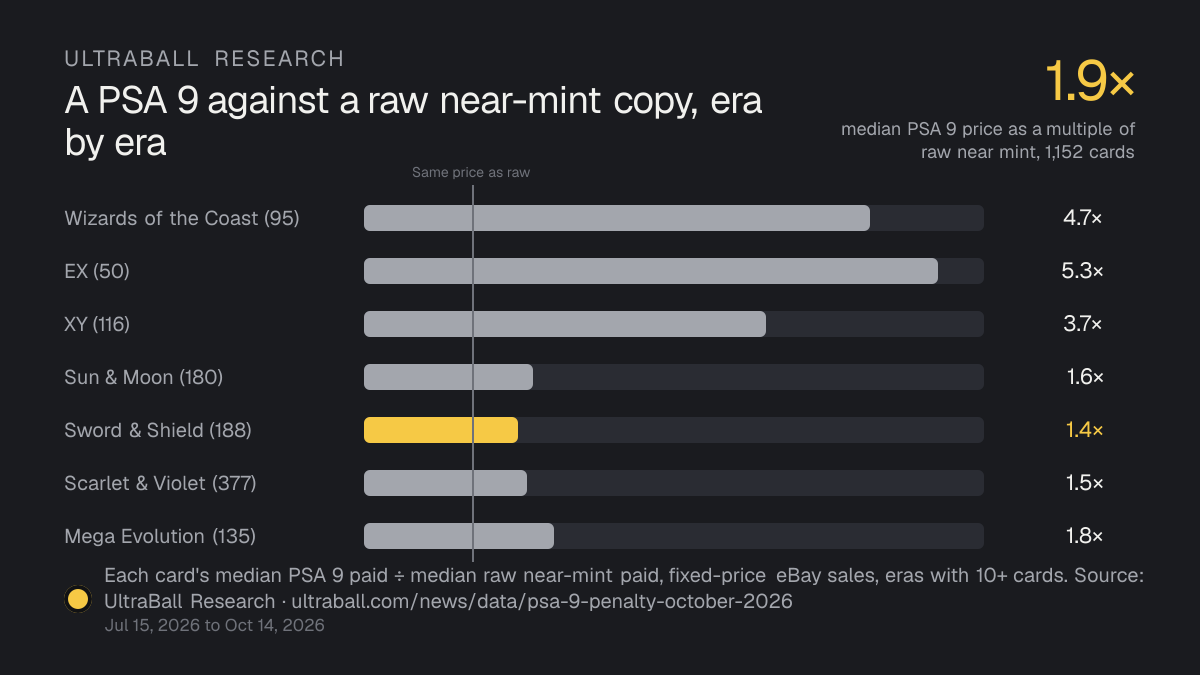
How does the PSA 9 multiple change by era?
In every era from Sun & Moon onward the median PSA 9 sold for between 1.4 and 1.8 times raw near mint.
- Wizards of the Coast4.7×95 cards
- EX5.3×50 cards
- XY3.7×116 cards
- Sun & Moon1.6×180 cards
- Sword & Shield1.4×188 cards
- Scarlet & Violet1.5×377 cards
- Mega Evolution1.8×135 cards
- Wizards of the Coast cards had the median PSA 9 at 4.7 times raw (95 cards).
- From Sun & Moon onward (Sun & Moon, Sword & Shield, Scarlet & Violet, Mega Evolution): Sun & Moon 1.6, Sword & Shield 1.4, Scarlet & Violet 1.5, Mega Evolution 1.8.
- Diamond & Pearl, Platinum, HeartGold & SoulSilver, Black & White have fewer than 10 cards each (11 in all), so no figure is read from them.
| Era | Cards | PSA 9 ÷ raw, median | PSA 9 below raw | PSA 10 ÷ PSA 9, median |
|---|---|---|---|---|
| Wizards of the Coast | 95 | 4.7× | 0 (0.0%) | 6.8× |
| EX | 50 | 5.3× | 0 (0.0%) | 9.3× |
| Diamond & Pearl | 1 | 7.5× | 0 (0.0%) | 10.7× |
| Platinum | 3 | 10.0× | 0 (0.0%) | 24.2× |
| HeartGold & SoulSilver | 1 | 8.2× | 0 (0.0%) | 3.4× |
| Black & White | 6 | 5.4× | 0 (0.0%) | 14.4× |
| XY | 116 | 3.7× | 0 (0.0%) | 7.6× |
| Sun & Moon | 180 | 1.6× | 9 (5.0%) | 4.8× |
| Sword & Shield | 188 | 1.4× | 19 (10.1%) | 3.3× |
| Scarlet & Violet | 377 | 1.5× | 42 (11.1%) | 4.3× |
| Mega Evolution | 135 | 1.8× | 19 (14.1%) | 2.8× |
Which sets have the lowest and highest PSA 9 multiples?
7 of 50 sets with 8+ compared cards have a median PSA 9 under 1.2 times raw near mint; Base Set is highest at 17.4 times.
- Under 1.2 times raw: Prismatic Evolutions (1.0, 30 cards), White Flare (1.0, 17 cards), Chilling Reign (1.1, 11 cards), Hidden Fates Shiny Vault (1.1, 25 cards), Evolving Skies (1.1, 21 cards), Crown Zenith Galarian Gallery (1.1, 32 cards), Fusion Strike (1.2, 11 cards).
- At the other end, Base Set has a median of 17.4 times (30 cards).
- The table shows the ten sets with the lowest median and the five with the highest; every set is in the CSV.
| Set | Cards | PSA 9 ÷ raw, median | PSA 9 below raw |
|---|---|---|---|
| Prismatic Evolutions2025 | 30 | 1.0× | 12 (40.0%) |
| White Flare2025 | 17 | 1.0× | 6 (35.3%) |
| Chilling Reign2021 | 11 | 1.1× | 3 (27.3%) |
| Hidden Fates Shiny Vault2019 | 25 | 1.1× | 9 (36.0%) |
| Evolving Skies2021 | 21 | 1.1× | 3 (14.3%) |
| Crown Zenith Galarian Gallery2023 | 32 | 1.1× | 7 (21.9%) |
| Fusion Strike2021 | 11 | 1.2× | 0 (0.0%) |
| Temporal Forces2024 | 23 | 1.3× | 5 (21.7%) |
| Unbroken Bonds2019 | 14 | 1.4× | 0 (0.0%) |
| Brilliant Stars Trainer Gallery2022 | 9 | 1.4× | 2 (22.2%) |
| Base Set1999 | 30 | 17.4× | 0 (0.0%) |
| Fates Collide2016 | 16 | 4.2× | 0 (0.0%) |
| Evolutions2016 | 34 | 4.0× | 0 (0.0%) |
| Ancient Origins2015 | 12 | 3.8× | 0 (0.0%) |
| BREAKthrough2015 | 10 | 3.4× | 0 (0.0%) |
Does the sale format change the PSA 9 multiple?
The multiple differs by sale format (1.9, 2.2 and 2.7 times), and the difference comes from which cards qualify.
- 82%
- Raw near-mint sales at a fixed price
- 36%
- PSA 9 sales at a fixed price
- 34%
- PSA 10 sales at a fixed price
A raw near-mint card and a graded card do not sell in the same way. To compare like with like the headline uses fixed-price sales on all three sides. Two checks use the same rule on other sales: auctions on all three sides, and every eBay format together (accepted offers with a known price included).
- The share of cards where a PSA 9 sold below raw is 7.7%, 7.6% and 7.1%.
- On the 805 cards that are in both the fixed-price and the auction view, the medians are 1.61 and 1.61.
- The every-format view has 2,648 cards because a card needs 3 sales of each of the three, not 3 of each in one format.
| Sales used | Cards | PSA 9 ÷ raw, median | Weighted by sales | PSA 9 below raw | PSA 10 ÷ PSA 9, median |
|---|---|---|---|---|---|
| Fixed price (Buy It Now)55,465 raw, 13,263 PSA 9, 19,663 PSA 10 sales | 1,152 | 1.9× | 1.7× | 89 (7.7%) | 4.3× |
| Auction21,683 raw, 23,634 PSA 9, 38,739 PSA 10 sales | 1,461 | 2.2× | 1.6× | 111 (7.6%) | 4.1× |
| Every eBay format123,584 raw, 45,852 PSA 9, 70,058 PSA 10 sales | 2,648 | 2.7× | 1.8× | 188 (7.1%) | 4.7× |
Which cards are traded most across raw, PSA 9 and PSA 10?
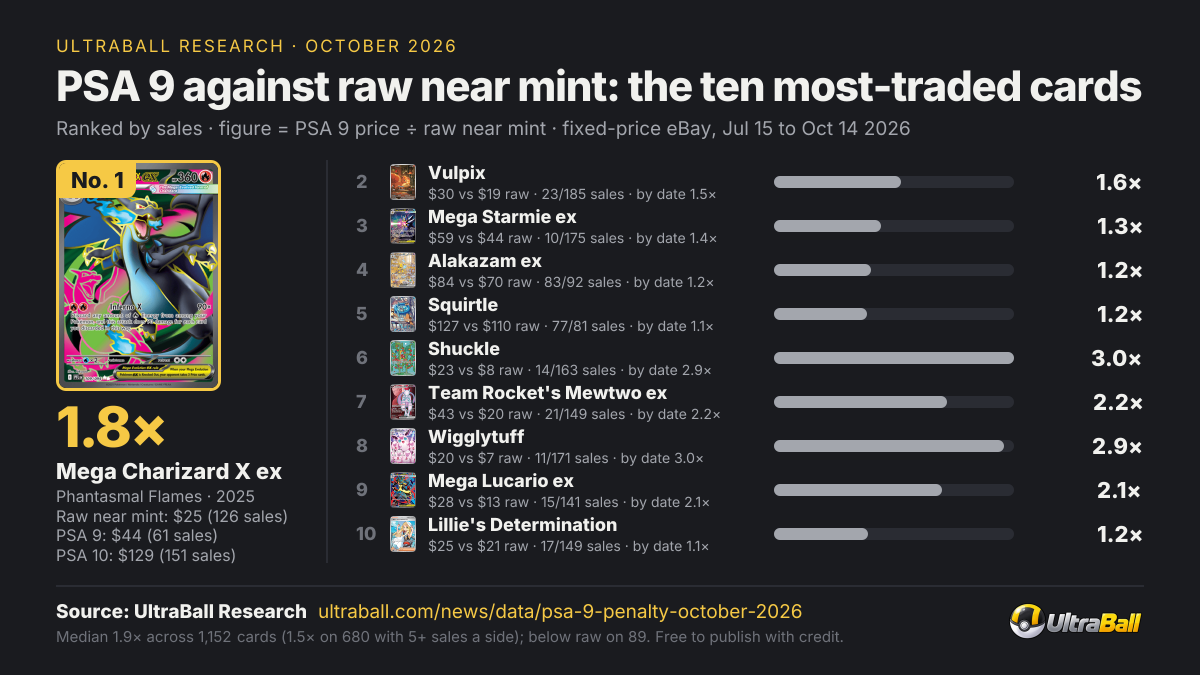
The Phantasmal Flames Mega Charizard X ex is the most-traded, with 126 raw near-mint, 61 PSA 9 and 151 PSA 10 sales.
The cards with the most sales across the three sides, among those with 5+ raw near-mint and PSA 9 sales, 3+ PSA 10 sales and a tight price range. Each row shows the date-matched ratio and the 95% interval, and the graphic is built from these ten.
| Card | Raw near mint | PSA 9 | PSA 10 | PSA 9 against raw | Matched by date |
|---|---|---|---|---|---|
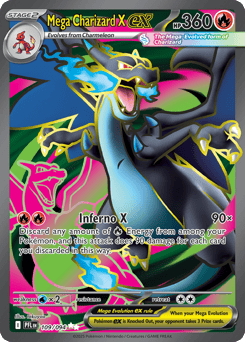 Mega Charizard X exPhantasmal Flames · No. 109 · 2025 | $25126 sales | $4461 sales | $129151 sales | 178%1.8 times raw95% interval 1.65 to 1.96 | 1.33× |
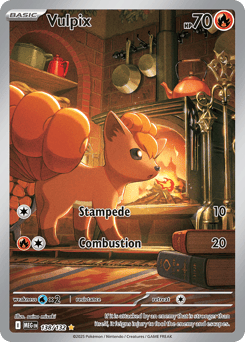 VulpixMega Evolution · No. 138 · 2025 | $19185 sales | $3023 sales | $9581 sales | 158%1.6 times raw95% interval 1.42 to 1.67 | 1.45× |
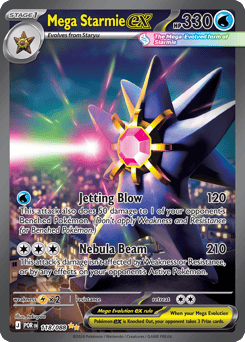 Mega Starmie exPerfect Order · No. 118 · 2026 | $44175 sales | $5910 sales | $15062 sales | 134%1.3 times raw95% interval 1.18 to 1.50 | 1.40× |
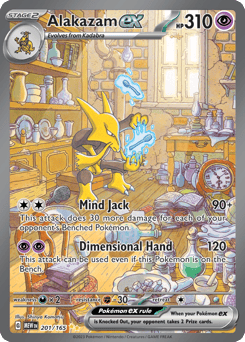 Alakazam ex151 · No. 201 · 2023 | $7092 sales | $8483 sales | $34565 sales | 120%1.2 times raw95% interval 1.14 to 1.23 | 1.21× |
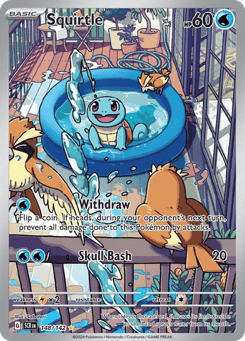 SquirtleStellar Crown · No. 148 · 2024 | $11081 sales | $12777 sales | $40067 sales | 115%1.2 times raw95% interval 1.11 to 1.18 | 1.14× |
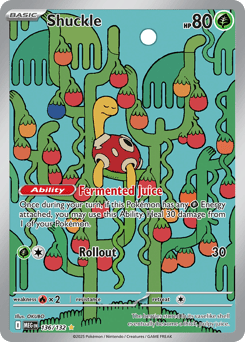 ShuckleMega Evolution · No. 136 · 2025 | $8163 sales | $2314 sales | $7545 sales | 298%3.0 times raw95% interval 2.57 to 3.29 | 2.86× |
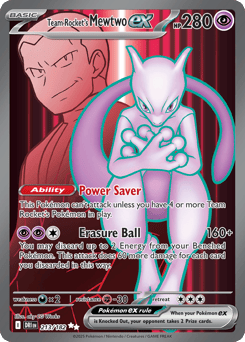 Team Rocket's Mewtwo exDestined Rivals · No. 213 · 2025 | $20149 sales | $4321 sales | $13044 sales | 215%2.2 times raw95% interval 2.00 to 2.25 | 2.17× |
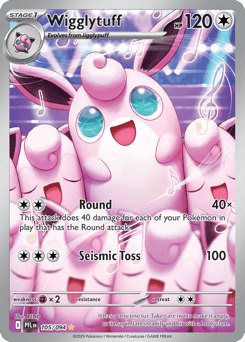 WigglytuffPhantasmal Flames · No. 105 · 2025 | $7171 sales | $2011 sales | $8329 sales | 286%2.9 times raw95% interval 2.59 to 3.00 | 3.00× |
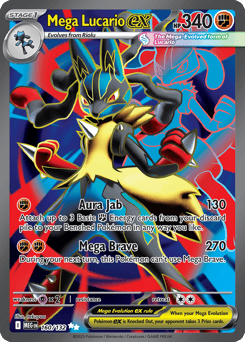 Mega Lucario exMega Evolution · No. 160 · 2025 | $13141 sales | $2815 sales | $8542 sales | 209%2.1 times raw95% interval 1.92 to 2.29 | 2.13× |
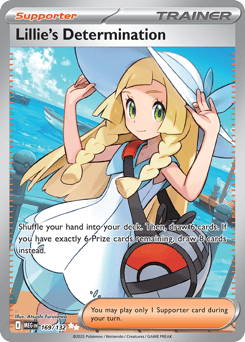 Lillie's DeterminationMega Evolution · No. 169 · 2025 | $21149 sales | $2517 sales | $6524 sales | 116%1.2 times raw95% interval 1.06 to 1.31 | 1.06× |
What does the PSA 9 data not explain?
The report measures prices, not causes.
- Raw near mint here is the seller’s own description in the listing title, not a grade, and a copy sold as near mint may be one a buyer then sends to be graded; the two sides are not independent markets.
- Cards from sets released inside the window moved in price during it, and each card’s three medians pool the whole 90 days rather than matching sales day by day.
- Where a PSA 9 sold close to or below raw, possible factors include a thin supply of PSA 9s or a market in which buyers pay for the chance of a higher grade; neither was tested here.
- Grading costs money and takes time, and none of that is in these figures.
How this was worked out, and its limits
Sales. Actual sales only, Jul 15, 2026 to Oct 14, 2026 (90 days), of raw, PSA 9 and PSA 10 English cards: 1,346,050 sales across the three, of which 109,496 were left out as not English and 26,301 English sales from Fanatics Collect, Alt and Goldin were left out, because raw copies are sold on eBay and those venues add a buyer’s premium.
That leaves 1,210,253 eBay sales, 244,580 of them of unknown amount (an offer accepted without a price): these are counted as sales but never priced, which leaves 965,673 priced (820,205 raw, 63,489 PSA 9, 81,979 PSA 10). Price is what the buyer paid for the item. Each sale counts once however many feeds report it.
Titles naming another product (Cracked Ice, Cosmos, prerelease, staff or stamped holos, 15,308 sales) or another language than English (1,504) were left out of all three sides.
Raw near mint. The ledger holds no usable condition field for most raw sales, so the seller’s words are all there is. A raw sale counts as near mint when its title says NM or Near Mint and names no other condition (LP, MP, HP, damaged, played, excellent and similar), no grading company, and no lot or sealed product.
Of 804,934 priced raw eBay sales left after those exclusions, 276,804 state NM or Near Mint, and 11,983 of those also name another condition or a grader, leaving 262,775. Titles naming Japanese (87), light play or NM- (1,170) or a sealed product, pack, box or deck, unless the title says “pack fresh” (789) are also dropped.
PSA 9 slabs whose title names a qualifier (off-centre, marks, stain, print defect, miscut, out of focus) or a cracked case were left out (516). A card is a card id and a printing (Unlimited, 1st Edition, Shadowless or Reverse Holo as the title or id says).
Format. The eBay feed that does not say whether a sale was an auction or a fixed price is filed as an auction by the shared loader, so the 945 sales that feed read are treated as an unknown format and are in no fixed-price or auction figure.
The headline is fixed price on all three sides; the auction and every-format figures are checks.
Ratios. A card is compared with at least 3 priced sales on each of the three sides; thin groups are noisy, which is why the sensitivity table repeats the headline at higher minimums.
Its PSA 9 figure is the PSA 9 median divided by the raw near-mint median (compared before rounding), and its PSA 10 figure the PSA 10 median divided by the PSA 9 median.
The groups show the median of those ratios (1.9 for PSA 9 over raw) and a median weighted by sales.
The weighted figure depends on the weight: 1.7 by sales on all three sides, 2.0 by raw near-mint sales, 1.4 by psa 9 sales, 1.4 by the smallest of the three sides. Where the text says weighted without a weight it means the first. Bands use the geometric mean of the raw and PSA 10 medians.
Intervals are 95% bootstrap intervals (1,000 resamples of each side, seed 20261017). Cards are named in the text only with 5+ raw and PSA 9 sales, 3+ PSA 10 sales and no side whose highest sale is more than 3 times its lowest; the penalty list also needs an interval wholly below 1.
The sale titles of every named card were read by eye on 2026-10-17, which found and led to the removal of two kinds of bad row (an Italian-language raw copy listed as English, and cracked PSA 9 slabs); this check is not part of the figures.
Limits. eBay coverage ramps up through July and dips from 16 to 31 August; Scrydex stops on 30 September. A sale matched to the wrong card, or a different print of the same card, moves a median, and a minimum of 3 sales a side does not guard against that.
The cards compared are those that trade often in all three forms, which skews recent and toward chase cards.
Only 2 of the 1,152 cards are a printing other than the base one (a title that does not name the printing is filed as the base printing), so Wizards of the Coast cards are in effect Unlimited. Every term is defined on the methodology page.
Questions people ask
How much more is a PSA 9 worth than a raw near-mint card?
In UltraBall’s analysis of 1,152 cards and printings with 3+ fixed-price eBay sales a side (15 July to 14 October 2026), the median PSA 9 sold for 1.9 times the raw near-mint price, and 1.5 times on the 680 cards with 5+ sales a side. The level depends on how often a card trades.
Does a PSA 9 ever sell for less than a raw card?
On some cards, yes: in UltraBall’s data (15 July to 14 October 2026) a PSA 9 sold for less than raw near mint on 89 of 1,152 cards (7.7%), all from Sun & Moon onward. That is a low end, and only 9 are clearly below once sampling noise is allowed for.
How much more is a PSA 10 worth than a PSA 9?
In UltraBall’s analysis of 1,152 cards (15 July to 14 October 2026), a PSA 10 sold for a median 4.3 times a PSA 9 (3.9 times weighted by sales) and 9.6 times the raw near-mint price, so the step from 9 to 10 is much larger than the step from raw to 9.
Does the PSA 9 multiple depend on the card’s era or price?
In UltraBall’s data (15 July to 14 October 2026), the median PSA 9 sold for 1.4 to 1.8 times raw in each era from Sun & Moon onward and 3.7 to 5.3 times before it. Weighted by sales, the multiple falls from 4.0 times under $25 to 1.0 at $750 or more.
The figures in this report are fixed as published. For the latest readings see the live data; every term is defined on the methodology page.