Reverse holo vs regular holo
The quickest way to tell them apart is to tilt the card under a light and watch where the rainbow moves.
| Regular holo | Reverse holo | |
|---|---|---|
| Where the foil is | Inside the artwork box only | Everywhere except the artwork box |
| Which cards get it | Holo Rares and above | Commons, uncommons and rares (and sometimes holo rares) |
| How many per pack | Usually one rare slot | One per pack from 2002, two from Scarlet & Violet |
| Official name | Holofoil | Parallel foil |
| Also exists as a non-foil card? | Older holo rares, no | Yes, almost always |
That last row is the important one. A reverse holo is a parallel of a card that also exists without foil in the same set. TCGplayer's rarity guide notes that the official term is "Parallel Foil" and that reverse holos are why you can't judge a card's rarity by whether it's foil. A reverse holo common is still a common. The rarity symbol doesn't change, and our rarity chart explains what each symbol means.
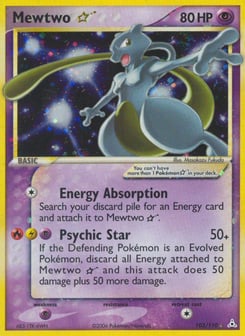
Full arts, gold cards and the gold-star illustration rares don't get reverse holo versions. They're already foil all over.
How to spot a reverse holo
Hold the card at an angle to a lamp or window and look at three places:
- The artwork box. On a reverse holo it's flat and matte. On a regular holo it's the only part that shines.
- The border and text areas. On a reverse holo, the card frame, the attack box and the weakness line all catch the light.
- The pattern. Most reverse holos have a pattern in the foil, and it tells you roughly when the card was printed.
On Scarlet & Violet cards there's one more tell: the small set code in the bottom corner is printed black-on-white on reverse holos, the opposite of the white-on-black on the regular version.
If the whole card shines, including the art, it isn't a reverse holo. It's a full art, a textured secret rare or one of the gold-star cards, and you should look it up by number. Our guide on how to tell if a Pokémon card is rare covers those.
A short history of reverse holos
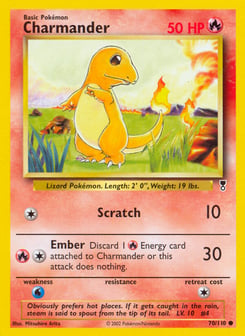
Reverse holos arrived with Legendary Collection in May 2002. Wizards of the Coast had just stopped printing 1st Edition cards after Neo Destiny, and borrowed the idea from Magic: The Gathering to give collectors a new chase. Every card in Legendary Collection got a reverse holo version with a "fireworks" pattern across the card, and each pack had one. That set is still where the most valuable reverse holos live.
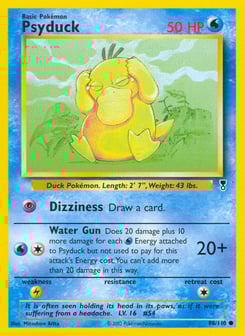
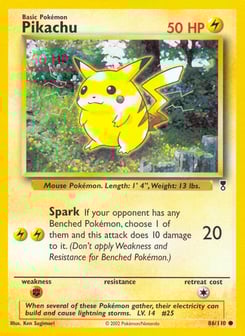
Look at the commons in that set. Charmander, Psyduck and Pikachu from Legendary Collection sell for about $2.15, $10.06 and $8.26 as regular cards. Their reverse holo versions are listed separately on each card page, and they sell for many times as much. Same card, same number, and the fireworks foil is the whole difference. The most valuable Legendary Collection cards list is full of them, and the Charmander, Psyduck and Pikachu pages show where those reverses sit against every other version.
After that, the pattern changed a lot:
- e-Card era, 2002 to 2003. Expedition Base Set used a flat foil over everything but the art, and gave reverse versions to both the holo and non-holo rares. Aquapolis and Skyridge fixed that by numbering the holos separately with an "H" and not making reverse versions of them.
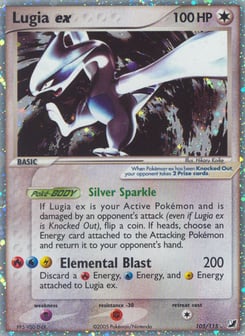
- EX era, 2003 to 2007. From Hidden Legends on, the foil moved into the artwork background on many sets, with energy symbols, pinwheels or Poké Balls behind the Pokémon, and the set logo stamped in the corner of the art. Emerald used Poké Balls and stars.
- Diamond & Pearl to Black & White. Back to plain foil across the card body.
- Emerging Powers to Steam Siege, and again in Sun & Moon. The Pokémon's type symbol printed into the foil background, with Poké Balls on Trainers.
- Sword & Shield to Crown Zenith. A "tile" pattern on a mirror-foil base.
- Scarlet & Violet to Black Bolt and White Flare. A busier tile pattern with type symbols of different sizes. Packs went from one reverse holo to two.
- Mega Evolution onward. Back to a plain foil background.
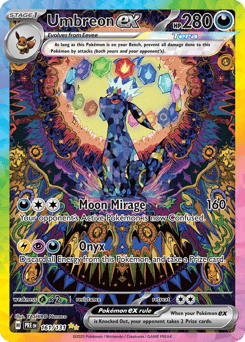
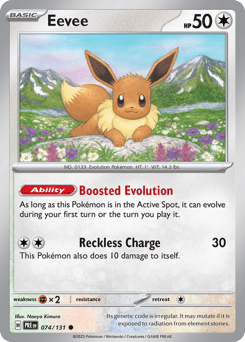
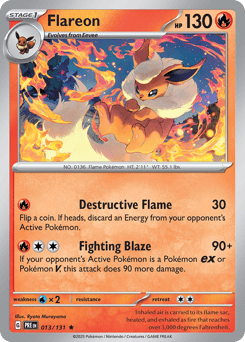
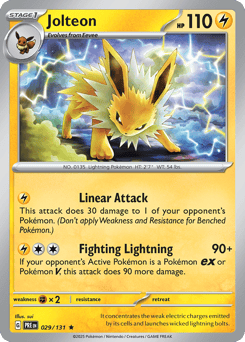
Two recent sets added something extra. Prismatic Evolutions and the split Black Bolt and White Flare sets printed their parallel foils in three versions: the normal one, one with a Poké Ball etched into the background, and one with a Master Ball. In Prismatic Evolutions, every common, uncommon and rare got a Poké Ball version and the Pokémon among them also got a Master Ball version. TCGplayer's opening sample found a Poké Ball foil in about one pack in three and a Master Ball foil in about one pack in twenty, which made any specific Master Ball card roughly as hard to pull as a specific Special Illustration Rare. Collectors chase those as separate cards. In a set built around Eevee, that meant Eevee, Flareon and Jolteon each came in at least three foil versions.
Are reverse holos rare?
Less than they look. Every modern pack has two, so you'll open far more reverse holos than holo rares.
A specific reverse holo is scarcer than the regular copy of the same card, though. The regular version of a common turns up in the common slots of many packs, while its reverse holo has to share one or two slots with every other common, uncommon and rare in the set. That's why completing a full reverse holo set is much harder than completing the regular set, and why "master set" collectors chase them.
It's also why scarcity alone doesn't make them valuable. Every copy of a modern set was opened in huge numbers, so even the scarcer parallel exists in large quantities.
Are reverse holo Pokémon cards worth anything?
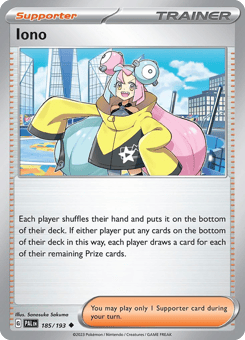
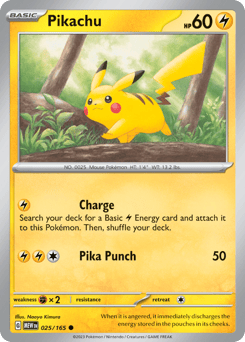
Most aren't. A reverse holo of a modern common or uncommon usually sells for about the same pocket change as the regular card, sometimes a little more. The regular Iono from Paldea Evolved sells for about $0.33, and its reverse holo isn't much different. The same goes for Pikachu from 151, a common whose reverse holo is still cheap. If you're sorting a pile of 2010s and 2020s reverse holos, they belong in the bulk box. Don't grade them. The fee costs more than almost any of them will ever sell for, and our PSA grading cost guide has the current fees if you want to check.
The ones that do sell well tend to share one of these traits:
- They're from the first years of reverse holos. Legendary Collection above all, then the e-Card sets. The hobby was much smaller then, and not many of those reverse holos survived with clean foil.
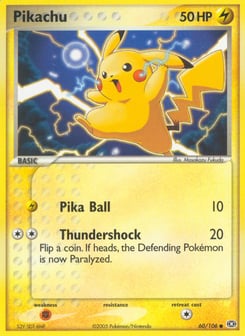
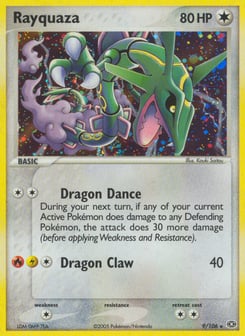
- They're from the EX era, especially of popular Pokémon. The foil in the art on those sets looks nothing like the regular card. Pikachu from Emerald sells for about $16.01 as a regular common, and its reverse holo, with the Poké Ball foil behind Pikachu, sells for many times that. Emerald's Rayquaza had a reverse version of its holo too.
- They're the only foil version of a popular Pokémon. When a Pikachu, Charizard or Eevee-line card is a plain common in a set, the reverse holo is the shiny one collectors want.
- They carry a special pattern, like the Poké Ball and Master Ball foils in Prismatic Evolutions and Black Bolt / White Flare.
- They're graded high. A reverse holo in a PSA 10 slab can sell well even when raw copies don't, because foil scratches easily and few survive perfect.
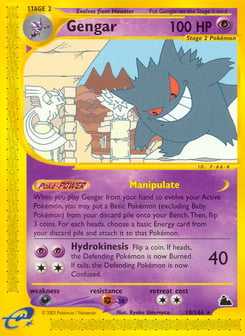
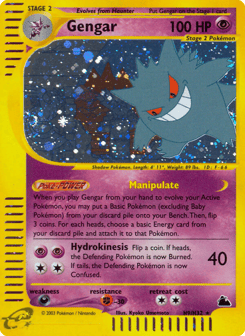
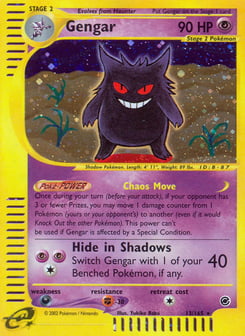
The e-Card sets show how odd this gets. The non-holo Gengar from Skyridge sells for about $597 ungraded, and its reverse holo sells for noticeably more; the separately numbered holo Gengar is another level entirely. Over in Expedition, Gengar (Expedition Base Set) had a reverse version too, because that set gave one to every rare. The Gengar page lists them all.
If you want the wider picture on what drives price, what makes a Pokémon card valuable goes through each factor.
Collecting reverse holos
Plenty of collectors build reverse holo sets on purpose. They look great in a binder, a full page of them catches the light in a way regular cards don't, and on older sets they're a real challenge. If that's you, a few things help:
- Sleeve them before binders. Foil shows scratches and edge wear faster than plain card stock. A penny sleeve before a binder pocket is cheap insurance. There's more in our guide to Pokémon card binders.
- Track the reverse and regular copies separately. They're different cards to buyers.
- Pick your sets. Legendary Collection, the e-Card sets and the EX era are where the challenge and the value are. Modern reverse holo sets are cheap to finish and mostly a matter of opening enough packs.
Reverse holos are legal in tournaments exactly like the regular card. The foil makes no difference to play.
How to check what a reverse holo is worth
Search the card by name on Ultraball and match the set and number. Where the market treats the printings differently, the card page shows the ungraded price for each one, including the reverse holo, under "Ungraded price by printing". The headline price blends the printings, so on older sets always check the reverse holo row. Our pricing notes explain how that works, and the price checker guide shows the quickest way to run through a stack.