Why storage matters, in dollars
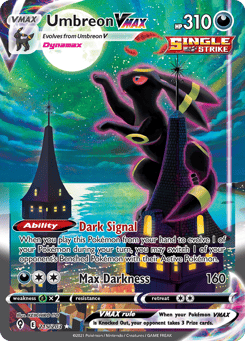
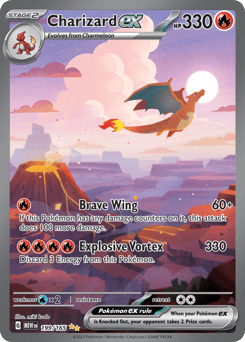
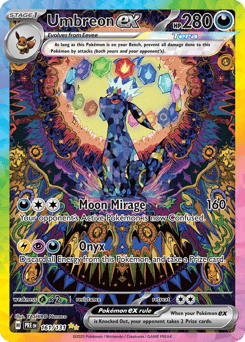
Condition is most of a card's price. Our ungraded prices assume a near-mint copy, and graded prices show how much more a perfect one fetches. The gaps are big. Umbreon VMAX (Evolving Skies) from Evolving Skies sells for about $2,200 raw and about $4,050 as a PSA 10. Charizard ex (151) from 151 is about $414 raw against about $1,425 in a PSA 10.
A dented corner from a ring, a scuffed holo from a tight pocket, or a warped card from a hot car can knock a card out of 10 contention for good. Storage can't make a card better than it came out of the pack. It can stop it getting worse, and that's worth a lot more than the binder costs. For what graders actually look for, see how Pokémon card grading works.
What makes a good binder
Every binder in the shops looks fine on the shelf. These are the details that separate them.
Side-loading pockets. The card slides in from the side, toward the spine, so the page itself holds it in. With top-loading pockets, a card can slide out if the binder is tipped upside down or carried in a bag. For anything valuable, side-loading is the one feature we'd call non-negotiable.
No rings. Ring binders have their place for bulk and trade binders, but the rings press into the pages nearest the spine when the binder closes, and cards in those pockets can pick up dents along the edge. Ringless binders have the pages bound in, which also stops pages tearing at the holes.
Acid-free, non-PVC pages. Every major maker now advertises archival-safe, acid-free, PVC-free materials for binder pages and soft sleeves. Treat it as a minimum, and be wary of cheap unbranded binders that don't say what the pages are made of.
A closure. A zipper keeps dust and loose cards in and makes the binder safe to carry. An elastic strap does most of the job for less money. A binder with neither can fall open.
A stiff, padded cover. The cover is what stops a book on top of the binder from pressing into your cards. Padded, rigid covers protect better than thin flexible ones.
Room for sleeves. If you want to put sleeved cards in the pockets (double protection for valuable cards), check the maker says the pockets fit them. Some are sized for single-sleeved cards, some for double-sleeved.
The right capacity. Buy for the collection you'll have, not the one you have now. A binder that's crammed full stresses its spine and pages; one that's mostly empty leaves pages flopping.
Binders that meet the bar
These all have side-loading pockets, ringless bound pages, a closure, and archival-safe, non-PVC materials, according to their makers' own product pages. Prices are as listed on each maker's US store in September 2026.
| Binder | Pockets per page | Capacity (maker's figure) | Closure | Listed price |
|---|---|---|---|---|
| Vault X Exo-Tec Zip Binder, 4-pocket | 4 | 160 cards | Zipper | $25.99 |
| Vault X Exo-Tec Zip Binder, 9-pocket | 9 | 360 cards | Zipper | $34.99 |
| Vault X Exo-Tec Zip Binder, 12-pocket | 12 | 480 cards | Zipper | $38.99 |
| Vault X Exo-Tec Zip Binder, 12-pocket XL | 12 | 624 cards | Zipper | $38.99 |
| Vault X Exo-Tec Zip Binder, 16-pocket | 16 | 1,088 cards | Zipper | $47.99 |
| Ultra Pro 9-Pocket Zippered Premium PRO-Binder | 9 | 180 cards | Zipper | $28.99 |
| Ultra Pro Elite Series 9-Pocket Zippered PRO-Binder for Pokémon | 9 | 360 sleeved cards | Zipper | $44.99 |
| Ultra Pro Elite Series 12-Pocket Zippered PRO-Binder for Pokémon | 12 | 480 sleeved cards | Zipper | $56.99 |
| Ultra Pro 9-Pocket PRO-Binder for Pokémon | 9 | 360 cards | Elastic strap | $29.99 |
| Dragon Shield Card Codex Portfolio 576 | 24 per page, both sides | 576 cards | Elastic strap | $39.99 |
Vault X Exo-Tec. The Exo-Tec zip binders are the ones collectors mention most. Vault X lists a padded, water-resistant cover, a microfiber lining, and pages that take single- or double-sleeved cards, with a 12-month guarantee. The range runs from 4 to 16 pockets a page, and many versions come with set-themed spines, which is handy if you keep one binder per set.
Ultra Pro PRO-Binders. Ultra Pro makes a lot of officially licensed Pokémon accessories, so this is where you'll find Charizard, Pikachu and Gengar covers. The zippered Premium and Elite Series binders meet the bar; the standard PRO-Binder uses an elastic strap instead of a zip. Ultra Pro says its Premium PRO-Binder fits standard 13-inch cube shelves, a small detail that matters if you're lining up a shelf of them.
Dragon Shield Card Codex. Dragon Shield's portfolios use side-loading pockets under a reinforced cover with an elastic strap. The 576-card Codex is listed at $39.99, with smaller 160-card ($21.99) and 80-card ($14.99) versions.
Pokémon Center binders. The Pokémon Company's own store has a binders category with official designs. Check each listing for side-loading pockets and a closure before you buy one for valuable cards.
A cheaper route for a first binder is a portfolio. Ultra Pro's Charizard 9-Pocket Portfolio is listed at $13.99 for 10 pages holding 90 cards, or 180 if you put a card in each side of the pocket. It's fine for a kid's collection or a set of commons. We'd keep anything valuable in one of the binders above.
9-pocket or 12-pocket?
Nine-pocket pages are the classic layout: a page of three rows of three, which is how most people picture a Pokémon binder. Twelve-pocket pages (three rows of four) hold a third more per page in a binder that's only a little wider.
- Pick 9-pocket for display binders, favorite-Pokémon binders, and any collection you'll flip through often. The cards look less cramped and the binder fits more shelves.
- Pick 12-pocket for set collecting. More cards per spread means a whole set fits in fewer pages, and a playset of four fits in a row.
- Pick 16-pocket only for very large master sets. At 1,088 cards, the biggest Vault X binder is heavy, and the cards at the far edge of each page get handled every time it opens.
- Pick 4-pocket for your best cards: fewer per page, less flexing, and the card fills the view.
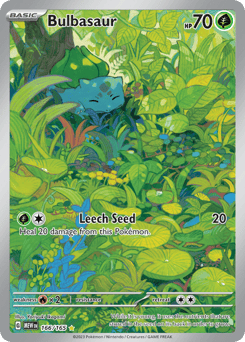
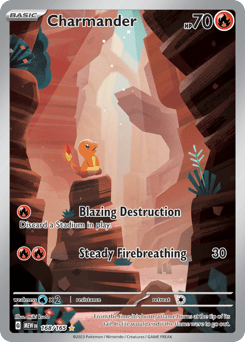
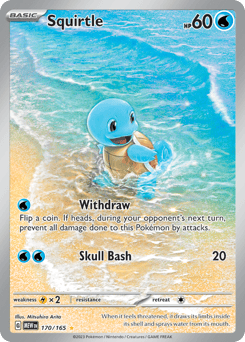
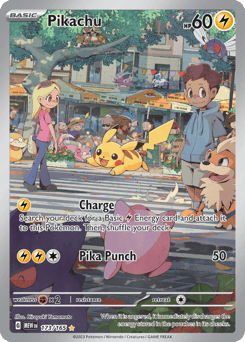
Set collectors often go one binder per set. The illustration rares from 151, such as Bulbasaur (151), Charmander (151), Squirtle (151) and Pikachu (151), look good in a row, and a 12-pocket page gives you room for the whole group. The Charmander alone sells for about $97.07 raw today, and the Bulbasaur for about $79.61, which is exactly the value range where a proper binder earns its price.
Sleeves, toploaders and magnetic holders
A binder is the right home for most of a collection. Cards worth real money deserve an extra layer or two. If you're unsure which sizes fit, Pokémon card dimensions lists the card size and the sleeve and holder sizes that go with it.
Penny sleeves. Thin, soft, clear sleeves that protect the surface from scratches and fingerprints. Ultra Pro lists its 100-count pack at $3.99; they're made of acid-free, non-PVC polypropylene and fit standard cards up to 35pt thick. Every card worth more than a couple of dollars should be in one.
Deck and premium sleeves. Thicker sleeves, and for players, the ones used in decks. Ultra Pro's premium sleeves are listed at $3.99 per 100 and are thicker than its penny sleeves. Printed Pokémon deck sleeves like Ultra Pro's 65-count packs work for binders too, if the pockets are sized for them.
Toploaders. Rigid clear holders a card slides into, usually in a penny sleeve first. Ultra Pro's regular 3-inch by 4-inch toploaders are rigid PVC, hold standard cards up to 35pt, and are listed at $5.99 for 25. Toploaders are the standard way to store and ship any card worth more than a few dollars; how to sell Pokémon cards covers the full packing method. If you want them in a binder, look for toploader binders: Ultra Pro lists a 9-pocket zippered version holding 180 toploaders at $31.99 and a 4-pocket version holding 80 at $29.99.
Magnetic holders. Two-piece hard cases that snap shut with magnets, for display and for your best raw cards. Ultra Pro's 35pt ONE-TOUCH is listed at $3.99, is non-PVC and has UV-blocking additives. They cost more than toploaders but look better on a shelf and protect better against knocks.
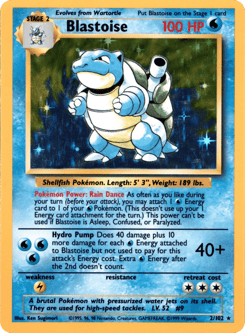
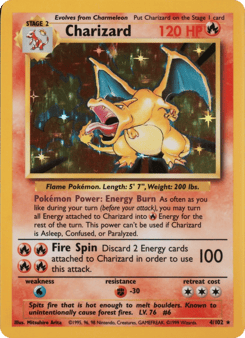
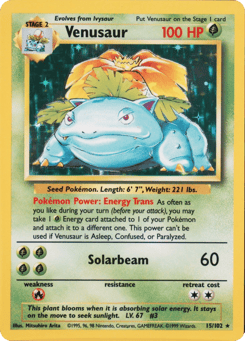
Our view: sleeve anything worth a few dollars, toploader anything worth $20 or more that's leaving the binder, and put your best handful in magnetic holders or get them graded. Vintage holos are the obvious candidates. Blastoise (Base Set) from the Base Set sells for about $158 raw, and its set-mates Charizard (Base Set) and Venusaur (Base Set) are the other two starters every vintage binder is built around.
Storing bulk
Binders are for cards you want to look at. Bulk belongs in cardboard storage boxes made for trading cards, standing upright in rows, sorted by set or by number. Don't pack the rows tight enough to bend cards, and don't leave them loose enough to slide and scuff. Label the box ends so you can find a set without digging.
Before cards go in a bulk box, do one pass for anything that should be in a binder instead: holos, special rarities, older cards, and popular Pokémon. How to tell if your Pokémon cards are worth money has a quick checklist.
What to avoid
Most damage comes from a short list of habits.
- Rubber bands. They dent the edges of the top and bottom cards and leave marks. Most of us learned this one the hard way with a childhood stack.
- Overstuffed pockets. Two cards back to back in one pocket is fine in a binder designed for it; forcing three in, or a thick sleeved card into a tight pocket, bends corners.
- Ring binders for valuable cards. Fine for bulk and trade binders; not for anything you'd want graded.
- Heat, damp and sunlight. Attics, garages, cars and windowsills. Heat and humidity warp cards; direct sunlight fades them. A closet shelf inside the house is better than any of those.
- Storing binders flat under a pile. Weight on the cover presses into the cards. Stand binders upright on a shelf, like books.
- Leaving valuable cards unsleeved in a binder. Sliding a card in and out of a pocket scuffs its surface over time. A penny sleeve first stops that.
Match the storage to the card
A simple rule of thumb by value:
| Card value | Storage |
|---|---|
| Bulk (under $1) | Cardboard storage box, upright |
| $1 to $20 | Binder pocket, sleeved if you'll handle it |
| $20 to $100 | Penny sleeve plus binder, or a toploader |
| $100 and up | Penny sleeve plus toploader or magnetic holder; consider grading |
| Graded slabs | Slab box or a padded case, upright |
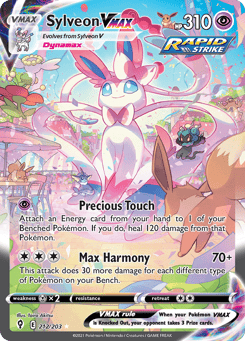
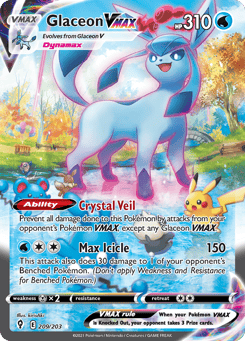
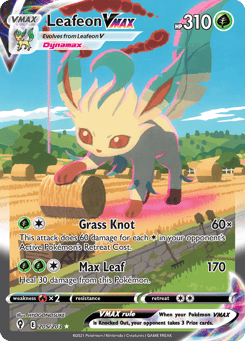
The alternate-art Eeveelutions from Evolving Skies are a good example of cards that belong in the upper rows. Sylveon VMAX (Evolving Skies) sells for about $383, Glaceon VMAX (Evolving Skies) for about $275, and Leafeon VMAX (Evolving Skies) for about $452. Those aren't cards to leave in a ring binder in the garage.
If a card's graded price is far above its raw price, better protection is only half the answer. Our PSA grading cost guide has a grading-upside table, and is it worth grading Pokémon cards covers when a slab pays for itself.
Track what's in the binder
A binder shows you what you have; it doesn't tell you what it's worth. Our collection tracker lets you add each card at the condition or grade you actually hold, and values it at today's price for exactly that. It's a quick way to see which cards have climbed into toploader territory, and it's a useful record if a binder is ever lost or damaged. To look up individual cards first, the price checker guide shows how to find the exact printing.
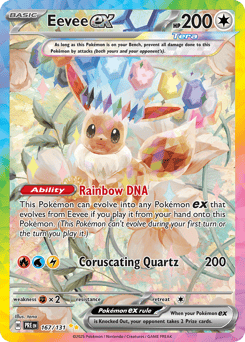
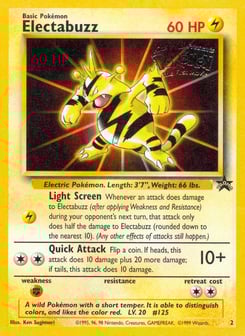
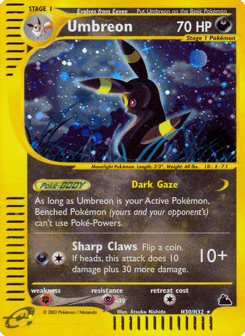
If you're building a binder around one Pokémon, the Pokémon pages are a good starting list. The Eevee and Umbreon pages list every English card with today's prices, and so does the Charizard page for the fire-type faithful. Eevee ex (Prismatic Evolutions) from Prismatic Evolutions, at about $173, is the kind of centerpiece those binders are built around.