The PSA grading scale at a glance
| Grade | Name | Label | Front centering | Back centering |
|---|---|---|---|---|
| 10 | Gem Mint | GEM-MT | about 55/45 or better | 75/25 |
| 9 | Mint | MINT | about 60/40 | 90/10 |
| 8 | Near Mint-Mint | NM-MT | about 65/35 | 90/10 |
| 7 | Near Mint | NM | about 70/30 | 90/10 |
| 6 | Excellent-Mint | EX-MT | 80/20 | 90/10 |
| 5 | Excellent | EX | 85/15 | 90/10 |
| 4 | Very Good-Excellent | VG-EX | 85/15 | 90/10 |
| 3 | Very Good | VG | 90/10 | 90/10 |
| 2 | Good | GOOD | 90/10 | 90/10 |
| 1.5 | Fair | FR | about 90/10 | about 90/10 |
| 1 | Poor | PR | not specified | not specified |
Centering is written as the split between the two borders. On a 60/40 card, one side's border takes 60% of the combined width and the other 40%. PSA measures left to right and top to bottom and uses whichever is worse.
Notice the back tolerance. From a PSA 9 down, PSA allows up to 90/10 on the back, which means a badly centered back only really hurts a card chasing a 10. The front is where grades are won and lost.
What PSA graders check
Graders look at four things, then at the card as a whole.
- Centering, front and back, as in the table above.
- Corners. Sharpness at all four corners. On Pokémon cards, the blue back shows whitening at the corners long before the front does.
- Edges. Chipping, whitening and nicks, again usually worst on the back.
- Surface. Scratches, print lines, dents, staining, fingerprints and loss of gloss. Holo foil and textured full arts show surface damage the most.
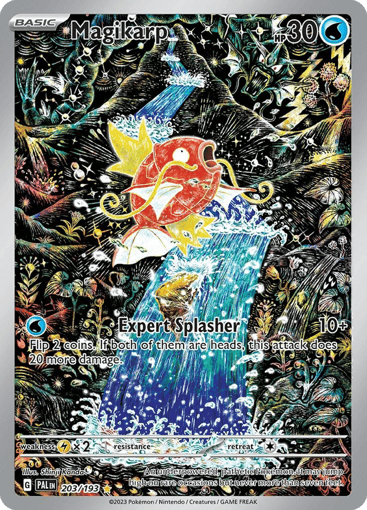
A modern illustration rare like Magikarp (Paldea Evolved) from Paldea Evolved is a good test piece: tilt it under a lamp and every scratch and print line on the texture shows. It sells for about $4,125 as a PSA 10 and $520 as a PSA 9, so those tiny surface marks are worth a lot of money.
PSA also says graders take eye appeal into account and can make a judgment call when a card sits right on the line between two grades. It's a small part of the process, but it explains why two cards that measure the same can get different grades. According to PSA's own walkthrough, every card is looked at by at least two graders before it ships.
If you want to grade your own cards before sending them, the process is in how to get a Pokémon card graded, and the wider picture of what happens inside a grading company is in how Pokémon card grading works.
Every grade, explained
These summaries follow PSA's definitions, with notes on what each grade looks like on a Pokémon card and what it tends to sell for.
PSA 10 Gem Mint
Four perfectly sharp corners, sharp focus, full original gloss and no staining. PSA allows a slight printing imperfection if it doesn't hurt the card's appeal. Centering must be within about 55/45 on the front and 75/25 on the back.
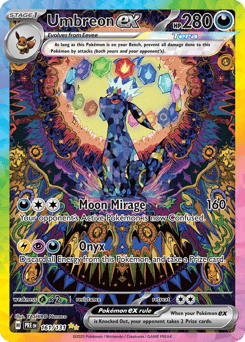
In practice, a 10 means you can't find a flaw without real effort. Many modern cards miss a 10 on centering alone, straight out of the pack. The payoff is large: across the cards we price, a PSA 10 typically sells for roughly three to five times a PSA 9 of the same card. Umbreon ex (Prismatic Evolutions) from Prismatic Evolutions sells for about $5,575 as a PSA 10 and about $1,350 as a PSA 9. Our PSA 10 Pokémon cards guide covers why the jump is so steep.
PSA 9 Mint
A superb card with just one minor flaw: a very slight wax stain on the back, a minor printing imperfection, or slightly off-white borders. Front centering can be about 60/40, back 90/10.
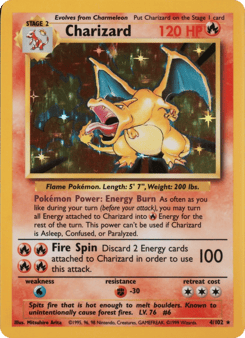
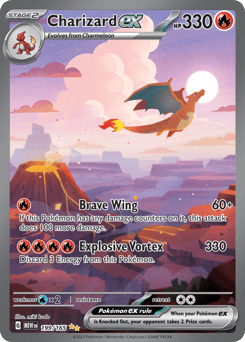
A 9 is a lovely card that isn't quite perfect, and the market prices it very differently depending on age. On vintage cards a 9 is a prize: an Unlimited Base Set Charizard (Base Set) sells for about $3,950 as a PSA 9. On many modern chase cards a 9 sells for about the same as a raw copy, because buyers see an ungraded card as a possible 10. Charizard ex (151) from 151 sells for about $414 raw and about $360 as a PSA 9.
PSA 8 Near Mint-Mint
Looks like a 9 at first glance. Up close it may show the slightest fraying at one or two corners, a very slight wax stain on the back, a minor printing imperfection or slightly off-white borders. Front centering about 65/35.
For vintage, an 8 is a strong grade and a common target for well-kept binder cards. A Base Set Charizard at PSA 8 sells for about $1,400, and Lugia (Neo Genesis) from Neo Genesis for about $1,263. For modern cards, an 8 usually sells below the raw price.
PSA 7 Near Mint
Slight surface wear visible on close inspection, maybe slight fraying on some corners. The picture can be slightly out of register, a minor printing blemish is allowed, and slight wax staining is fine on the back only. Most of the original gloss remains. Front centering about 70/30.
Is a 7 good? For a 25-year-old card, yes. PSA says roughly 80% of the vintage trading card game cards it has graded since 2018 came back at 7 or higher, so a 7 sits in the normal range for a card that was played with carefully. Blaine's Charizard (Gym Challenge) from Gym Challenge sells for about $600 as a PSA 7 and about $1,400 as a PSA 9. For a modern card, a 7 means something went wrong and usually sells for less than raw.
PSA 6 Excellent-Mint
Visible surface wear or a printing defect that doesn't spoil the overall look. A very light scratch may show on close inspection, corners may have slightly graduated fraying, and some gloss may be gone. Minor wax stain on the back, very slight notching on the edges and some off-white borders are allowed. Front centering 80/20.
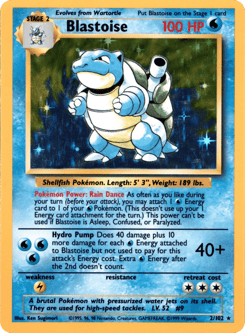
This is where childhood cards that lived in a binder, not a pocket, often land, especially from the Wizards of the Coast era. Blastoise (Base Set) from Base Set sells for about $156 as a PSA 6, against about $1,005 as a PSA 9.
PSA 5 Excellent
Very minor rounding of the corners is becoming visible. Surface wear or printing defects are more visible, there may be minor chipping on the edges, and loss of gloss is more obvious. Several light scratches may show on close inspection. Front centering 85/15.
A 5 is a card that has clearly been used but still looks good in a slab. Lugia (Neo Genesis) sells for about $466 as a PSA 5, which for a card like Lugia is still a meaningful amount of money.
PSA 4 Very Good-Excellent
Corners may be slightly rounded, and surface wear is noticeable but modest, with possible light scuffing or scratches. Some gloss remains, borders may be slightly off-white, and a light crease may be visible. Front centering 85/15.
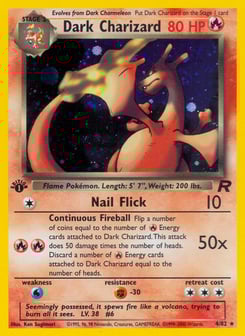
That last detail matters: a light crease can still be a 4. For key vintage cards, a creased copy in a PSA 4 slab has a real market. Dark Charizard (Team Rocket) from Team Rocket sells for about $186 as a PSA 4.
PSA 3 Very Good
Some rounding of the corners, apparent surface wear, possible scuffing or scratches, noticeable edge wear, much of the gloss gone, borders possibly yellowed. A crease may be visible, and there may be a slight stain on the front. Centering 90/10.
PSA 2 Good
Accelerated rounding of the corners, obvious surface wear, possible scratching, scuffing, light staining or chipping. Several creases are possible and the gloss may be completely gone. Centering 90/10.
Grades 3 and 2 mostly exist for cards people want in a slab regardless: key vintage holos, sentimental cards, and cards where authentication matters more than condition. Dark Charizard sells for about $135 as a PSA 3 and $108 as a PSA 2.
PSA 1.5 Fair and PSA 1 Poor
A PSA 1.5 shows extreme corner wear, advanced surface wear, possibly heavy creases and dirty borders, but it must be fully intact: no missing pieces, no peeled-off back layer, no missing corner. A PSA 1 has many of the same problems taken further. It may be missing one or two small pieces, have creasing that nearly breaks through the card, or be so dirty or discolored the card is hard to identify.
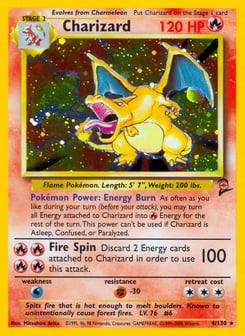
It sounds like nobody would pay for a 1. For the right card, people do: an Unlimited Base Set Charizard in PSA 1 sells for about $372. What buyers are paying for there is a guaranteed-genuine Charizard, not condition. The same goes for the Base Set 2 reprint, Charizard (Base Set 2), at about $243 in a PSA 1. Every version is on our Charizard page.
Half points
PSA can add a half point to cards that show high-end qualities within a grade between PSA 2 and PSA 9, so you'll see labels like 8.5 or 6.5. PSA says graders look at every attribute but focus clearly on centering. An 8.5 is best thought of as a very good 8; it usually sells between the 8 and the 9. Umbreon ex (Prismatic Evolutions) sells for about $1,113 as a PSA 8 and about $1,125 as a PSA 8.5.
Qualifiers: when a number comes with letters
Sometimes a grade comes with a qualifier, a set of letters that flags one specific problem. PSA lists these:
| Qualifier | Meaning |
|---|---|
| MK | Marks: writing, ink or pencil marks, or the dent left by writing |
| MC | Miscut: an unusual factory cut, parts of the card missing or part of another card visible |
| OC | Off center |
| ST | Staining |
| PD | Print defect |
| OF | Out of focus or out of register |
MK and MC are always applied when they fit. OC, ST, PD and OF are what PSA calls optional: a card with one of those problems either gets the qualifier or gets a lower numeric grade that reflects it.
On centering, PSA spells out a useful rule. Front centering minimums get 5% leeway for cards that grade PSA 7 or better. A card that meets every other PSA 9 requirement and measures 60/40 on the front automatically meets the 9 centering standard; one that measures 65/35 can still get a 9 if its eye appeal is good.
Our take as collectors: qualified grades are harder to sell and price. Most buyers look straight past the number to the letters. If a card has a centering issue, you'll usually get a cleaner resale from an honest lower grade than from a high number with "OC" beside it.
No grade: Authentic, Altered and the N codes
Not every card comes back with a number. PSA won't grade cards with evidence of trimming, recoloring, restoration or other tampering, or cards of questionable authenticity. Instead the card comes back in a sleeve with a code:
| Code | Reason | Fee charged? |
|---|---|---|
| N1 | Evidence of trimming | Yes |
| N2 | Evidence of restoration | Yes |
| N3 | Evidence of recoloring | Yes |
| N4 | Questionable authenticity | Yes |
| N5 | Altered stock (pressing, scratch removal, added gloss, cleaning sprays or wax) | Yes |
| N6 | Below minimum size | No |
| N7 | Evidence of cleaning | Yes |
| N8 | Miscut | No |
| N9 | Don't grade (an item PSA doesn't grade) | No |
Two related label outcomes exist. Authentic means PSA certifies the card is genuine without giving a grade. Authentic Altered (AA) means it's genuine but has been altered, and it's only used when you request it on the submission form.
The N5 and N7 codes are why you should never wipe cards with sprays or try to press out a bend before submitting. A dry microfiber cloth is the limit. If you're not sure a card is real, read how to tell if Pokémon cards are fake before paying a fee to find out.
What each grade is worth
A grade only matters for what it does to the price, and the curve is very different for old and new cards. Here's one vintage card across the whole scale, with today's sold prices:
| PSA grade | Dark Charizard (Team Rocket) |
|---|---|
| 10 | about $10,800 |
| 9 | about $875 |
| 8.5 | about $550 |
| 8 | about $507 |
| 7 | about $375 |
| 6 | about $250 |
| 5 | about $215 |
| 4 | about $186 |
| 3 | about $135 |
| 2 | about $108 |
| Raw, near mint | about $327 |
Three things to take from a ladder like this. The top of the scale is a cliff: the gap between 9 and 10 dwarfs every other step. The middle is gentle, so an 8 and a 7 are closer than the numbers suggest. And the bottom never hits zero on a card people want, because a slab guarantees it's real.
Modern cards look different. Charizard ex (151) sells for about $1,425 as a PSA 10, $360 as a PSA 9 and $348 as a PSA 8, against $414 raw. Below a 10, modern grades bunch together near or below the raw price. PSA's own figures help explain why: it says about 90% of modern trading card game cards it has graded since 2018 came back at 8 or higher, so an 8 or 9 on a modern card is ordinary.
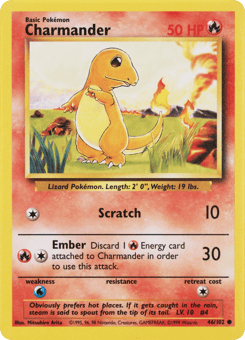
For a cheap vintage common, the curve is steep at the top and flat below. A Base Set Charmander (Base Set) sells for about $255 as a PSA 10, $100 as a PSA 9 and $35.72 as a PSA 8.
Whether a given grade is worth paying for depends on your card; our guide is it worth grading Pokémon cards walks through the maths, and PSA grading cost lists every fee. To browse graded prices across the hobby, the most valuable Pokémon cards ranking and our market page are good starting points.
How PSA's scale compares with CGC, Beckett and TAG
All four major graders use a 10-point scale, but they slice the top differently.
- CGC runs from Poor 1 to Pristine 10, with half points throughout (Mint+ 9.5, NM/Mint+ 8.5 and so on). Its top grade, Pristine 10, is a card CGC describes as virtually flawless to the naked eye. A Gem Mint 10 at CGC is a 10 overall that falls short of Pristine on one criterion.
- Beckett (BGS) gives four subgrades, for centering, corners, edges and surface, alongside the overall grade. A card that scores 10 on all four gets the Black Label.
- TAG uses the 1–10 scale plus a TAG Score out of 1,000 and a report that maps each defect.
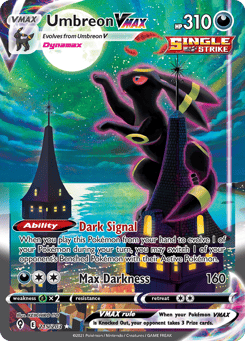
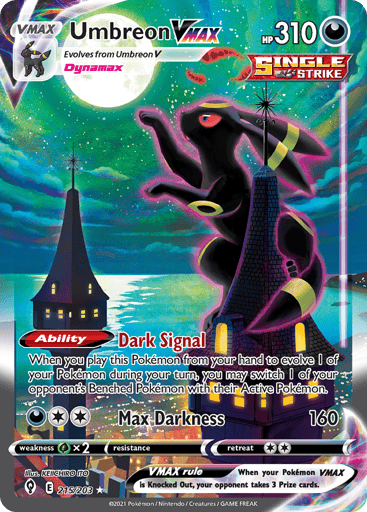
The numbers don't translate one-to-one, and the market doesn't treat them as equal. Umbreon VMAX (Evolving Skies) from Evolving Skies sells for about $4,050 as a PSA 10; its CGC and Beckett prices sit on the same card page, and the gap between labels is plain to see.
In our sold data, a PSA 10 sold for more than a CGC 10 of the same card on about 97% of the cards where we have enough sales of both. If you're choosing where to send a card, check both prices on its page first.