What grading does (and doesn't) do
A grading company like PSA or CGC checks that the card is genuine, gives it a condition grade from 1 to 10, and seals it in a tamper-evident plastic case with a label. That does three useful things:
- It settles the condition argument. A buyer doesn't have to trust your photos or your idea of "near mint". The number is on the label.
- It authenticates the card. That matters most for expensive vintage cards, where fakes and altered cards circulate. Our guide to spotting fake Pokémon cards covers what graders catch.
- It makes the card easier to sell. Graded cards have their own sold-price history at every grade, so pricing one is straightforward.
What grading doesn't do is make a card better. A card that comes back a PSA 7 was a PSA 7 before you sent it; you've paid to find out, and to make it official. If you want the full walk-through of what happens inside the grading room, read how Pokémon card grading works.
The short answer, card by card
- Bulk commons, uncommons and plain modern holos: no. About two in three cards we have solid prices for sell for under $5 raw, and no grading fee on the market leaves room for profit on those.
- Modern chase cards (illustration rares, special illustration rares, alt arts): only if the card is genuinely clean and the PSA 10 price is several times the raw price. You're paying for a chance at a 10.
- Vintage holos from the Wizards era: usually yes, if the card is in decent shape. Even mid grades often sell above what you'd get raw.
- Clean vintage commons of popular Pokémon: sometimes. A high grade can turn a $2 card into a real one, but anything less than a 9 usually doesn't cover the fee.
- Cards you'll never sell: your call. Grading for your own enjoyment is fine; just don't count it as an investment.
What our sales data says
We looked at every card where we have enough recorded sales to price the raw card, the PSA 9 and the PSA 10, and asked a simple question: after a $60 grading fee, does the graded card sell for more than the raw one? Shipping and selling fees are left out, which flatters grading.
| Era | PSA 10 beats raw + fee | PSA 9 beats raw + fee |
|---|---|---|
| Scarlet & Violet | about 3 in 5 cards | about 1 in 100 |
| Sword & Shield | about half | almost never |
| Mega Evolution | just under half | about 1 in 100 |
| Sun & Moon | nearly 9 in 10 | fewer than 1 in 10 |
| EX | about 4 in 5 | about half |
| Wizards of the Coast | about 4 in 5 | about a third |
Two things jump out. For modern cards, a PSA 9 almost never pays for itself; the whole case rests on getting a 10. For older cards, a 9 pays surprisingly often, because clean copies of 20-year-old cards are scarce and buyers pay for them.
These figures are also flattering in another way. They only include cards that get graded often enough to have prices at both grades, which means the cards people already thought were worth sending. The typical card in a shoebox never makes this table at all.
Modern cards: you're paying for a shot at a 10
Take three cards from recent sets.
Charizard ex (151) from 151 sells for about $414 raw, $360 as a PSA 9 and $1,425 as a PSA 10. Look at the first two numbers. When a PSA 9 sells for less than a raw copy, a 9 doesn't just fail to make money, it loses you the card's raw value on top of the fee. That's common with modern chase cards: buyers treat a raw near-mint copy as a possible 10, and a slab marked 9 as a card that definitely isn't.
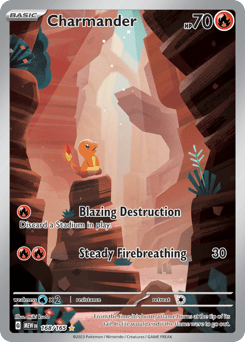
Charmander (151), an illustration rare from the same set, shows the better shape. It sells for about $97.07 raw, $120 as a 9 and $649 as a 10. A 9 adds a little over raw but doesn't cover the fee. The 10 is a big multiple. Cards with that profile are the ones worth sending, provided the copy in your hand survives a close look.
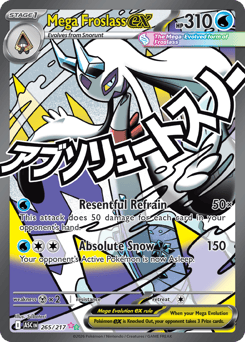
Then there's the card that's never worth it. Mega Froslass ex (Ascended Heroes) from Ascended Heroes sells for about $9.49 raw and $67.00 as a PSA 10. Take a $59.99 Standard fee off that PSA 10 price and a perfect grade leaves you roughly where you started. Plenty of shiny, full-art modern cards look like this.
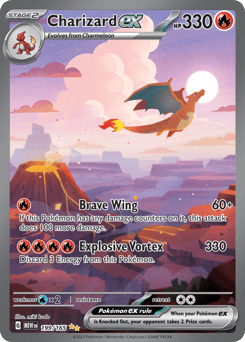
How likely is a 10? Nobody publishes gem rates for your exact card, and centering alone knocks a lot of modern cards out. PSA's definition of a Gem Mint 10 allows front centering of about 55/45 at worst. Hold your card next to a ruler, compare the left and right borders, and be honest. If one border is visibly wider, you're grading a 9 at best, and on cards like the 151 Charizard ex that loses money. The PSA grading scale explained goes through exactly what each grade allows.
Vintage cards: a 9 can pay, and so can a 6
Older cards work differently because the raw market is full of worn copies. PSA says that about 80% of the vintage trading card game cards it has graded since 2018 came back at PSA 7 or higher, while about 90% of modern TCG cards came back 8 or higher. Vintage graders expect wear. Buyers do too, and they pay well for the copies that don't have much.
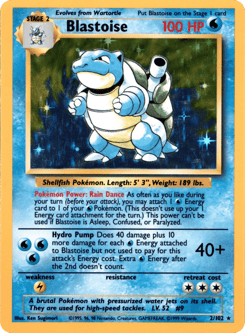
Blastoise (Base Set) from Base Set is a good example. It sells for about $158 raw, about $156 as a PSA 6, $408 as a PSA 8 and $1,005 as a PSA 9. A clean Blastoise that grades 8 or 9 clears the fee easily. A played one that grades 6 sells for something close to the raw near-mint price, so grading it only makes sense if your copy was never near mint in the first place, which brings us to the catch.
Our raw prices are for a near-mint ungraded copy (our pricing page explains why), and most vintage cards in circulation aren't near mint. Lugia (Neo Genesis) from Neo Genesis sells for about $598 raw near mint, but about $543 as a PSA 6 and $466 as a PSA 5. If your Lugia has soft corners, it isn't a near-mint card and it won't sell for the near-mint price. Grading it might still be the best way to sell it, because a PSA 6 slab has a clear market and a "lightly played?" raw listing doesn't.
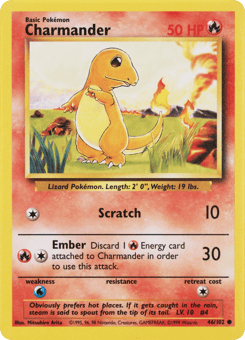
Popular commons can surprise you. A Base Set Charmander (Base Set) sells for about $2.25 raw, but about $100 as a PSA 9 and $255 as a PSA 10. As a PSA 8 it's about $35.72, which doesn't cover the fee. So a Charmander is only worth sending if it's the sharp, well-centered copy you've been saving, not the one from the rubber-banded stack.
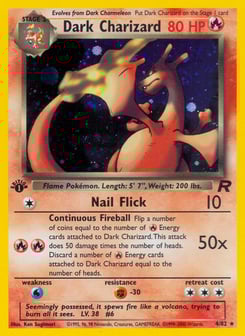
The same shape shows up across the Team Rocket and Gym sets. Dark Charizard (Team Rocket) sells for about $327 raw against about $507 as a PSA 8, and Blaine's Charizard (Gym Challenge) for about $582 raw against about $790 as a PSA 8. On cards like these an 8 is a perfectly good result, which is why vintage holos in decent shape are the safest cards to grade.
What grading costs (as of September 2026)
As of September 2026, PSA's cheapest open service is Standard at $59.99 per card for cards worth up to $1,000 after grading, with an estimated 90–100 business days. Priority is $79.99 (up to $1,500) and Express is $199 (up to $2,500). PSA's cheaper Value tiers have been paused since June 2, 2026. CGC's Bulk tier is $17 a card with a 25-card minimum and a $500 value cap, and its Economy tier is $20 for cards up to $1,000.
The fee isn't the whole bill:
- Upcharges. You pick a service level based on what the card will be worth after grading. If it comes back worth more than your level's cap, PSA moves it up a tier and charges you the difference.
- Shipping both ways. PSA doesn't insure your package on the way in, so insure it yourself if the cards matter. Return shipping is charged on top.
- Selling fees. If you're selling, the marketplace takes its cut of the slab price, not the raw price.
- Time. Four or five months is a long time for modern prices. A card can fall while it's in the queue.
Every fee, tier and turnaround is laid out in PSA grading cost, along with CGC, Beckett and TAG.
Run the numbers on your own card
Here's the check we'd do before sending anything.
- Look up three prices: raw, PSA 9 and PSA 10. Search the card on Ultraball (the price checker guide shows how) and note all three.
- Grade it yourself, harshly. Check centering against a ruler, then the corners, edges and surface under a bright light. Decide which grade is realistic. If you're unsure, assume one grade lower than your first guess.
- Add up the costs. Fee, shipping both ways, a possible upcharge, and selling fees if you'll sell.
- Compare. Take the price at your realistic grade, subtract costs, and compare with the raw price. If the gap is small, keep it raw. If only a 10 makes it work, you're betting, so size the bet accordingly.
A quick rule we like: if the PSA 9 price alone clears raw plus costs, grading is sound. If only the PSA 10 does, grade only the copies that are genuinely clean. If neither does, don't grade.
To find cards where the upside is biggest, the table of cards where a PSA 10 pays the most ranks them by the gap between raw and PSA 10, and our PSA 10 Pokémon cards guide explains why that gap is so steep. For a quick, free pre-check of centering and surface, AI card grading apps can help, though none replaces your own eyes.
Good reasons to grade that aren't about profit
Money isn't the only reason, and it's fine to grade for these as long as you know that's what you're doing.
- Selling an expensive card. On a card worth hundreds or thousands, buyers want certainty. A slab can make the sale quicker and safer even if it adds little to the price. Our guide on how to sell Pokémon cards covers raw versus graded listings.
- Authentication. If you've bought a high-value vintage card raw, grading is the cheapest insurance against owning a fake or a trimmed card. PSA won't give a numeric grade to cards showing trimming, recoloring or restoration.
- Sentiment. Your first Charizard, the card you pulled with a sibling, a set you finished as a kid. Grade it if the slab makes you happy.
An Unlimited Charizard (Base Set) is the classic example: plenty of people grade theirs knowing they'll never sell it.

Grading purely "for protection" is harder to justify. A penny sleeve and a toploader protect a $10 card perfectly well for pennies, and our guide to the best Pokémon card binders covers the rest.
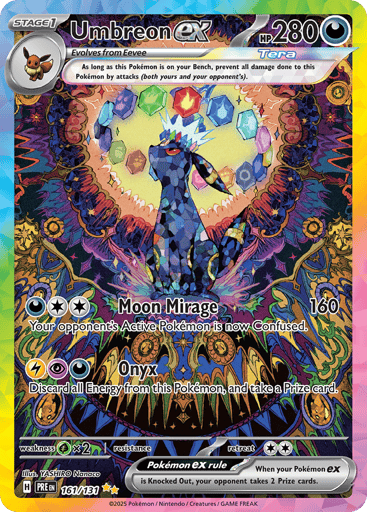
The modern card that tempts the most people right now is probably Umbreon ex (Prismatic Evolutions) from Prismatic Evolutions. It sells for about $1,528 raw, $1,350 as a PSA 9 and $5,575 as a PSA 10. Same shape as the 151 Charizard: a 9 doesn't help you, a 10 changes everything. Check it against the other chase cards on the most valuable Umbreon cards list and our market movers page before you commit.