Price them before you pick a place
You can't judge any offer until you know what the card sells for. Search each card on Ultraball to see its ungraded price and its PSA 9 and PSA 10 prices from recorded sold listings. Match the set and card number exactly; our price checker guide shows how to read them.
Then sort. Across every English card we have good sales data for, nearly half sell for under a dollar near mint. Those cards don't justify a listing each, anywhere. The cards worth $20 or more are the ones where the choice of platform really matters. How to sell Pokémon cards covers the sorting, listing and shipping in full.
Where each kind of card sells best
| What you're selling | Best place | Why |
|---|---|---|
| Bulk commons and uncommons | Bulk buyer, local shop, or big lots | Fees and postage kill single sales under a dollar |
| Raw singles, about $1 to $200 | TCGplayer | Buyers search by exact card and condition |
| Raw cards $200 and up | eBay | Largest audience; Authenticity Guarantee at $200+ |
| Graded slabs | eBay, or an auction house for top cards | Graded buyers shop there; cert numbers do the trust work |
| Vintage holos and 1st Editions | eBay or an auction house | Collectors with money look there first |
| A whole collection, fast | Local shop or a card show dealer | One deal, cash today, below market |
| Anything, if you like being on camera | Whatnot | Live auctions reward personality and volume |
Online marketplaces
This section gives each platform in brief. For the head-to-head version, with fees worked through on $20, $50, $500 and $2,000 sales, see the best place to sell Pokémon cards online.
eBay
eBay has the biggest pool of buyers for Pokémon cards and is where graded cards and vintage get the most eyes. It's also the most expensive major option. As of September 2026, eBay's final value fee for collectible card games is 13.25% of the total sale up to $7,500 per item, and 2.35% on any portion above that. The total includes shipping and sales tax, not just the card price. There's also a per-order fee of $0.30 on orders of $10 or less and $0.40 above that. Individual sellers get up to 250 listings a month without an insertion fee.
Two eBay features matter for cards specifically. Single raw and graded cards selling for $200 or more are eligible for the Authenticity Guarantee, where the card goes to an authenticator before the buyer gets it. And the eBay standard envelope gives you a cheap tracked label for low-value cards in letter mail.
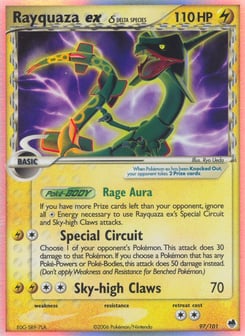
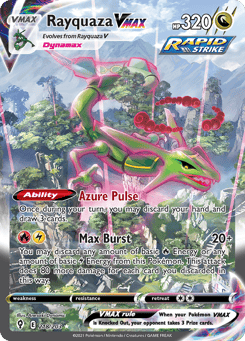
eBay suits cards like the Dragon Frontiers Rayquaza ex δ (Dragon Frontiers), about $417 raw and about $18,204 in a PSA 10, or the alternate-art Rayquaza VMAX (Evolving Skies) from Evolving Skies, about $1,132 raw. Buyers of cards at that level want to see real photos and your feedback score, and eBay is where they're used to finding both.
TCGplayer
TCGplayer is a marketplace built around individual cards. Buyers pick the exact card and condition, then choose from sellers' listings, so you're competing mostly on price and condition. That makes it efficient for raw singles and the natural home for cards from a dollar up to a few hundred.
As of September 2026, most sellers (TCGplayer's Level 1 to 4 accounts) pay a 10.75% commission on the order subtotal, capped at $75 per card sold, plus a transaction fee of 2.5% of the order total and $0.30. TCGplayer raised the commission from 10.25% and the cap from $50 on February 10, 2026, so older guides quoting lower numbers are out of date. That $75 cap makes TCGplayer surprisingly cheap on expensive raw cards, which the online comparison works through.
The trade-off: TCGplayer buyers expect accurate condition grading and fast, clean shipping, and you're one of many sellers listing the same card. It's a system for moving a lot of cards efficiently, not for showing off one special card.
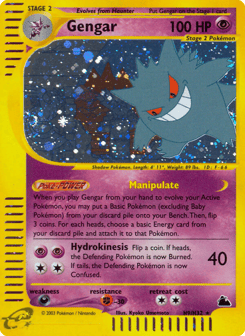
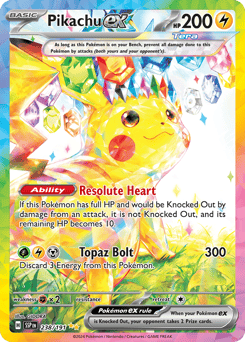
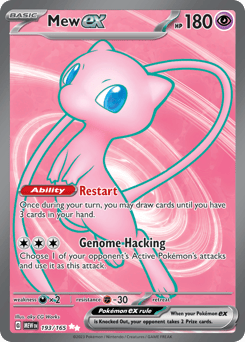
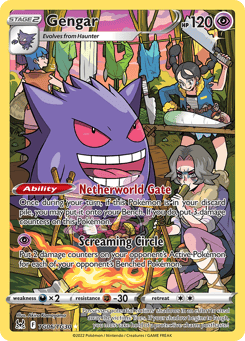
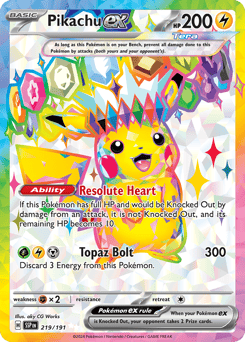
This is the price band where TCGplayer shines. Ultra rares and trainer gallery cards like Mew ex (151) (about $35.99), Gengar (Lost Origin Trainer Gallery) (about $59.99) and Pikachu ex (Surging Sparks) (about $30.94) sell steadily there, because buyers are looking for exactly that card in exactly that condition and don't need to be persuaded by photos.
Whatnot
Whatnot is live selling: you host a stream and auction cards one by one while buyers watch and bid. It rewards sellers who show up regularly and have a steady supply of cards. For a one-off sale of a few cards, it's more effort than it's worth.
Whatnot changed its fees on September 21, 2026. US sellers of trading card games now pay 8% commission on the sale price (shipping and tax aren't included) until they reach $15,000 in sales over a four-week period, after which the rate drops in tiers. Payment processing is separate at 2.9% of the order total plus $0.30. Whatnot is also running a promotion with no commission on the portion of a trading card sale above $1,500, which it says can end at any time.
Mercari
Mercari is a general marketplace with a casual audience. Listing is free, and as of September 2026 the seller pays a flat 10% of the item price plus buyer-paid shipping when it sells. Buyers pay a separate 3.6% buyer protection fee on top. It works for lots, sealed product and mid-range cards; serious collectors of high-end singles tend to shop elsewhere, so don't expect top prices for a premium card.
Facebook Marketplace and collector groups
Local Facebook Marketplace listings and Pokémon buy-sell groups are where a lot of person-to-person trading happens. Meet in person and pay in cash, and no platform takes a cut, because no money goes through one. That's the appeal.
The risks are real, though. Groups have their own rules, reputations are built on screenshots of past deals, and "pay me outside the platform" is the start of most scams. If you sell to someone you've never met, use a payment method with seller protection, ship with tracking, and don't let the card go until the payment has cleared. Meeting in person, somewhere public and busy, is the safest version.
Selling in person
Local card shops
A local game or card shop is the fastest way to turn cards into money. Walk in, get an offer, walk out paid. Shops have to resell what they buy, so offers come in below market price, and many offer more in store credit than in cash. That's fair on their side; they carry the risk and the time.
To get a good deal:
- Bring your numbers. Know the recorded sold prices for your best cards. A shop owner respects a seller who's done the homework.
- Sort first. Present bulk separately from your good cards. Mixing them invites a single low offer for the whole pile.
- Call ahead. Ask whether they're buying, and what. Some shops only buy singles or sealed product; some are overstocked on modern cards.
- Use the credit if you'll spend it. If you're buying cards anyway, store credit usually stretches further than cash.
Card shows
Card shows put a room full of dealers in one place, which means competition for your cards. Walk the floor, get several offers on anything valuable, and don't take the first one. Dealers at shows move fast and usually pay in cash or by instant transfer.
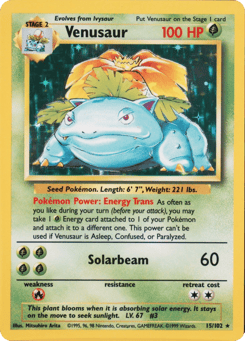
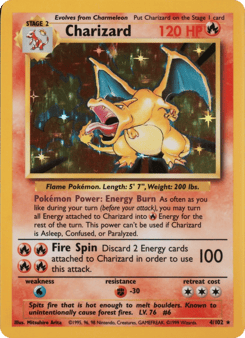
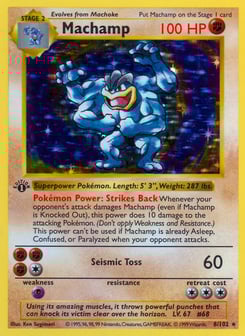
Bring cards sleeved and in toploaders, sorted by value, with a list of recent sold prices on your phone. Graded cards are the easiest thing to sell at a show because the dealer doesn't have to judge condition. Raw vintage takes longer, because every dealer will check it under a light. Base Set holos like Venusaur (Base Set), Charizard (Base Set) and Machamp (Base Set) (about $72.91 raw) get the full treatment: corners, edges, the holo surface, and whether the copy is 1st Edition, Shadowless or Unlimited. Knowing which you have before you walk in saves an awkward conversation.
GameStop
GameStop's graded-card page says participating stores take PSA-graded cards in trade for cash or store credit, for cards graded 8, 9 or 10 in PSA's current Lighthouse label, up to a maximum of $1,500. It's quick and local, but it's a trade-in price, not a market price. Check the terms with your store before you go, since programs like this change.
Bulk buyers and buylists
If you have thousands of commons and uncommons, sell them as bulk. Bulk buyers, including many local shops and mail-in buylists, pay by count and by rarity category rather than by individual card value. Rates vary widely between buyers, so get two or three quotes.
Before any card goes in a bulk box, pull out:
- Holos, reverse holos and anything with a special rarity like an illustration rare or a secret rare.
- Older cards. A Wizards-era uncommon can be worth more than a whole row of modern commons.
- Popular Pokémon. Charizard, Pikachu, Umbreon and the other Eeveelutions, and Gengar sell above their rarity.
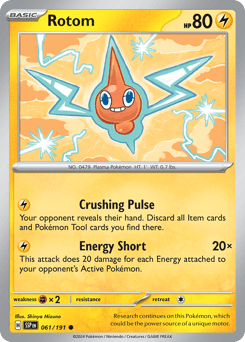
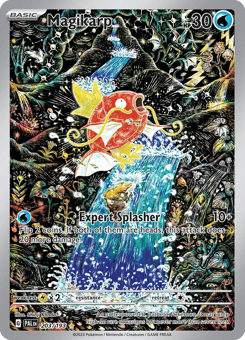
The contrast is stark. Rotom (Surging Sparks) from Surging Sparks sells for about $0.11, which is typical of recent commons. Magikarp (Paldea Evolved) from Paldea Evolved, which came out of the same kind of pack, sells for about $375.
Auction houses for high-end cards
For cards worth thousands, especially high-grade vintage, specialist auction houses and consignment services are worth a call. Goldin and Fanatics Collect both sell graded Pokémon cards and reach buyers who spend at that level. Each sets its own consignment terms and buyer's premiums, so ask for them in writing and compare the net amount you'd receive, not the headline hammer price.
PSA also offers a path of its own. Its app lets you vault graded cards with PSA and list them through the PSA eBay store, and it advertises eligible zero-fee offers from PSA's partners during grading and vaulting.
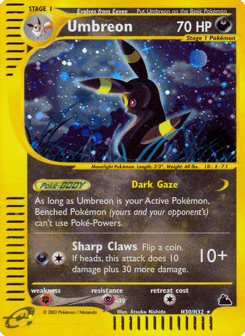
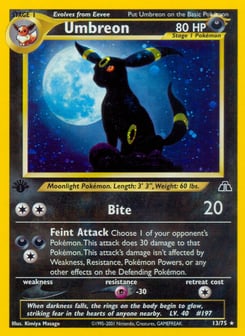
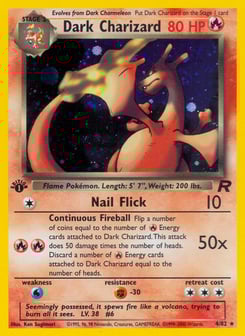
Cards that belong in this tier include PSA 10 copies of Wizards and e-Card era holos. Umbreon (Neo Discovery) sells for about $669 raw but about $26,099 as a PSA 10. The 1st Edition Dark Charizard (Team Rocket) from Team Rocket is about $10,800 in a PSA 10. Our most valuable Pokémon cards ranking and the top recent sales show which cards are trading at that level now.
Staying safe, whichever you choose
Most selling problems come from a short list of situations, and they're the same online and off.
- Keep payment on the platform. Buyers who want to pay you directly to save fees are removing your protection, not theirs. eBay's own fee page warns it can still charge the final value fee when contact details are swapped to trade outside eBay.
- Photograph what you ship. Close-ups of your card's specific flaws, plus a short video of you packing it, answer nearly every "not as described" or "wrong card" claim.
- Ship to the order address only. A request to send to a different address is a red flag.
- For in-person deals, meet somewhere public, count cash before handing over the card, and don't accept payment apps you can't verify on the spot.
- Don't send cards on approval. "Send it and I'll pay when it arrives" ends badly more often than not.
If a deal feels rushed or too good, walk away. There's always another buyer for a card that's priced right.
Selling sealed product
Booster boxes, elite trainer boxes and packs are a separate market from singles. eBay and TCGplayer both handle sealed product, and local shops often buy it more readily than singles because it's easy to resell. Buyers worry about resealed packs, so photograph the factory wrap from every side, including the seams, and never sell anything as sealed that you've opened and rewrapped. For older sealed product, look up recent sold prices for the exact item, since prices for the same set can differ a lot between a booster box and a single blister pack.
Fees at a glance (as of September 2026)
These are the standard seller fees for trading cards in the US, taken from each marketplace's own fee page in September 2026. They change, so check before you list.
| Where | Commission | Payment / order fees | Notes |
|---|---|---|---|
| eBay | 13.25% of total sale up to $7,500; 2.35% above | $0.30 per order ($10 or less), $0.40 (over $10) | Total includes shipping and tax; Authenticity Guarantee at $200+ |
| TCGplayer (Level 1–4) | 10.75% of subtotal, capped at $75 per card | 2.5% of order total + $0.30 | Pro and Direct sellers pay different rates |
| Whatnot (US, TCG) | 8% of sale price, lower in higher tiers | 2.9% of order total + $0.30 | 0% commission above $1,500 on a sale (promotion) |
| Mercari | 10% of item price plus buyer-paid shipping | None for the seller | Buyer pays a 3.6% protection fee |
| Facebook, in person | None when you're paid in cash | None | You carry all the risk |
| Local shop, show dealer | No fee, but offers are below market | None | Credit often beats cash |
What we'd do with a typical collection
Say you've found a binder from 2000 and a couple of shoeboxes of newer cards. Here's the order we'd work in.
- Look up everything that shines. Holos, reverse holos, full arts and anything with a rarity symbol that isn't a plain circle, diamond or star. Note the price of each.
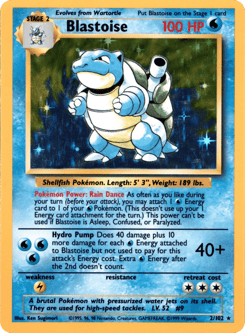
- List the top few individually on eBay. Anything around $100 or more raw, and any graded card, gets its own listing with proper photos. The Base Set holos are prime candidates: Blastoise (Base Set) sells for about $158 raw.
- Put mid-value singles on TCGplayer, or in small themed lots on eBay if you don't want to set up a seller account.
- Consider grading only the cards with a big PSA 10 premium and condition to match. Is it worth grading Pokémon cards helps you decide.
- Sell the rest as bulk to a shop or bulk buyer, after one last pass for anything you missed.
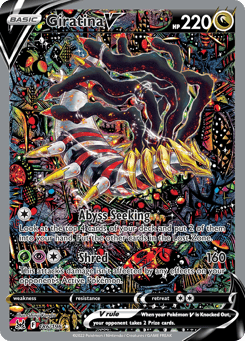
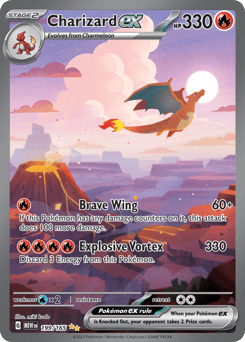
The cards in the middle of that list, like Giratina V (Lost Origin) (about $1,003) or Charizard ex (151) (about $414), are where your choice of platform makes the biggest difference in dollars. Take ten minutes to compare net payouts before listing them.