Step 1: find what each card actually sells for
Start with sold prices, never asking prices. Anyone can list a common for $50. What matters is what buyers paid, for your exact card, in your card's condition.
Three things have to match before a price means anything:
- The exact card. Same set, same number. There are dozens of Charizards. The set symbol and the number at the bottom corner (like 215/203) tell you which one you have. Our price checker guide shows where to find both.
- The printing. A 1st Edition stamp or a Shadowless Base Set holo can be worth several times the Unlimited copy. See 1st Edition vs Shadowless vs Unlimited if you have early Wizards cards.
- The condition. Our ungraded prices are for near-mint copies. Whitened edges, a crease or a scratched holo take a card well below that. Be honest with yourself here, because buyers will be.
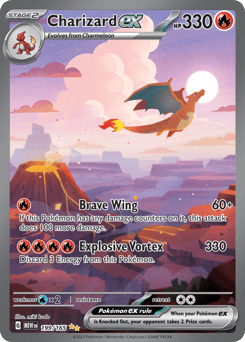
Charizard shows why. Charizard (Base Set) from the Base Set, Charizard ex (Obsidian Flames) from Obsidian Flames and Charizard ex (Paldean Fates) from Paldean Fates are all "a Charizard", and they sell for very different money: about $118 for the Obsidian Flames card against about $276 for the Paldean Fates one, with the Base Set holo depending heavily on printing and condition. Every other Charizard card has its own price too.
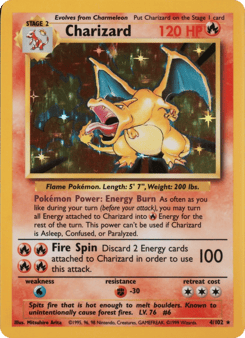
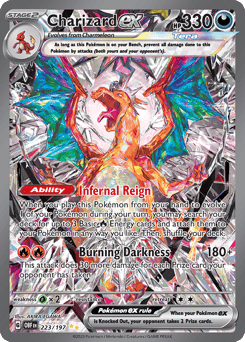
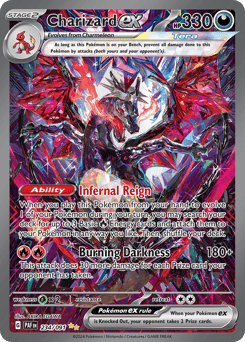
Search the card on Ultraball and you'll see its ungraded price and its PSA 9 and PSA 10 prices, all built from recorded sold listings and refreshed daily. How we price cards explains exactly what goes into each number. If you have a whole stack to get through, how much are my Pokémon cards worth walks through doing it quickly.
Step 2: sort into bulk, mid and chase piles
Most of any collection is bulk. Across every English card we have solid sales data for, nearly half sell for under a dollar in near-mint condition. For commons and uncommons from the Sword & Shield and Scarlet & Violet eras, it's about 99%. That isn't a knock on your collection. Modern sets are printed in huge numbers.
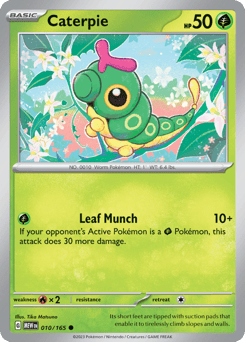
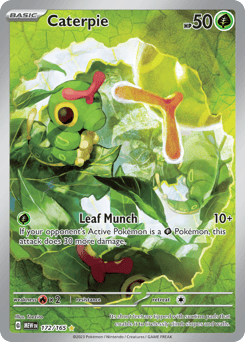
The same Pokémon in the same set can land in different piles. Caterpie (151) from 151 sells for about $0.18. The illustration rare Caterpie (151) from the same set sells for about $18.95. Check the number, not just the name.
A sorting system that works:
- Bulk (under $1). Commons, uncommons, plain rares and most reverse holos from recent sets. Sell by the lot or to a bulk buyer. Don't list them one by one; the fee and postage eat the sale.
- Mid ($1 to $20). Sell in small lots grouped by set or Pokémon, or singly on TCGplayer, which is built for cheap singles.
- Worth a listing of its own ($20 and up). These get their own photos and their own listing.
- Big cards (a few hundred dollars and up). Think about grading, authentication and the platform more carefully. Steps 3 and 4 matter most here.
Step 3: decide raw or graded
Grading only makes money when the graded price beats the raw price by more than the grading fee, shipping both ways, and the months the card is away. PSA's cheapest open tier is $59.99 a card as of September 2026, before shipping. So a card that sells for $15 raw and $60 in a PSA 10 is not a grading candidate, however clean it looks.
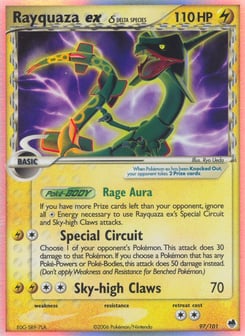
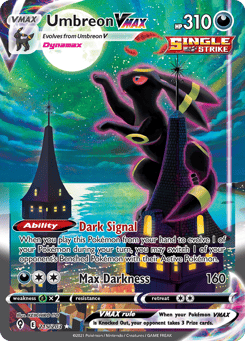
Where it does pay, it can pay a lot. Rayquaza ex δ (Dragon Frontiers) from Dragon Frontiers sells for about $417 raw and about $18,204 in a PSA 10. Umbreon VMAX (Evolving Skies) from Evolving Skies is about $2,200 raw against $4,050 graded 10. Both prices assume a truly clean card, and most copies aren't. The grading-upside table in our PSA cost guide does the maths across many cards, and is it worth grading Pokémon cards covers the judgment side.
Two rules we'd stick to. Don't grade a card to sell it unless you'd be happy getting a 9 back, because a 9 is the likely result for most cards that look perfect to the naked eye. And if a card already sits in a PSA, CGC or Beckett slab, sell it as it is. Cracking a slab to resubmit is a gamble, not a selling strategy.
Step 4: pick where to sell
Each platform suits a different kind of card. The short version:
- eBay for anything valuable, graded cards, and vintage. The biggest buyer pool, and the highest fees.
- TCGplayer for raw singles from roughly a dollar to a few hundred. Buyers there search by exact card and condition.
- Whatnot if you're willing to sell live on camera.
- Mercari and Facebook groups for casual sales and lots.
- A local card shop for speed. You'll get less than market, but you'll get it today.
Fees decide more than people expect. As of September 2026, eBay charges 13.25% of the total sale (including shipping and tax) plus $0.40 on orders over $10 for trading cards. TCGplayer charges most sellers 10.75% commission, capped at $75 per card, plus 2.5% and $0.30 for payment processing. Whatnot charges 8% commission on the sale price for trading card games plus 2.9% and $0.30 processing. Mercari charges a flat 10% of the item price and buyer-paid shipping.
We compare these properly, with worked examples on real sale prices, in the best place to sell Pokémon cards online. For shops, card shows, buylists and auction houses as well, read where to sell Pokémon cards.
Step 5: photos and the listing
The listing is where most sellers lose money. Buyers can't hold the card, so your photos are the card.
Photos. Take your own, never stock images. Shoot the front and the back, flat and square, on a plain dark background in soft daylight. Add close-ups of all four corners and any flaw you know about. For holos, add one shot tilted under a lamp so buyers can see the surface. If the card is sleeved, take it out for the photos; sleeves hide scratches and buyers know it.
Title. Put in what buyers type: Pokémon name, card number, set, variant and condition. "Umbreon VMAX 215/203 Evolving Skies Alt Art NM" beats "RARE Umbreon!! Mint!!!" every time. Add "1st Edition", "Shadowless", "Reverse Holo" or the grade and company when they apply.
Condition. Use the standard ungraded terms: Near Mint, Lightly Played, Moderately Played, Heavily Played, Damaged. If you're torn between two, pick the lower one. A buyer who gets a card better than described leaves feedback; one who gets a card worse than described opens a return.
Description. One or two plain sentences. Mention anything a buyer would want to know: a soft corner, light whitening on the back, a print line. Honesty here saves you disputes later.
Step 6: price it
Use the recent sold prices from Step 1 as your anchor, not the highest sale you can find. That record sale was probably a better copy or a lucky auction.
- Fixed price works for most cards. List at or a little above recent sales, and accept reasonable offers.
- Auctions work for cards with lots of demand, where several buyers will chase them, like a sought-after vintage holo or a fresh modern chase card. Start low only if you're comfortable with it selling low.
- Lots of bulk sell on count and on what's inside. Name the best cards in the title.
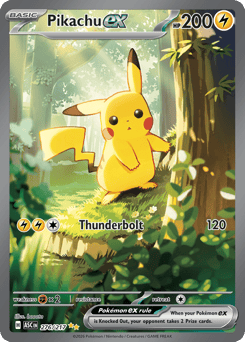
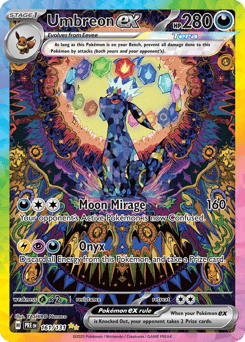
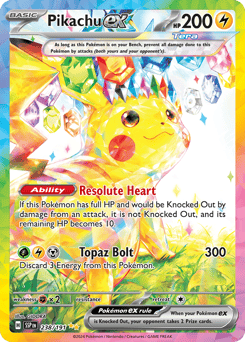
If a fixed-price listing hasn't sold in a couple of weeks, the price is the problem more often than the photos. And check the price again before listing a card that's been sitting in a box: modern cards in particular move. Our market page shows what's trading now, and top recent sales shows where the high end is landing. New chase cards are the classic example: Umbreon ex (Prismatic Evolutions) sells for about $1,528 and Pikachu ex (Surging Sparks) for about $285 today, and prices on cards this new can shift a lot in a few months.
Step 7: pack and ship
Almost every "arrived damaged" story comes down to packing. For a single card:
- Put the card in a soft penny sleeve.
- Slide the sleeve into a rigid toploader. A small strip of painter's tape over the top keeps it from sliding out; avoid regular tape on the toploader, which buyers hate peeling.
- Sandwich the toploader between two pieces of cardboard, or put it in a team bag, so it can't bend.
- Use a bubble mailer with tracking for anything worth more than a few dollars.
For cheap cards sold on eBay, the eBay standard envelope is worth knowing about. As of September 2026, eBay lists labels at $0.78 for 1 oz up to $1.36 for 3 oz, with tracking included, for letter-size envelopes up to a quarter inch thick. That fits a sleeved, toploadered card in cardboard.
For valuable cards, pay for signature confirmation and insurance, and film yourself packing the card. It takes two minutes and settles most disputes. On eBay, single raw and graded cards selling for $200 or more are eligible for eBay's Authenticity Guarantee, which routes the card through an authenticator before it reaches the buyer. That protects you from "this isn't the card I sent" claims as much as it protects the buyer.
Avoiding the common scams
A few patterns show up again and again:
- Moving off the platform. A buyer asks to pay you directly to "save on fees". You lose every protection the marketplace gives you, and eBay's fee page says it can charge you the final value fee anyway if you swap contact details to trade outside eBay.
- Unprotected payments. In person, take cash or a payment you can verify before the card leaves your hand. Online, use the marketplace's checkout.
- Changed addresses. Ship only to the address on the order.
- Swap returns. A buyer returns a worse copy of the card. Photos of your card's specific flaws, and the packing video, are your evidence.
Keep a simple record of what you sold, for how much, and what you paid in fees. If you sell a lot, talk to a tax professional about how those sales are treated where you live.