The quick answer, with numbers
We price English cards from recorded sold listings, and when you line up every card we have solid sales data for, the picture is blunt:
- Nearly half sell for under $1 in near-mint condition.
- About 85% sell for under $20.
- Only about one card in twenty sells for $100 or more.
Those figures are for a near-mint, ungraded copy, which is the basis of every price on the site (our pricing method explains why). A bent or scuffed card sells for less.
Age shifts the odds a lot. About one in eight cards from the Wizards of the Coast era (1999 to 2003) sells for $100 or more. For the Scarlet & Violet era it's closer to one in a hundred, because modern sets are printed in enormous numbers and most of each set is commons, uncommons and plain holos that nobody is short of. If your cards came out of packs opened in the last five years, expect the bulk of them to be bulk.
What makes some Pokémon cards worth money
The cards that sell for real money nearly always have at least two of these going for them. The full explanation is in what makes a Pokémon card valuable; here's the short version.
They were hard to pull. Holo rares in the early sets, secret rares numbered past the set total, and modern special illustration rares are the usual suspects. Rarity alone isn't enough, though, and rare Pokémon cards worth money shows how many "rare" cards still sell for a couple of dollars.
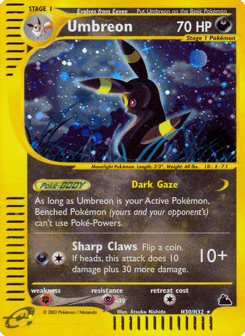
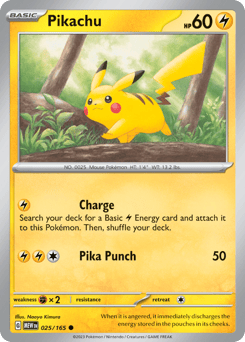
They show a Pokémon people love. Charizard, Pikachu, Umbreon and the other Eeveelutions, Gengar, Lugia and Rayquaza sell for more than other Pokémon of the same rarity, set after set.
They're in great condition. For older cards this is the biggest single factor. A clean copy can sell for several times a played one, and a card graded PSA 10 can sell for many times a PSA 9.
They're from the right printing. A 1st Edition stamp or a Shadowless Base Set holo changes the price completely.
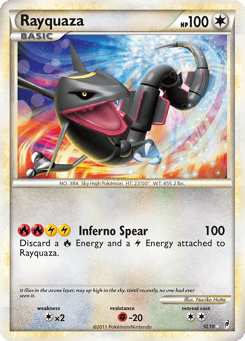
The older cards below show several of these at once. Blaine's Charizard (Gym Challenge) sells for about $582 ungraded, Dragonite (Fossil) for about $132, and the shiny Rayquaza (Call of Legends) from 2011 for about $1,201.
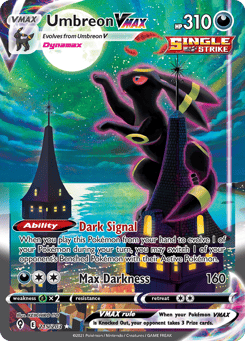
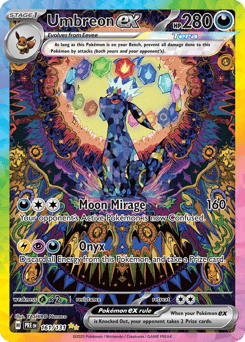
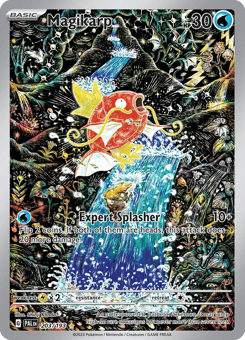
Modern cards can match them, but only at the very top of a set. The alternate-art Umbreon VMAX (Evolving Skies) from Evolving Skies sells for about $2,200, and Umbreon ex (Prismatic Evolutions) from Prismatic Evolutions for about $1,528. Even a Magikarp can do it with the right art: the illustration rare Magikarp (Paldea Evolved) sells for about $375 raw and about $4,125 in a PSA 10.
What's usually worth nothing
Be ruthless with these. They are the cards that fill shoeboxes and almost never sell for more than the cost of the stamp.
- Commons and uncommons from the last few years. Across Sword & Shield, Scarlet & Violet and Mega Evolution, 99% of them sell for under a dollar. That's a circle or diamond in the bottom corner.
- Plain holo rares from modern sets. A star-rarity holo from a 2020s set feels special when you pull it. Most sell for under a dollar.
- Most reverse holos. The shiny-background version of a common is still a common. There are exceptions, covered in what a reverse holo is, but don't count on them.
- Basic Energy cards and code cards. Grass, Fire, Water and friends, plus the online code cards from packs. Nobody is buying them in singles.
- "ex" and "V" cards with the regular, non-full-art design. Most of the double rare ex cards from Scarlet & Violet sell for under a dollar.
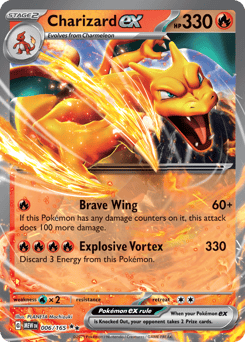
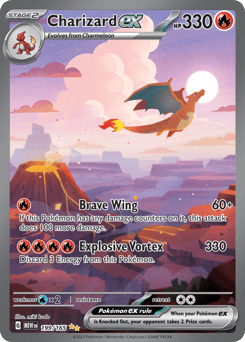
A famous name doesn't rescue a card from this pile either. The regular Charizard ex (151) sells for about $10.02, while the special illustration rare Charizard ex (151) from the same 151 set sells for about $414. Same Pokémon, same set, very different card.
The ones that surprise people
The rule of thumb that commons are worthless breaks down with older, smaller sets. A handful of commons sell for more than most holos, because the sets they came from are much harder to find today than Base Set or anything modern, and clean copies harder still.
Pikachu (Skyridge) from Skyridge, the last Wizards set, sells for about $232 raw. Psyduck (Aquapolis) from Aquapolis sells for about $242. And Pikachu (POP Series 5), a common from a small promotional set, sells for about $360.
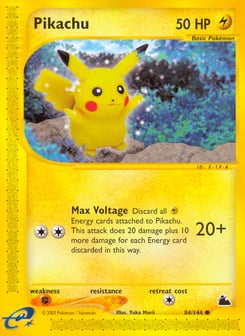
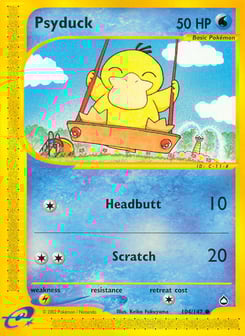
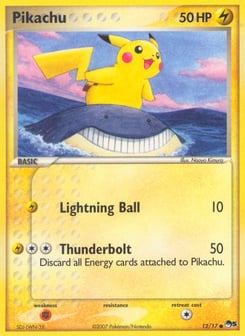
If you have anything from the e-Card sets (look for the strip of dot code along one edge) or the POP Series, check each card individually rather than bagging them as bulk. The same goes for anything older than about 2003. Our guide to old Pokémon cards worth money goes through the vintage sets one by one.
Check yours in five minutes
You don't need to price every card. Sort first, then look up the survivors.
- Pull out anything shiny, full-art, gold, or with a star, "ex", "GX", "V", "VMAX", "VSTAR" or "LV.X" in the name. Put everything else aside.
- Pull out anything from before about 2004, whatever it looks like.
- Check the card number. If it's higher than the set total (say 83/82), it's a secret rare.
- Look each survivor up by name and number in the search box at the top of any page, or browse by set.
The detail for each step is in how to tell if Pokémon cards are worth money, and how much are my Pokémon cards worth walks through reading a price page properly: which printing it covers, how much to trust it, and what condition does to it. If you'd rather start from the top, the most valuable Pokémon cards ranking is the list of cards worth checking your binder against.
One word on grading before you spend money on it. PSA's cheapest open service costs $59.99 a card as of September 2026, so grading only makes sense for cards that are already worth a fair bit and look close to perfect. Is it worth grading Pokémon cards runs the numbers.