Our pick by card
| What you're selling | Our pick | Runner-up |
|---|---|---|
| Raw singles, $1 to about $200 | TCGplayer | eBay |
| Raw cards over about $200 | eBay (Authenticity Guarantee) | TCGplayer, where the $75 cap helps |
| Graded cards | eBay | Whatnot, if you have an audience |
| Vintage and 1st Edition | eBay | A specialist auction house for top grades |
| Lots and bulk | eBay lots, or a bulk buyer | Mercari |
| Sealed product | eBay or TCGplayer | Mercari |
| High volume, every week | Whatnot or TCGplayer | eBay |
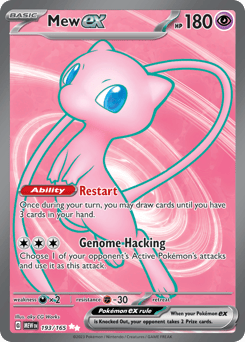
Before choosing, know what the card sells for. Search it on Ultraball to see the ungraded price and PSA grade prices from recorded sold listings. It changes the answer: a card worth about $35.99, like Mew ex (151) from 151, belongs in a very different place from one worth about $1,126, like the 1st Edition Shining Gyarados (Neo Revelation) from Neo Revelation.
The four big sites side by side
| eBay | TCGplayer | Whatnot | Mercari | |
|---|---|---|---|---|
| How it sells | Fixed price or auction listings | Your price on a shared card page | Live-stream auctions and listings | Fixed-price listings |
| Commission (US, trading cards) | 13.25% of total sale up to $7,500 | 10.75% of subtotal, max $75 per card | 8% of sale price (tiered down with volume) | 10% of price plus buyer-paid shipping |
| Other seller fees | $0.30 or $0.40 per order | 2.5% of order total + $0.30 | 2.9% of order total + $0.30 | None |
| Fee charged on shipping and tax? | Yes | Transaction fee only | Processing only | Shipping yes |
| Who buys | Everyone, from casual to high-end | Players and collectors buying exact cards | Collectors who like live breaks and auctions | Casual buyers, gift shoppers |
| Best for | Graded, vintage, high-value raw | Raw singles | Sellers with volume and time | Lots, sealed, mid-range |
All fees are the standard rates for US sellers as of September 2026, from each marketplace's own fee page. They change. Check before you list.
What you actually keep
Headline percentages hide the details that matter: what the percentage is charged on, fixed fees per order, and caps. Here's what each site takes on four sale prices, assuming the buyer pays $5 shipping and ignoring sales tax to keep it simple (on eBay, tax would add a little more to the fee, because eBay charges on the whole total).
| Card sells for | eBay fee | TCGplayer fee | Whatnot fee | Mercari fee |
|---|---|---|---|---|
| $20 | $3.71 | $3.08 | $2.63 | $2.50 |
| $50 | $7.69 | $7.05 | $5.90 | $5.50 |
| $500 | $67.31 | $66.68 | $54.95 | $50.50 |
| $2,000 | $266.06 | $125.43 | $178.45 | $200.50 |
Three things jump out.
eBay is the most expensive at every price. Not by much on cheap cards, but it adds up. Whether it's worth paying depends on whether eBay gets you a higher sale price, which for graded and vintage cards it often does.
TCGplayer's cap changes everything above about $700. The 10.75% commission stops at $75 per card, so on a $2,000 raw card TCGplayer takes less than half what eBay does. That cap went up from $50 in February 2026, but it still makes TCGplayer the cheapest major site for expensive raw singles, if the buyers are there for your card.
Whatnot and Mercari are cheapest on paper. Whatnot's $2,000 figure includes its current promotion of no commission on the portion of a sale above $1,500; without it the fee would be $218.45. Mercari's flat 10% is simple, but its buyers also pay a 3.6% protection fee at checkout, which can make them a bit more price-sensitive.
Fees are only half the sum. A lower fee on a site where your card sells for 15% less is a bad trade. For cards with active buyers everywhere, fees decide it. For cards that need the right collector to find them, reach decides it.
eBay: the biggest audience, the highest fees
eBay is where most high-value Pokémon sales happen, and where buyers expect to find graded slabs and vintage. As of September 2026, it charges 13.25% of the total sale on collectible card games up to $7,500 per item, 2.35% on anything above $7,500, and a per-order fee of $0.30 on orders of $10 or less and $0.40 above that. Individual sellers get up to 250 free listings a month before insertion fees apply.
What you get for that:
- Reach. More buyers see a card on eBay than anywhere else. For a card with a small pool of serious buyers, that matters more than the fee.
- Auctions. A well-timed auction on a card people are chasing can beat any fixed price.
- Authenticity Guarantee. Single raw and graded cards at $200 or more are eligible; the card is checked by an authenticator before it reaches the buyer, which gives expensive raw cards a trust boost.
- Cheap shipping for cheap cards. The eBay standard envelope gives tracked letter-mail labels from $0.78 as of September 2026.
The downsides are the fees, occasional problem buyers, and a lot of competition from other sellers on popular modern cards.
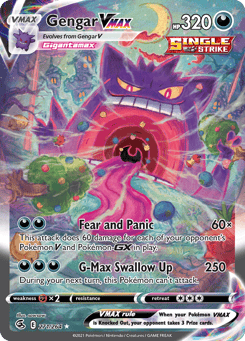
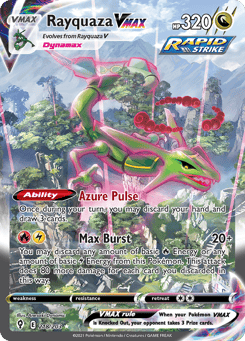
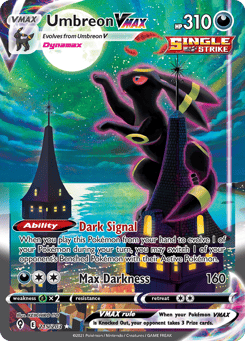
Cards like these are eBay cards: Gengar VMAX (Fusion Strike) from Fusion Strike (about $1,053 raw) and Rayquaza VMAX (Evolving Skies) from Evolving Skies (about $1,132 raw). They're valuable enough that buyers want real photos and a seller with feedback, and valuable enough to go through the Authenticity Guarantee.
TCGplayer: the collector's price list
TCGplayer works differently from eBay. Each card has one page, and every seller's copy is listed on it by condition and price. Buyers search for exactly the card they want, pick a condition, and usually buy the cheapest copy from a seller they trust. It's how most players and set collectors buy singles.
As of September 2026, most sellers (Level 1 to 4 accounts) pay:
- 10.75% commission on the order subtotal, capped at $75 per card sold.
- A transaction fee of 2.5% of the order total (items, shipping and tax) plus $0.30.
Pro and Direct sellers pay different rates. The commission went up from 10.25% on February 10, 2026, so guides quoting the old figure are stale.
The strengths are clear: a buyer base that knows exactly what it wants, pricing that's easy to set against the market, and low effort per sale once you're set up. The weaknesses are the other side of the same coin. You're one of many sellers of the same card, so you compete on price and condition, and a carefully photographed near-perfect copy won't stand out the way it can on eBay. Condition has to be accurate, because buyers can't see your card before they buy.
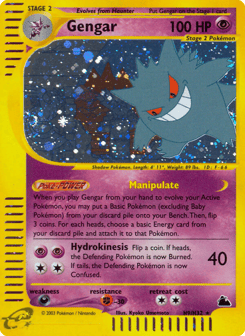
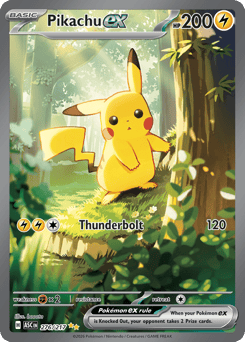
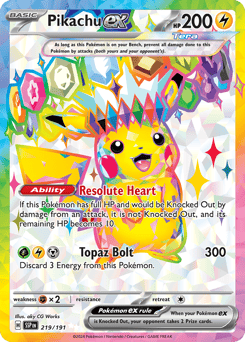
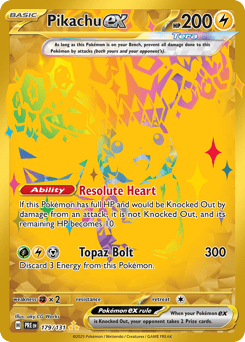
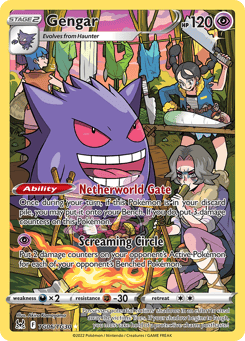
Mid-range modern cards are TCGplayer's bread and butter: think Pikachu ex (Surging Sparks) (about $30.94), Pikachu ex (Prismatic Evolutions) (about $66.12), or Gengar (Lost Origin Trainer Gallery) (about $59.99).
Whatnot: live selling
On Whatnot you run a live show, holding up cards and auctioning them one by one. It suits sellers who enjoy it, sell every week, and have enough stock to keep a show moving. It doesn't suit someone selling five cards once.
Whatnot changed its fees on September 21, 2026. US trading card game sellers now pay:
- 8% commission on the sale price, not on shipping or tax, until they reach $15,000 in sales in a four-week period; the rate then steps down through tiers to 6.5%.
- Payment processing of 2.9% of the order total plus $0.30.
- No commission above $1,500 on a single sale, under a promotion Whatnot says it can end at any time.
The live format rewards cards people get excited about: popular Pokémon, modern chase cards, and graded slabs that don't need close inspection. If you already have an audience from social media, it can be the best place for you. If you don't, building one is a job in itself.
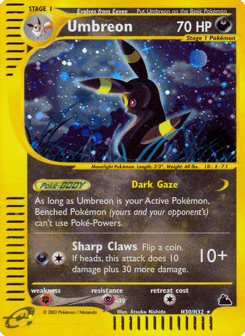
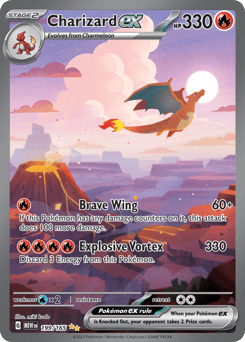
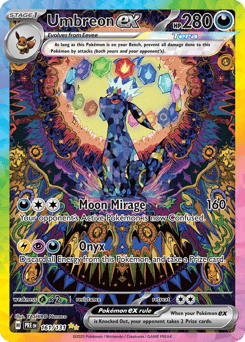
The cards that carry a live show are the ones viewers already want: Charizard ex cards like Charizard ex (151) (about $414 raw), Umbreon cards like Umbreon ex (Prismatic Evolutions) (about $1,528), and the Evolving Skies alternate arts. A table of mid-grade commons won't hold anyone's attention for long.
Mercari: simple, cheap, casual
Mercari is a general marketplace. Listing is free, and when an item sells, the seller pays a flat 10% of the item price plus buyer-paid shipping. There's no separate payment processing fee for sellers on current listings. Buyers pay a 3.6% buyer protection fee on their side.
It's easy to use and the fee is predictable, which makes it fine for sealed product, lots, and mid-range cards. The audience is broader and more casual than eBay's or TCGplayer's, though, and serious collectors of expensive singles mostly shop elsewhere. We wouldn't list a four-figure card there. Where Mercari earns its place is the pile in between: a themed lot of holos, a partly completed set, or sealed product you'd rather not auction. Price it from recorded sales, include the fee in your maths, and it moves.
Selling directly to collectors online
Facebook buy-sell groups, collector forums and trading communities let you sell to other collectors with no platform fee. For experienced sellers with a good reputation in a group, that can be the most profitable route of all.
It's also where most scams happen. There's no platform to step in if something goes wrong, so:
- Check the buyer's history in the group before agreeing a deal.
- Take payment through a method that protects you as the seller, and wait until it has cleared.
- Ship with tracking and signature on anything valuable, to the buyer's confirmed address only.
- Keep screenshots of the agreement and photos of the card.
If any of that sounds like too much work for one card, it probably is. That's what marketplace fees buy you.
Bulk vs singles online
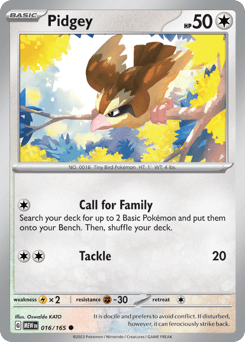
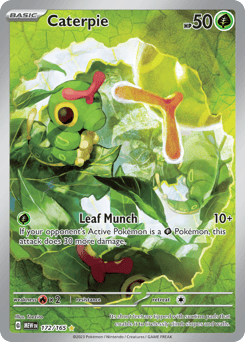
Online marketplaces work for singles. Bulk is harder. A common that sells for about $0.25, like Pidgey (151), can't carry a listing fee, a transaction fee and postage on its own. Its illustration rare set-mate Caterpie (151) sells for about $18.95, which can. Same set, same packs, very different treatment.
What works for bulk online:
- Lots on eBay. Group cards by set, by Pokémon or by type, and name the best cards in the title. "Charizard lot" sells; "500 Pokémon cards" gets bargain hunters.
- Playsets and deck staples on TCGplayer. Trainer cards and energies that players need in multiples can sell for small amounts in steady numbers.
- A bulk buyer by mail. Many shops and buylist sites buy by count and rarity category. Payouts are low and vary a lot between buyers, so get a few quotes, but you'll clear it all at once.
Before any of it goes, pull out anything holo, anything with a rarity other than common or uncommon, and anything from before about 2003. Our guide to whether Pokémon cards are worth anything explains how to spot the exceptions.
Graded cards online
Graded cards are the easiest cards to sell online, because the slab answers the condition question for the buyer. eBay has the deepest market for them. Buyers search by card and grade and compare against recent sales of the same grade, so price against those, not against raw prices.
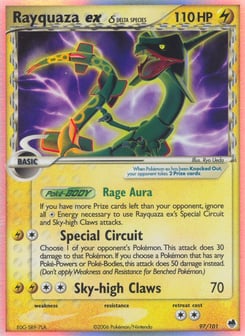
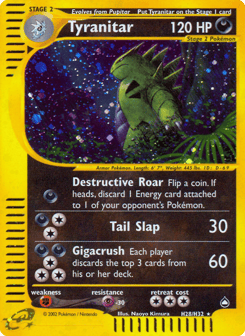
The gap between raw and graded is where the money is. Rayquaza ex δ (Dragon Frontiers) from Dragon Frontiers sells for about $417 raw and about $18,204 as a PSA 10. Tyranitar (Aquapolis) from Aquapolis is about $684 raw and about $30,000 in a PSA 10. At those numbers, a specialist auction house or eBay with a long auction is worth the fees. Whether to grade a raw card before selling is a separate question; is it worth grading Pokémon cards and our PSA grading cost guide cover the maths.
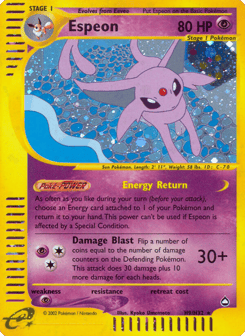
If you grade with PSA, its app also lets you vault a graded card and list it through the PSA eBay store, and it advertises eligible zero-fee offers from PSA's partners during grading and vaulting. That can save a round of shipping.
How to find out which site works for your cards
The tables above are the general answer. Your own cards might behave differently, and it's cheap to find out.
- Look at the sold history on each site. For the same card and condition, check what it sold for recently on eBay and TCGplayer. If one site consistently sells it higher, that difference can outweigh the fee gap.
- Work out your net, not the sale price. Subtract the fee from the tables above and your real shipping cost. A sale that looks $5 higher on eBay may leave you with less.
- Test with a few cards. List a small batch on the site you're less sure about and see how fast they sell and for what.
- Keep track. Our collection tracker values each card at the condition or grade you hold it, so you can see what's left to sell and what it's worth today.
After a month you'll know which site suits your mix of cards better than any comparison chart can tell you.
When online isn't the answer
Online selling takes time: photos, listings, questions, packing, and waiting for buyers. If you want money this week for a whole collection, a local shop or a card show dealer will usually beat the hassle, even at a lower price. For record-level cards, an auction house can find buyers no marketplace listing will. Both are covered in where to sell Pokémon cards, and the full listing-to-shipping process is in how to sell Pokémon cards.