
Pokémon card collection tracker
Know what’s in the binder and what it’s worth. Add each card the way you hold it, raw or slabbed, and the tracker values it from real sold prices for that exact card at that exact grade. Put in what you paid and it shows your gain. Pick a set to chase and it tells you how far along you are and what the missing cards cost today.
20,797 English cards across 185 sets, priced as of Sep 29, 2026. Free, with no cap on cards.
Value today
$5,400
4 cards across 3 lines · each line valued at its own condition or grade
× 1
$520
× 1
$4,050
× 2
$830
$415 each
up +7.9% 4 wk
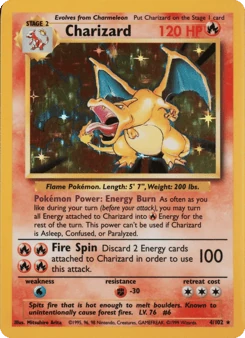
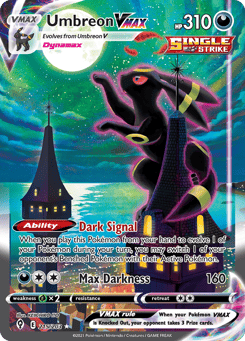

What the tracker keeps for you
- Every card at its own grade. Ungraded, or a PSA, CGC, BGS, SGC, TAG slab at the grade on the label. Hold a raw copy and a PSA 10 of the same Charizard and they sit on two lines with two prices.
- What the collection is worth today, with the four-week move, and a chart of its value over the last 90 days.
- What you paid and when. Add a cost to any line and you get the gain on that card and across the collection, plus your best and worst buys.
- Set completion. Track a set and see how many cards you hold, how many you’re missing, and what the gaps would cost at today’s prices.
- What you’d take home. Each line links to the selling calculator with the price filled in, so you can see the figure after eBay or TCGplayer fees.
- A Monday email with what the binder is worth and what moved, if you switch it on. One click turns it off.
- Your currency. Values show in US dollars, pounds, euros, or Canadian, Australian or New Zealand dollars.
How to start tracking your cards
- Find the card. Search the name and the number from the bottom corner, such as “Umbreon VMAX 215”. The number is what separates the $5 card from the $500 one with the same name. Not sure which set it’s from? Match the icon on the set symbols page.
- Add it at its condition or grade. Every add asks. Nothing goes in as near mint by default, because a guess there is a wrong total later.
- Put in what you paid, if you know. Pulled it from a pack? Leave it blank, or enter what the pack cost you.
- Track the sets you’re building. Press “Track this set” on any set page and it appears on your collection with a progress bar.
- Already have a list? Import it and skip the typing.
Set completion: how far along, and what’s left to buy
Most collections are really a handful of sets in progress. For each set you track, the tracker shows cards held out of the total, the same count for the main set alone when the set has secret rares, the cost to buy every missing card ungraded, and the three dearest gaps. Those three usually decide whether a set is realistic to finish: it’s rarely the 150 commons that stop you, it’s the one alt art.
Main set or master set?
Collectors use “main set” for the cards numbered up to the printed total, 1 to 198 in a 198-card set, and “master set” for everything: the secret rares numbered past the total, and for many people every reverse holo and stamped variant too. The tracker counts both the main set and the full numbered set. It doesn’t yet tick off reverse holos as separate cards, so if you’re building a true master set, use it for the numbered cards and keep the parallels on your own list for now.
What popular sets cost to build today
One ungraded copy of every priced card, added up at today’s prices. It’s the figure the tracker shows as “cost to finish” before you’ve added a single card.
| Set | Cards | Every card, ungraded | Dearest card |
|---|---|---|---|
| Ascended Heroes 2026 | 295 | $5,730 | Pikachu ex $1,026 |
| Base Set 1999 | 102 | $1,536 | Charizard $520 |
| Destined Rivals 2025 | 244 | $1,912 | Team Rocket's Mewtwo ex $539 |
| 151 2023 | 207 | $2,039 | Charizard ex $415 |
| Crown Zenith Galarian Gallery 2023 | 70 | $2,558 | Giratina VSTAR $373 |
| Mega Evolution 2025 | 188 | $1,623 | Mega Lucario ex $259 |
| Fossil 1999 | 62 | $923 | Gengar $165 |
| Jungle 1999 | 64 | $845 | Snorlax $92.46 |
Cards with no recent sales are counted as “not priced” and left out of the sum, not treated as free. Prices as of Sep 29, 2026.
Where the values come from
Every price is built from cards that actually sold, not from what sellers are asking. Each sale is checked against the exact card, by name, number, set and version, before it’s allowed near a price, and raw sales never mix with graded ones. How we price has the full method.
- Ungraded lines use the ungraded price, which is for a clean, near-mint copy. A card with whitening or a crease is worth less than the figure shown; the price checker shows what played copies sell for.
- Graded lines use that grading company and that grade only. No PSA 9 sales, no PSA 9 price: the line says unpriced and stays out of the total.
- The 90-day chart counts only the lines that have 90 days of history at their grade, and says how many that is.
Tracking graded cards
A slab is priced by the company and the number on its label, so that’s how the tracker holds it. The gap between grades is often the whole story: on a modern chase card a PSA 10 commonly sells for two to four times the PSA 9, and a PSA 9 for about what a clean raw copy fetches. Log a slab one grade out and the total is wrong by more than any price movement will ever be.
Today’s example: Charizard ex 199/165 from 151 is $415 ungraded, $360 as a PSA 9 and $1,425 as a PSA 10.
- Half grades count. A BGS 9.5 and a BGS 9 are different lines, as are CGC 9.5 and CGC 10.
- Thinly traded slabs show as unpriced until one sells. That’s common for SGC and TAG, and for low grades of cheap cards that nobody pays to slab.
- Sent cards off for grading? Keep them as ungraded until they’re back, then change the line to the grade they got. The gain updates with it.
The tracker doesn’t store certification numbers or photos. If you need those on record, keep them in the spreadsheet you export. The PSA grading scale explained covers what each grade means.
Import from a spreadsheet, export whenever you like
If your collection lives in a spreadsheet or another app, save or export it as a CSV and open it on the import page. The file is read in your browser. You choose which column is which, and nothing is added until you’ve seen the preview.
- Name, set and number find the card. When a row could be more than one card, you’re shown the pictures and you pick.
- Condition or grade is needed on every row. If the file doesn’t have one, set it for all rows at once or row by row.
- Quantity, price paid and purchase date come across if the file has them.
- Rows that don’t match are listed and left out. Up to 2,000 rows a file.
Export gives you the lot back as a CSV with 13 columns: the card, set, number, rarity, grader, grade, quantity, cost, purchase date, today’s value per copy and per line, and a link to the card’s page. Your list is yours; take it wherever you like.
Tracker or spreadsheet?
A spreadsheet is a fine way to list cards and a poor way to value them. The list is the easy part. The prices are the work: a few hundred cards, each moving, each with a different price raw and at every grade. Type them in once and they’re out of date by the next set release. The tracker keeps the list and refreshes the prices for you, and you can still export to a spreadsheet for insurance, for a sale, or just to have a copy.
A record for insurance
If a binder is ever lost, stolen or damaged, a dated list of what was in it is the first thing you’ll be asked for. Export the CSV every few months and keep it somewhere other than the house the cards are in, with photos of the cards that matter. Check what your own policy covers: many home policies cap collectibles well below what a good binder is worth.
What’s worth adding
You don’t need to log every common. Most of a binder’s value sits in a few cards: the holos, the ex and V cards, the full arts, illustration rares and anything vintage. Start with those and the total will be close. Add the bulk later if you’re building sets, where every card counts towards the bar. Not sure which of yours are the hits? How to tell if a card is rare and which cards are worth money will sort a pile quickly.
Once you know what you’ve got
- Thinking of slabbing the best ones? Check the borders with the card centering tool, then see if the numbers work in the grading calculator.
- Thinking of selling? How to sell Pokémon cards covers where and how, and the selling calculator shows what’s left after fees.
- Waiting for a price? Add the card to your watchlist with a target and we’ll email you when it gets there.
- Storing them properly? The best binders for Pokémon cards.