The five-point checklist
- Rarity symbol and number. Star or better, or a number above the set total? Keep it.
- Holo, full art and edition marks. Shiny art, full-bleed art, gold, a 1st Edition stamp? Keep it.
- Condition. Clean corners, edges and surface? It's worth more than you think. Creased? Worth much less.
- Demand. Is it a Pokémon collectors chase? That can multiply the price of two otherwise identical cards.
- The price. Look up the exact card and printing, and read the sold price, not the asking price.
A card only needs to pass the first two to be worth checking. Checks three and four tell you how much.
1. Rarity symbol and card number
Turn the card over, face up, and look at the bottom corner. On most cards there's a small symbol next to the card number.
- Circle: common.
- Diamond: uncommon.
- Star: rare. On older sets a black star with a shiny picture means a holo rare.
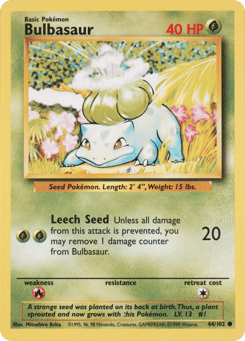
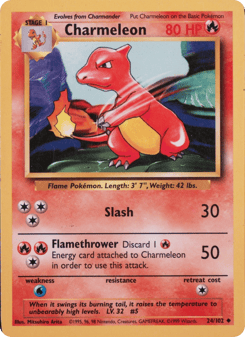
Commons and uncommons are the easiest cards to set aside. On a modern card, a circle or diamond means bulk almost every time. On a card from 1999 to 2003 it's worth a second look, because even Base Set commons like Bulbasaur (Base Set) sell for about $2.55 in near mint, and uncommons like Charmeleon (Base Set) for about $2.22. Not a fortune, but not nothing either.
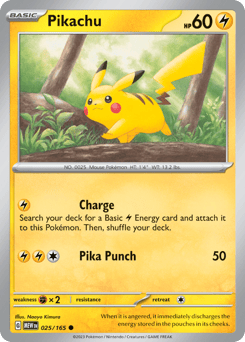
Since Scarlet & Violet in 2023, the symbols carry more detail: two black stars for a double rare, two silver stars for an ultra rare, and one, two or three gold stars for an illustration rare, special illustration rare and hyper rare. The full chart is in the Pokémon card rarity guide, and how to tell if a Pokémon card is rare walks through each symbol with pictures.
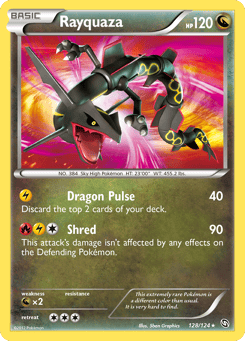
Then read the number. If the first number is higher than the second, as in 83/82, the card is a secret rare that wasn't counted in the set total. Dark Raichu (Team Rocket) from Team Rocket was one of the first, and sells for about $111. Rayquaza (Dragons Exalted) from Dragons Exalted is a later one, at about $1,437.
2. Holo, full art and edition marks
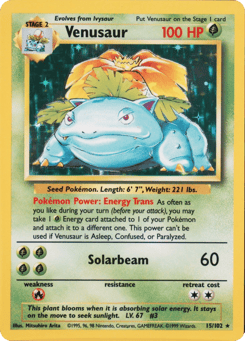
Look at the picture. If the art box itself is shiny, it's a holo. If the whole card is covered in artwork, edge to edge, it's a full art, alternate art or special illustration rare. Gold-bordered or all-gold cards are usually hyper rares or older secret rares. All of these go in the keep pile.
If only the background around the picture is shiny, it's a reverse holo. Most reverse holos from the last fifteen years sell for little, so don't get excited yet.
For cards from 1999 to 2002, check below the bottom left corner of the art box for a small black circle with a "1" and the word "Edition". That's a 1st Edition printing, and it sells for more, often much more, than the same card without it. Typhlosion (Neo Genesis) from Neo Genesis sells for about $216 unlimited, and the 1st Edition Typhlosion has its own page and price. Base Set holos also have the Shadowless middle printing: no stamp, no drop shadow to the right of the art box, and a copyright line that ends in "99".
3. Condition
Condition decides how much a keeper is worth, and it's the check people are most generous with. Take the card out of the binder, hold it under a bright lamp and look at:
- The back edges. Blue borders show every chip as a white fleck. This is where most wear shows first.
- The corners. Sharp, or soft and white?
- The surface. Scratches across the holo, dents, print lines.
- Creases. Any crease at all drops a card out of near mint.
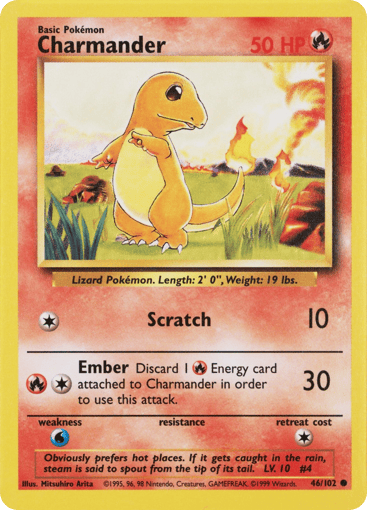
Prices on Ultraball are for near-mint copies, so a played card sells for less than the number you see. At the other end, a truly clean card can be worth grading. Charmander (Base Set) shows the spread: about $2.25 ungraded, about $100 as a PSA 9 and about $255 as a PSA 10. The PSA grading scale explained covers what separates those grades.
4. Demand: which Pokémon is on it
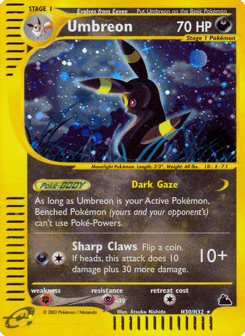
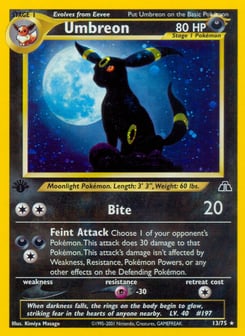
Two cards from the same set with the same rarity can sell for wildly different prices because of the Pokémon on them. Collectors pay up for Charizard, Pikachu, Umbreon and the other Eeveelutions, Gengar, Lugia, Rayquaza and Mew, and the gap holds set after set.
The Neo Discovery holos make the point. Umbreon (Neo Discovery) sells for about $669 ungraded. Forretress (Neo Discovery), a holo from the same set with the same rarity symbol, sells for about $25.94. Same set, same symbol, same shiny art box. The difference is Umbreon.
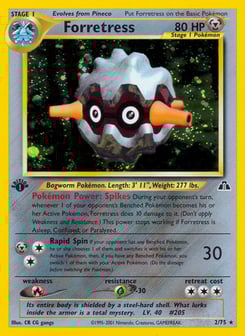
Artwork counts too, especially on modern cards. The alternate-art Umbreon VMAX (Evolving Skies) from Evolving Skies sells for about $2,200, while the regular Umbreon V (Evolving Skies) from the same set sells for about $8.08. Same Pokémon, very different demand.
5. Check the price
Only now look anything up. Type the card's name and number into the search box at the top of any page, pick the matching set, and make sure you're looking at the right printing. The price shown is for a near-mint ungraded copy, built from recorded sold listings, with a confidence mark that tells you how much sales data sits behind it.
How much are my Pokémon cards worth goes through that step in detail: reading the confidence mark and recent sales, adjusting for condition, and deciding between raw and graded. The price checker guide compares the lookup options.
What to do with the pile
After the checklist you'll have three piles.
- Bulk: commons, uncommons and plain holos from modern sets. Keep the ones you like, sell the rest by the box.
- Look-ups: the cards that passed checks one and two. Price them one by one.
- Handle with care: anything that prices at $20 or more, anything from before 2004 in clean condition, and anything with a 1st Edition stamp. Put these in a penny sleeve and a toploader today.
If the look-up pile is mostly older cards, old Pokémon cards worth money covers the vintage sets set by set. For a broader list of what sells, see Pokémon cards worth money and the most valuable Pokémon cards ranking.