The short answer
Think of it as two separate questions.
For an ordinary modern card that exists in both languages, English usually wins. A Special Illustration Rare pulled from an English booster tends to sell above its Japanese twin, and the gap is widest on the cards Western collectors chase hardest.
For a card that only ever existed in Japanese, there's nothing to compare it with. Contest prizes, trophy cards, event promos and early first prints can be worth far more than anything in an English binder. The most expensive Pokémon card ever sold is one of them.
So when someone says "Japanese cards are worth more," they're usually thinking of that second group. When someone says "Japanese cards are cheaper," they mean the first. Both are right about different cards.
Why the English copy usually sells for more
Nobody at Pokémon sets these prices. Buyers do, and a few things push buyers in the US toward English cards.
Demand follows the cards people grew up with
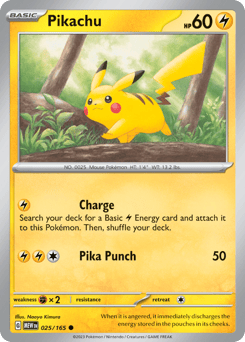
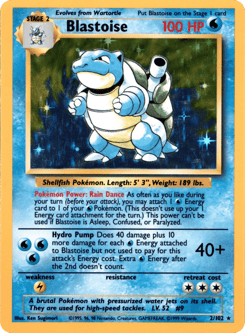
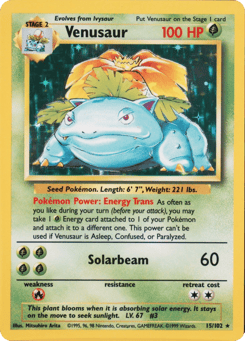
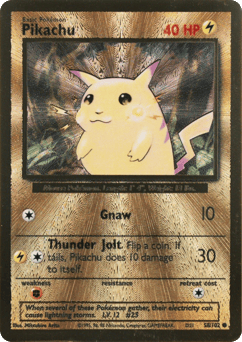
Most collectors in the US and Europe started with English cards, and nostalgia drives a big share of the money in this hobby. A grown-up who opened Base Set in 1999 wants the card they remember, text they can read and all. That's a bigger pool of buyers than the pool looking for Japanese imports, and a bigger pool bids prices up. It's why the English Blastoise (Base Set) sells for about $158 in near-mint condition, why Venusaur (Base Set) still draws steady bids, and why even the humble Pikachu (Base Set) sells for about $10.90: they're the cards a generation of American kids actually held.
Tournament players need English cards
The official Play! Pokémon tournament handbook requires cards to be in the correct language for the region, and for Championship Series events in the US and Canada that language is English. It also treats Japanese cards as marked, because their backs are different from every other language. There's an exception at Regionals, Internationals and Worlds, where players can use English cards or any language legal in their home country, but a player in Ohio building a deck still needs English copies. Playable staples carry that extra demand in English and not in Japanese.
The grading and resale market is English-first
Graded English cards have deeper sales histories, more buyers and faster sales in the US. When you're paying the same grading fee either way (see our PSA grading cost guide), resale depth matters. A card you can sell in a day is worth more to most buyers than one that sits for a month.
Supply reaching the US
Japanese sets release first and plenty of product gets imported, so Japanese singles aren't scarce here. Neither Pokémon nor its printers publish print runs for either language, so anyone quoting you exact print numbers is guessing. What we can say is that supply of Japanese modern cards in the US is not tight, and prices reflect it.
When a Japanese card is worth more
The pattern is simple once you see it. The Japanese cards that beat English are almost always ones with no English equivalent at all.
Cards that never came out in English
The Pikachu Illustrator is the famous case. It was a prize in a 1998 illustration contest in Japan, only 39 were given out, and the only PSA 10 sold at Goldin in February 2026 for $16,492,000. There's no English version to compare it with, which is the whole point. Our most expensive Pokémon cards ever sold guide covers the rest of that tier.
Below that sit Japanese trophy cards from early tournaments, event-only promos, and magazine and store promos that were never printed in English. These are the cards where Japanese really does mean "worth more."
First prints and early promos
Japan's Base Set came out in 1996, years before the English one, and PSA grades it as "1996 Pokemon Japanese Basic." Its first print is missing the rarity symbol in the corner, and collectors call those copies No Rarity. A No Rarity holo in high grade is a serious card. The English world's version of that "first print" premium is the 1st Edition stamp, which is a different thing on a different card.
Art and set differences
Japanese sets don't always line up one to one with English sets. Cards get split, combined or reworked, and now and then a Japanese-only product carries artwork that never reaches English. When the art or the card itself is exclusive, the normal English premium doesn't apply.
When English wins
For most cards you're likely to own or chase, this is the side that matters. A few examples where the English copy is the one collectors in the US pay up for:
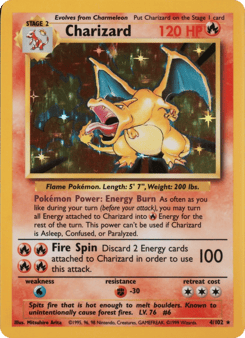
The English Base Set Charizard, Charizard (Base Set), is the card most people picture when they think of valuable Pokémon cards, and the 1st Edition Charizard adds a premium from the Wizards of the Coast print runs that the Japanese Base Set simply doesn't have. The Wizards era as a whole is where English nostalgia money is deepest.
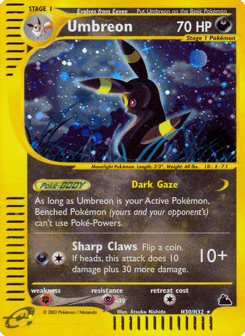
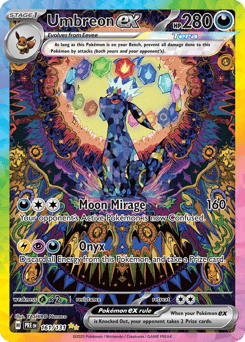
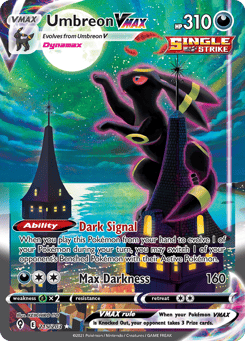
Modern chase cards follow the same pull. Umbreon ex (Prismatic Evolutions) sells for about $1,528 ungraded and about $5,575 in a PSA 10, and Umbreon VMAX (Evolving Skies), the Evolving Skies alt art people call Moonbreon, sells for about $2,200. Both are Umbreon cards, and the most valuable Umbreon cards ranking shows how far that one Pokémon pulls prices.
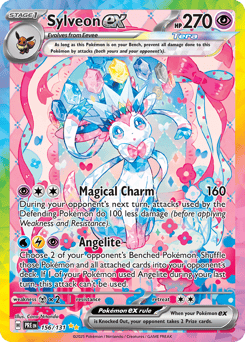
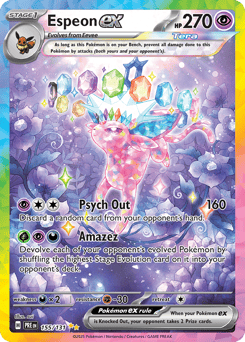
The rest of the Eevee family from Prismatic Evolutions follows close behind: Sylveon ex (Prismatic Evolutions) at about $486 and Espeon ex (Prismatic Evolutions) at about $306. Japanese Eeveelution cards are popular too, but in the US the English copies are the ones setting the price.
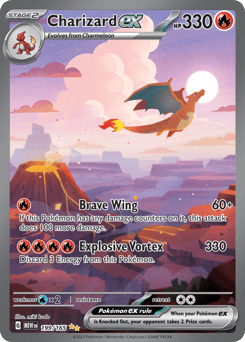
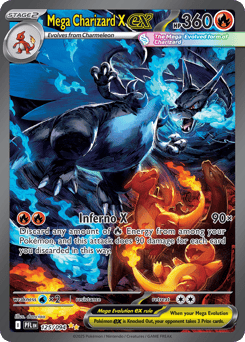
The same goes for Charizard. Charizard ex (151) from 151 sells for about $414, and Mega Charizard X ex (Phantasmal Flames) from Phantasmal Flames for about $790. From this year's Ascended Heroes, Pikachu ex (Ascended Heroes) is running about $1,051. All three are Special Illustration Rares, the rarity that sets the price ceiling in modern English sets. If you're not sure what that label means, our SIR explainer covers it.
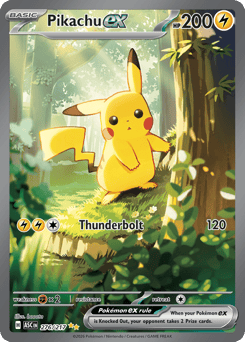
If you own the Japanese version of any of these, expect it to sell for less than the English prices shown. How much less changes card to card and month to month, so check sold listings rather than applying a rule of thumb.
Japanese vs English side by side
| Japanese cards | English cards | |
|---|---|---|
| Same card, same grade | Usually sells for less in the US | Usually sells for more |
| Exclusive cards | Contest, trophy and event cards with no English version | Some English-only promos and printings |
| First-print premium | No Rarity (1996 Base Set) | 1st Edition and Shadowless |
| Card back | Different design from every other language | Standard international back |
| US tournaments | Not legal at US Championship Series events | Legal |
| Release timing | Sets come out first | Months later |
| Print quality | Collectors generally rate the cuts and centering highly | More variation, more off-center copies |
| Priced on Ultraball | No | Yes |
The print-quality row is worth a second look if you grade. Grading fees don't change with language, so a cleaner card gives you better odds at a high grade for the same money. It still won't close the price gap on most modern cards.
How to price a Japanese card
We don't price Japanese cards, so here's how to do it properly yourself.
- Find the exact card. Japanese cards carry a set code and number at the bottom. Use both, not just the Pokémon's name.
- Search sold listings for that Japanese card specifically, in the same condition or grade. Asking prices mean very little.
- Look up the English version on Ultraball with the search box, or follow our price checker guide, to see where the English copy sits. That tells you the ceiling for most modern cards.
- If the card is valuable, make sure it's real before anything else. Our guide on how to tell if Pokémon cards are fake applies to Japanese cards too, and the back is the first place to look.
Our prices are for near-mint English copies built from recorded sold listings; how we price explains the method. For more on reading a price once you have one, see how much are my Pokémon cards worth.
Which should you collect?
If you're buying to resell in the US, buy English. The buyer pool is bigger and the card is easier to sell.
If you're buying to enjoy, Japanese has a lot going for it: cheaper product, sets that arrive first, clean printing, and artwork you might not get in English. Plenty of long-time collectors keep a Japanese binder for exactly those reasons and don't think about resale at all.
And if you're holding a Japanese card that never came out in English, don't assume it's cheap. Look it up properly. The same goes for other Asian-language cards, which we cover in are Korean and Chinese Pokémon cards worth anything.