Official card or bootleg?
Official Korean cards are printed in Korean. Official Chinese cards are printed in Chinese characters, either Traditional or Simplified. They carry a real set symbol and number, they're on proper card stock, and they have the normal Pokémon card back. Pokémon's own tournament handbook notes that Japanese cards are the only ones with a different back from every other language, so a Korean or Chinese card should look like an English one from behind.
A bootleg is usually an English-language card, made without permission, that tries to pass as the real thing. If your "Chinese" card is written in English, it's almost certainly a bootleg rather than an official Chinese print.
Korean Pokémon cards
Korean cards are official, published in South Korea, and they follow the Japanese release schedule closely: the sets, card numbers and artwork generally mirror the Japanese sets they're based on rather than the English ones. That means a Korean card often has an English twin with the same art, just under a different set name and number.
Collectors like them for the same reasons people like Japanese cards: they arrive earlier than English sets and they're cheap to open. What they don't have is a big buyer pool in the US. For the same card in the same condition, expect a Korean copy to sell for less than the English one, and usually less than the Japanese one too.
They also can't be played at US Championship Series events. The handbook limits the US and Canada to English cards, with an exception at Regionals, Internationals and Worlds where players can use any language legal in their home country. A Korean player at Worlds can play Korean cards. A player at a US League Cup can't.
Chinese Pokémon cards
There are two official Chinese versions, and they're separate products.
Traditional Chinese cards are sold in Taiwan and Hong Kong. The Pokémon Company launched them in October 2019, starting with a set built from Sun & Moon cards, and they have their own official site. Like Korean cards, they track the Japanese releases.
Simplified Chinese cards are sold in mainland China and have been printed since 2022. This market has had some exclusive products of its own, such as the Gem Pack series, with cards and artwork you won't find in English.
Chinese cards have picked up a following among Western collectors who like the look of them in a binder, and some region-exclusive cards have sold for real money. The general rule still holds, though: for a card that also exists in English, the English copy usually sells for more in the US.
Why they usually sell for less
Nothing to do with quality. Official Korean and Chinese cards are proper Pokémon cards. The price gap comes from who's buying:
- Fewer buyers in the US. Most American collectors grew up with English cards and want to read the text. That's the single biggest factor.
- Tournament rules. US players need English cards for sanctioned events, so playable cards carry extra demand in English only.
- A thinner resale market. Fewer sold listings means it's harder to price a card and slower to sell one, and buyers pay less for that uncertainty.
- Supply. The game is sold in 16 languages across more than 90 countries and regions, according to The Pokémon Company. Modern sets are printed in huge numbers in every one of them.
The same logic explains why Japanese cards are usually worth less than English for the same card, with the same big exception.
When they're worth more than you'd think
The exception is exclusivity. A card that only exists in Korean or Chinese has no English copy dragging its price down, and a few of those have real followings: event promos, tournament prizes and region-only products like China's Gem Packs.
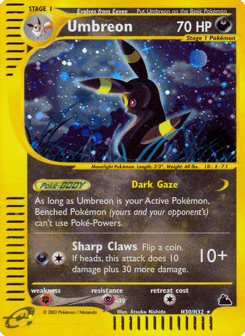
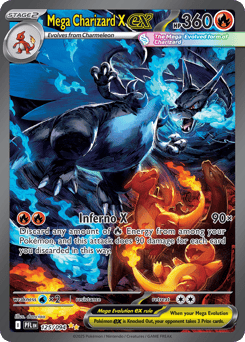
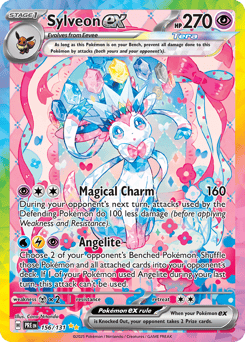
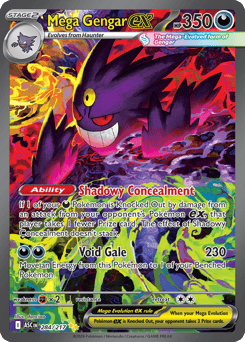
Popular Pokémon help too. A Korean or Chinese Umbreon or Charizard will always find a buyer more easily than a Korean Pokémon nobody chases, just as in English. For a sense of which Pokémon carry that premium, the most valuable Pokémon cards ranking is a good guide, since the same names sit near the top in every language. In English, Mega Charizard X ex (Phantasmal Flames) sells for about $790 and Sylveon ex (Prismatic Evolutions) for about $486; the Korean and Chinese versions of cards like these are the ones with the best resale chances. So is Mega Gengar ex (Ascended Heroes), one of the most expensive cards from this year's sets; our market page shows which English cards are selling most right now.
How to spot a bootleg
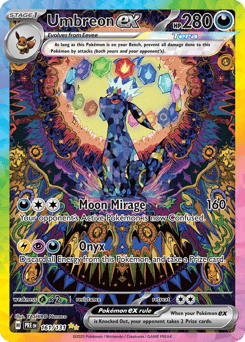
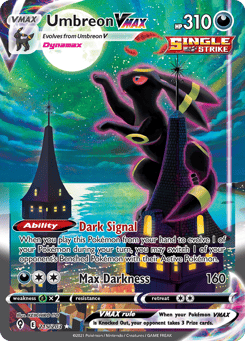
Bootlegs mostly copy English cards that people will pay for, especially modern Special Illustration Rares and vintage Charizards. Real examples of cards that get copied a lot: Umbreon ex (Prismatic Evolutions), which sells for about $1,528; Umbreon VMAX (Evolving Skies), about $2,200; and Charizard ex (151), about $414. Prices like that are exactly why fakes exist.
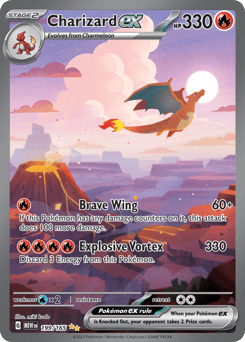
Checks that catch most of them:
- Text errors. Wrong fonts, odd spacing, misspellings and made-up attack text.
- The é in Pokémon. Bootlegs often drop the accent or get the symbol wrong.
- Colors and holo. Washed-out or oversaturated colors, and a flat, glittery holo instead of a proper pattern.
- Card stock. Fakes often feel glossy or flimsy and bend too easily. Real cards have a thin dark layer visible when you look closely at the edge.
- Size. Compare it with a card you know is real; our Pokémon card dimensions guide has the numbers.
- Where it came from. Very cheap "booster boxes" and whole packs of ultra rares from marketplace sellers are the usual source.
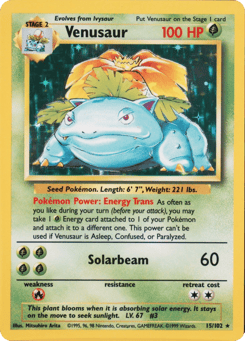
Our full guide on how to tell if Pokémon cards are fake goes through each test in detail. If you're not sure about an expensive card, buy it already graded, or put it side by side with a card from the same set that you know is real. And the vintage ones get copied too: a Charizard (Base Set) offered cheap is a fake until proven otherwise.
How to price one
Ultraball prices English cards only, so here's how to price a Korean or Chinese card yourself:
- Confirm it's official using the checks above.
- Identify the exact card from its set code and number at the bottom, not just the Pokémon.
- Search sold listings for that language. Asking prices for foreign-language cards are all over the place; sold prices are what count.
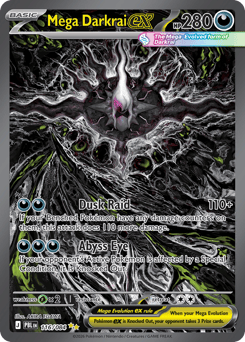
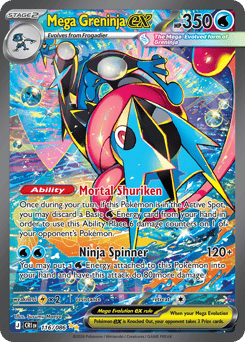
- Check the English version on Ultraball with the search box or our price checker guide. For most cards, that's roughly the ceiling for a Korean or Chinese copy in the US. If you hold the Korean print of Mega Darkrai ex (Pitch Black), for example, the English copy at about $238 tells you where the top of the market is, and the Korean one will usually sit below it. The same goes for Mega Greninja ex (Chaos Rising) at about $205.
Our prices are for near-mint English copies; how we price explains what the numbers mean.
If you decide to sell, our guide to where to sell Pokémon cards covers the options. For foreign-language cards, marketplaces with international buyers usually beat a local shop.