Step 1: Identify the exact card
A card's name isn't enough. There are more than a hundred English Charizard cards, and they range from bulk to the price of a car. You need three things, all printed on the card.
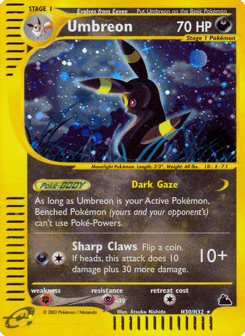
The name. Include everything after it: "Charizard ex", "Umbreon VMAX", "Dark Charizard" and "Blaine's Charizard" are all different cards.
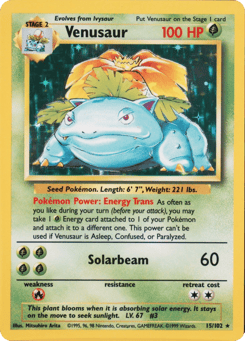
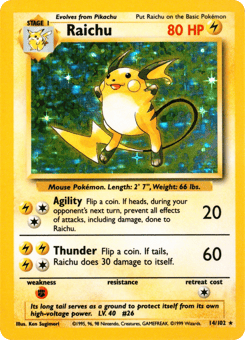
The card number. Bottom left or bottom right, printed as a fraction like 4/102. The first number is the card, the second is the printed size of the set. If the first is bigger than the second, you have a secret rare.
The set. Most cards have a small set symbol near the number (or, on the oldest cards, beside the art box). The 1999 Base Set has no symbol at all, which is itself the tell. If you can't place the symbol, the set release dates guide lists every English set in order, and the sets page shows each one's cards.
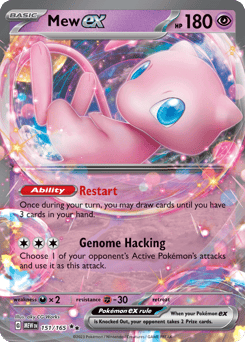
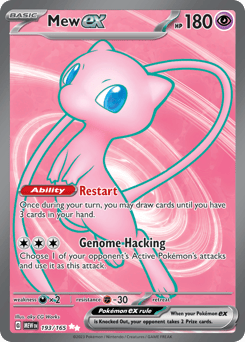
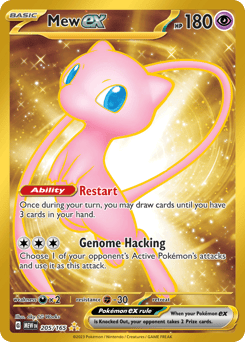
Then type the name and number into the search box at the top of any page. Matching on the number matters more than people expect. The 151 set alone has three different Mew ex cards: the regular Mew ex (151) at about $8.00, the full art Mew ex (151) at about $35.99, and the gold Mew ex (151) at about $31.24. Same name, same set, different money.
Step 2: Check the printing
Older cards often exist in more than one printing, and the difference can be larger than the card's whole value.
For sets from 1999 to 2002, look for the small black "Edition 1" stamp just below the bottom left corner of the art box. That's a 1st Edition copy. Base Set holos have a middle printing too, Shadowless, with no stamp and no drop shadow along the right edge of the art box. The 1st Edition vs Shadowless vs Unlimited guide shows the differences side by side.
Card pages list every printing we price. Charizard (Base Set) has separate pages for the 1st Edition Charizard and the Shadowless Charizard, and the unlimited card's page shows all three prices together so you can see how far apart they are.

Modern cards have their own version of this: a normal holo, a reverse holo and sometimes a stamped promo version of the same card. If yours has the shiny pattern on the background rather than the picture, it's a reverse holo and it may be priced separately.
Step 3: Read the price properly
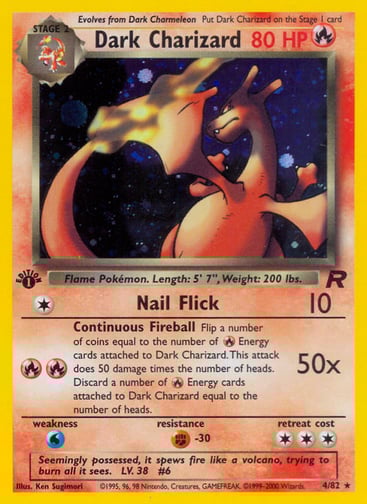
Let's use a real card. Dark Charizard (Team Rocket) from Team Rocket (2000) sells for about $327 ungraded. Here's what that number means, and what it doesn't.
- It's for a near-mint copy. Every ungraded price on Ultraball assumes a clean card: sharp corners, no creases, no real whitening on the edges.
- It's for the unlimited printing unless you're on a printing page. Dark Charizard also has a 1st Edition page with its own price.
- It's built from sales. A listing is what a seller hopes for. A sale is what a buyer paid. We build prices from recorded sold listings, and when a card's asking prices run far above what it actually sells for, we show the sales instead.
Every price also carries a confidence mark. "Strong data" means many recent sales that agree. "Limited data" means a few sales, so treat the number as a rough guide and read the recent sales listed on the card page yourself. The details are on how we price cards.
Step 4: Adjust for condition
This is where most home valuations go wrong. Be honest with yourself. Hold the card under a bright light and tilt it.
- Corners: sharp, or slightly rounded and white?
- Edges: look at the back first. Blue borders show every chip as a white fleck.
- Surface: scratches on the holo, dents, print lines, fingerprints.
- Creases and bends: any crease at all takes a card out of near mint, and a hard crease takes most of the value with it.
A card that was played with, carried in a pocket or stored in a rubber band will sell for well under the near-mint price. How far under depends on the card. For expensive vintage holos, collectors pay a big premium for clean copies, so a played one can sell for a fraction of the listed price. For cheap modern cards the gap matters less, because there wasn't much value to lose.
Step 5: Raw or graded?
A graded card has been authenticated and scored by a company like PSA or CGC and sealed in a plastic slab. Graded prices are separate markets, grade by grade. On a card page you'll see the ungraded price next to PSA 10, PSA 9 and lower grades where there are enough sales.
The gaps can be enormous. Dragonite (Fossil) from Fossil sells for about $132 raw, about $660 as a PSA 9, and about $6,500 as a PSA 10. That doesn't mean your raw copy is worth the PSA 10 price. It means a copy good enough to earn a 10 is rare and priced accordingly. Plenty of carefully kept vintage cards come back an 8 or lower.
Grading costs money and time. PSA's cheapest open tier was $59.99 a card in September 2026, before shipping. PSA grading cost has the current fees and a table of cards where the grading upside is biggest, and is it worth grading Pokémon cards walks through the decision. The short rule: only grade a card if it's already worth a fair amount raw and looks close to perfect.
Pricing a whole collection: bulk vs chase
Nobody prices a shoebox card by card. Split it in two piles.
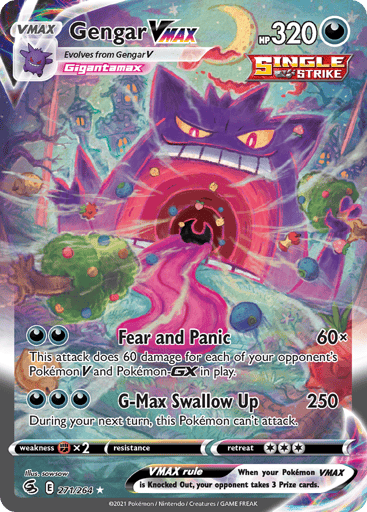
The chase pile is anything with a star rarity symbol, shiny or full-art design, a number above the set total, a 1st Edition stamp, or a date before about 2004. Look these up one at a time using the steps above. A modern example worth knowing: Gengar VMAX (Fusion Strike) from Fusion Strike sells for about $1,053, and from across a room it looks like any other shiny card. The chase pile is usually small, and it's where nearly all the value is.
The bulk pile is everything else: modern commons, uncommons, plain holos, reverse holos and Energy. These are worth cents each. They're sold by the hundred or thousand, sorted by type or rarity, and the buyer is usually a shop or another collector filling sets. Don't spend an evening looking them up.
If the chase pile has a lot of older cards, old Pokémon cards worth money goes through the vintage sets that matter, and the Wizards of the Coast era page lists every one with prices. For modern chase cards, the market page shows what's actually selling right now, and the most valuable Pokémon cards ranking is a good list to scan your binder against. When you're ready to sell, how to sell Pokémon cards covers the options.