
What is a Shadowless Pokémon card?
PSA puts it plainly: Shadowless is "a unique printing" that "can only be found in the 1999 Base Set." Shadowless cards have no 1st Edition stamp, like Unlimited cards, but they also lack the drop shadow that runs along the side of the artwork border. That missing shadow is where the name comes from.
It wasn't a mistake. It's just how the earliest Base Set cards were designed. PSA explains that after the 1st Edition print run, the stamp was removed while "the missing shadow and thin HP font" were kept. Later the drop shadow was added and the HP font thickened, and those later cards are Unlimited.
Two things follow from that history:
- Shadowless is a Base Set term. Jungle, Fossil and the other Wizards-era sets split only into 1st Edition and Unlimited. Our catalog tracks a Shadowless printing for all 102 Base Set cards and for no other set.
- Shadowless is an English term. Beckett notes that foreign-language Base Set cards, such as French, German, Italian and Spanish, were printed with the shadow from the start. A "Shadowless" French Base Set card is a mislabeled listing.
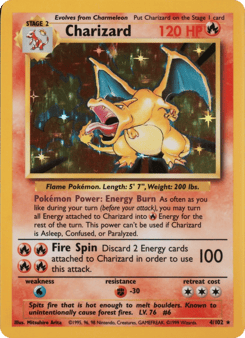
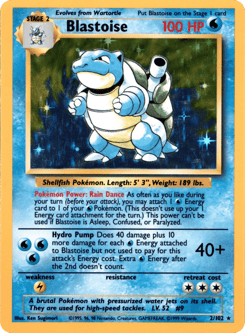
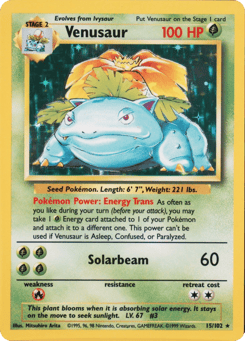
The three starters are the cards most people go looking for: Charizard (Base Set), Blastoise (Base Set) and Venusaur (Base Set). Each one has a separate Shadowless price, and on all three the gap to Unlimited is large.
The Base Set print runs
Base Set went back to press several times, and collectors group the results into four printings. CGC calls the first two the Limited Edition print runs.
| Printing | Stamp | Drop shadow | HP font | Copyright line |
|---|---|---|---|---|
| 1st Edition | Edition 1 | No | Thin | Includes 99 |
| Shadowless | None | No | Thin | Includes 99 |
| Unlimited | None | Yes | Bold | Ends at 98 |
| 4th print (2000, UK print) | None | Yes | Bold | Wizards date reads 1999-2000 |
- 1st Edition. The first run, with the Edition 1 stamp below the artwork. It's also shadowless. Our 1st Edition Pokémon cards guide covers the stamp in full.
- Shadowless. The second Limited Edition run. CGC notes that both Limited Edition runs were shadowless but only the first carried the stamp, which is why CGC grades them as two separate categories: Base Set 1st Edition and Base Set Shadowless.
- Unlimited. The drop shadow appears along the right side of the art box and the HP text gets heavier. This is the printing most people own, and probably the one in your old binder.
- 4th print. A later run from 2000, which CGC calls the UK print. It looks like Unlimited, but the copyright line carries 1999-2000. Collectors also call it Base Set 2000 or the UK 4th print.
The order matters for value. Scarcity runs 1st Edition, then Shadowless, then Unlimited, and prices follow. PSA says Shadowless cards "are typically more desirable than their Unlimited counterparts but often fall second to 1st Editions." Our guide to 1st Edition vs Shadowless vs Unlimited puts all three printings side by side.
How to tell if a Pokémon card is Shadowless
Four checks settle it. You don't need tools, just decent light and ideally an Unlimited Base Set card to hold next to it.
- Confirm it's Base Set. Base Set cards have no set symbol at the bottom right of the art box and are numbered out of 102. Base Set 2 looks similar but has its own set symbol and is numbered out of 130. Base Set 2 has no Shadowless version.
- Check the right edge of the art box. On a Shadowless card the artwork sits flat against the yellow border. On Unlimited cards a gray shadow runs down the right side of the frame, which makes the art look raised.
- Compare the HP. Shadowless and 1st Edition cards print the HP in a thin font. Unlimited cards use a bolder, heavier one. Side by side, you can't miss it.
- Read the copyright line. At the bottom of the card, Shadowless cards read ©1995, 96, 98, 99. Unlimited cards drop the final 99 and read ©1995, 96, 98. Beckett calls the extra 99 "the clearest and most consistent identifier on the card."
If the card passes those checks and has no Edition 1 stamp, it's Shadowless. If it has the stamp, it's 1st Edition. Of the four, the copyright line is the one we'd check first: it's printed text, so it doesn't depend on lighting or on how good your eyes are that day.
Trainer and Energy cards
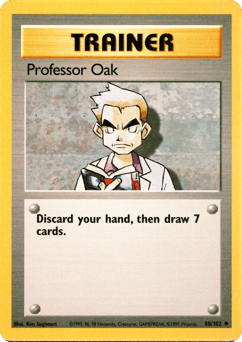
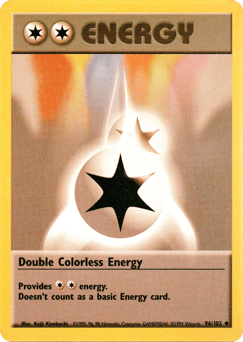
The copyright line is the check to trust on Trainers and Energy. Read the fine print on a Professor Oak (Base Set) or a Double Colorless Energy (Base Set) rather than squinting at the art box. The 99 is there on Shadowless copies and missing on Unlimited ones.
Checking from listing photos
In a compressed listing photo the shadow is a thin band a few pixels wide, and it can vanish completely in a blurry picture. When buying online, ask for a sharp photo of the copyright line and the HP. Both survive mediocre photography better than the shadow does. A seller who can't show either clearly is asking you to take the printing on trust, and on a Shadowless holo that's a lot of trust.
Shadowless vs Unlimited
The practical differences come down to three visual tells and one large price gap.
| Shadowless | Unlimited | |
|---|---|---|
| Drop shadow on the art box | No | Yes, along the right side |
| HP text | Thin | Bold |
| Copyright line | ©1995, 96, 98, 99 | ©1995, 96, 98 |
| Print run | Limited | Large |
| Value | Premium | Baseline |
Why Shadowless cards are worth more
It's supply, mostly. The Shadowless run was short and early, so far fewer copies exist than Unlimited ones. Fewer again survived decades of binders, rubber bands and shoeboxes in clean condition. Add the fact that collectors treat it as a distinct printing, and graders slab it as one, and you get a steady premium.
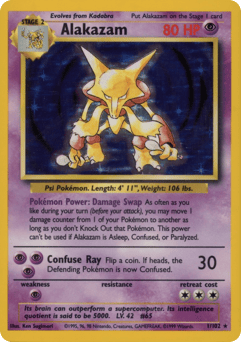
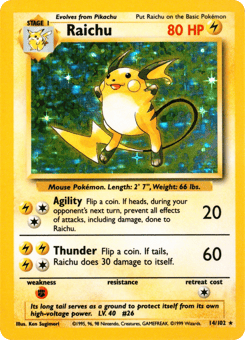
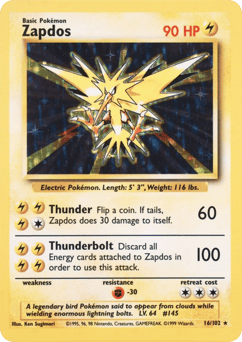
On the big holos the gap is wide. Blastoise sells for about $158 as an Unlimited copy, while its Shadowless Blastoise (Base Set) trades far higher. Alakazam (Base Set) runs about $55.33 Unlimited, with its Shadowless copy on Shadowless Alakazam (Base Set). The same pattern holds across the other holos, like Raichu (Base Set) at about $51.77 and Zapdos (Base Set) at about $35.21 Unlimited.
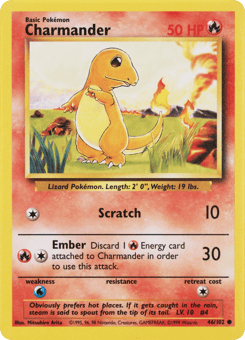
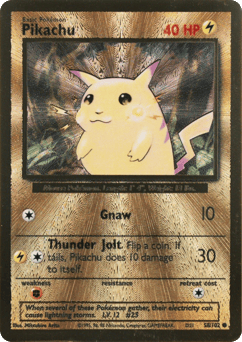
On commons and uncommons the premium is real but small in dollars. Charmander (Base Set) sells for about $2.25 Unlimited and about $255 in PSA 10. Check Shadowless Charmander (Base Set) before you decide a raw common is worth grading. Pikachu (Base Set) runs about $10.90 Unlimited, and its Shadowless copy is on Shadowless Pikachu (Base Set). The Charmander and Pikachu pages show where these sit among each Pokémon's other cards.
Shadowless vs 1st Edition is a simpler comparison: the cards are identical apart from the stamp, and the stamp adds a further premium on top. Venusaur shows all three prices across its card page and its 1st Edition Venusaur (Base Set) and Shadowless Venusaur (Base Set) pages.
Shadowless Charizard
The Shadowless Charizard is the most searched card in this whole corner of the hobby, and for most collectors it's the realistic top card of a vintage collection. The 1st Edition copy is out of reach for most budgets; a PSA 10 1st Edition Charizard sold for $550,000 at Heritage in December 2025. The Unlimited copy is far more common. The Shadowless Charizard sits between the two.
Its price history is on Shadowless Charizard (Base Set), split by condition and grade. A few things decide where a given copy lands:
- Grade. Charizard's holo scratches easily, and the jump from mid grades to a 9 or 10 is steep. Most copies that get graded fall well short of Gem Mint.
- Supply. Beckett reported in May 2026 that just over 13,000 Shadowless Charizards had been graded across all the major graders combined, with PSA 10s numbering in the dozens.
- Grader. CGC reported in April 2023 that a Shadowless Charizard earned a CGC Pristine 10, the highest-graded example in its population report at the time.
How to tell if a Charizard is Shadowless
Use the same four checks, in this order:
- No set symbol and the number 4/102 at the bottom right.
- No gray shadow down the right side of the art box.
- Thin "120 HP" at the top right.
- ©1995, 96, 98, 99 in the copyright line.
Then check for an Edition 1 stamp below the left of the art. No stamp means Shadowless. A stamp means 1st Edition Charizard (Base Set).
Charizard is also the card most worth faking, so authenticate before you celebrate. The fake-card section below covers how.
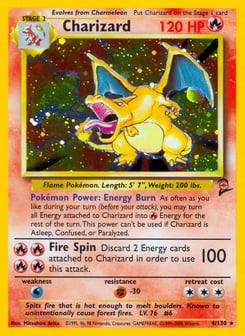
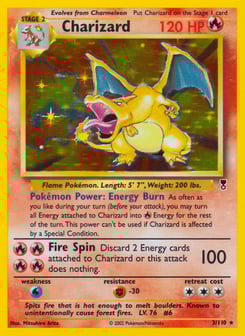
For the rest of Charizard's cards, see our Charizard hub and the most valuable Charizard cards ranking. The Base Set 2 reprint, Charizard (Base Set 2), is easy to mistake for a Base Set Charizard in a small photo; check for its set symbol and the 4/130 number. Charizard (Legendary Collection) from Legendary Collection reuses the same art too. Neither reprint has a Shadowless version, so if a listing calls one Shadowless, it's wrong.
Most valuable Shadowless cards
The list below ranks Base Set Shadowless printings by today's recorded sold prices. It updates daily.
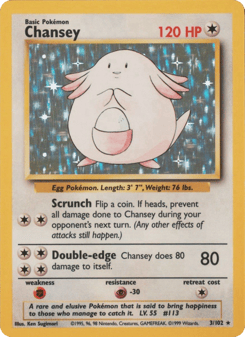
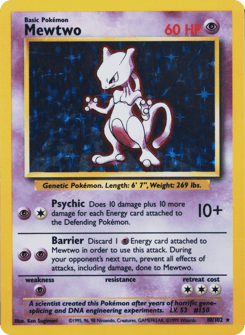
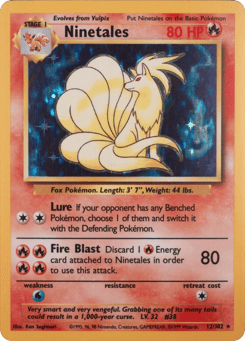
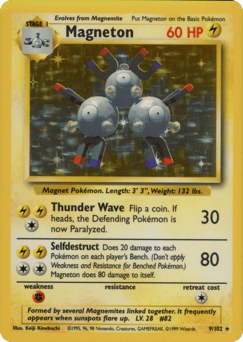
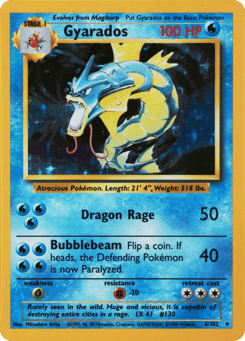
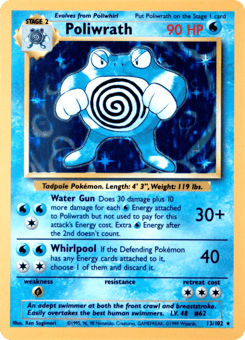
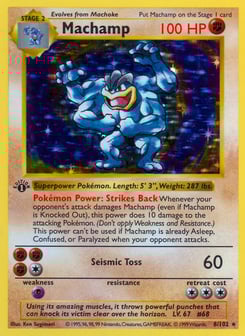
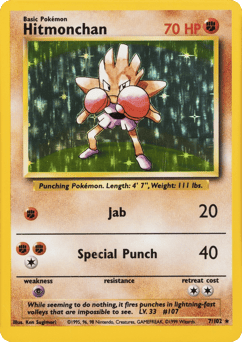
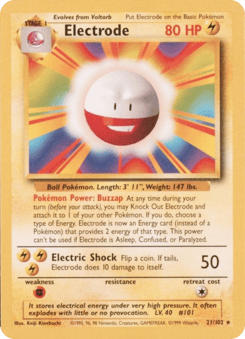
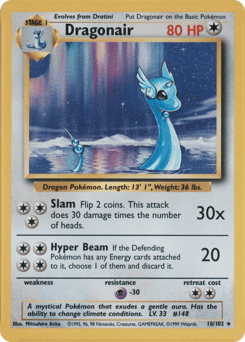
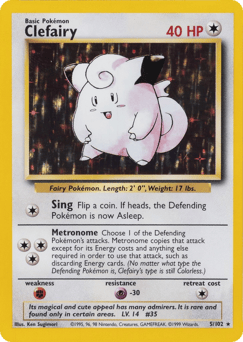
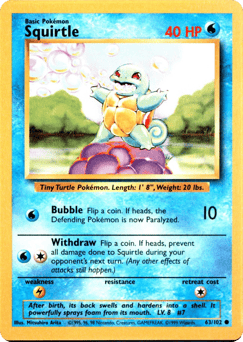
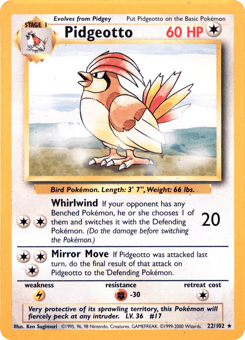
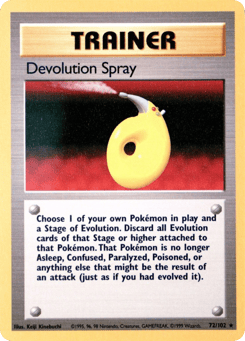
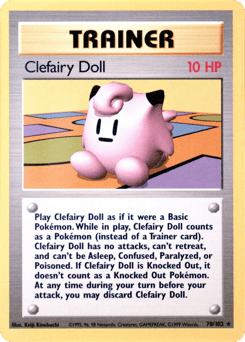
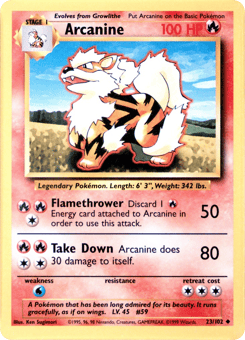
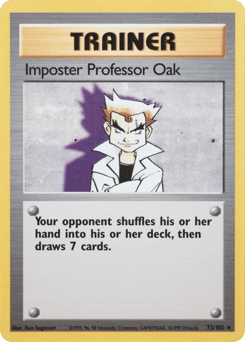
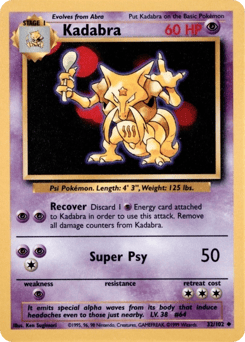
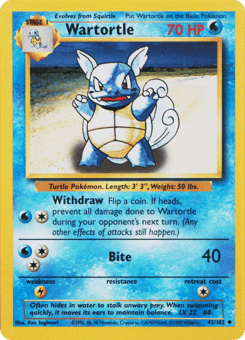
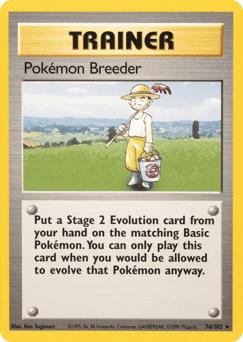
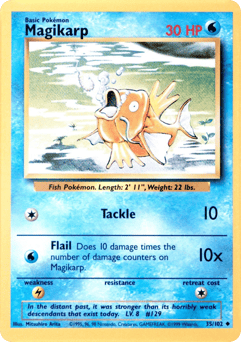
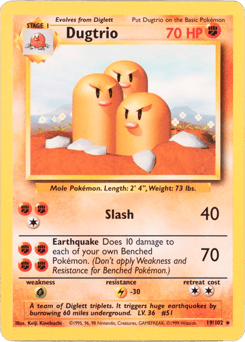
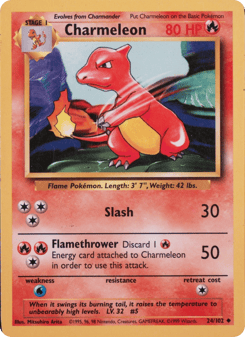
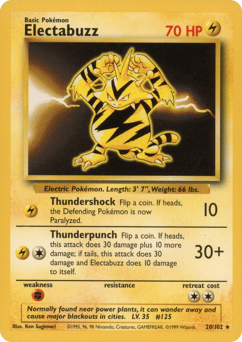
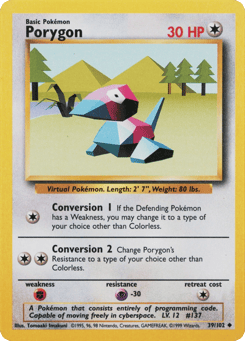
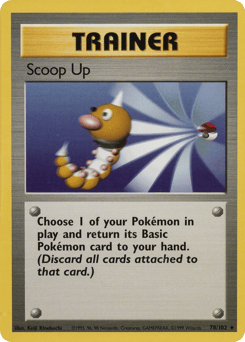
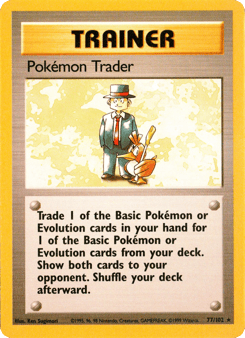
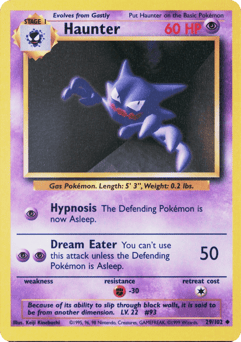
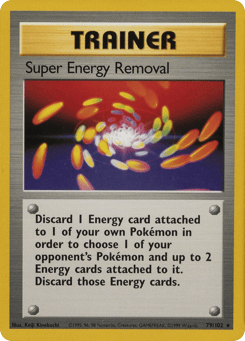
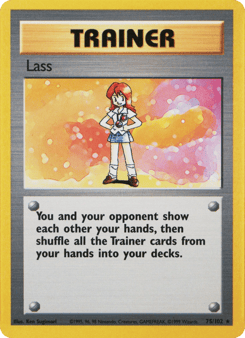
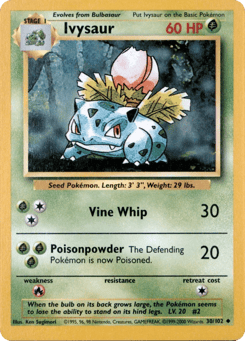
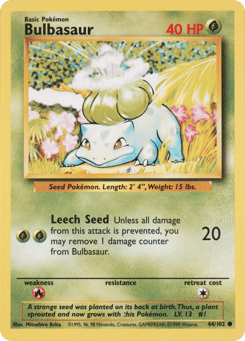
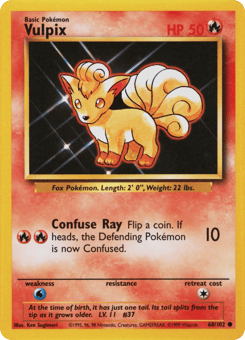
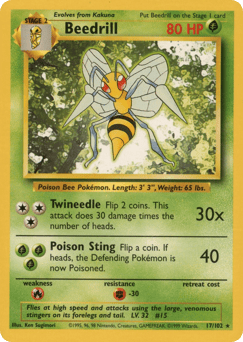
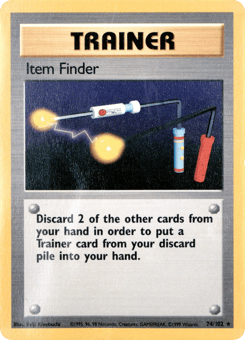
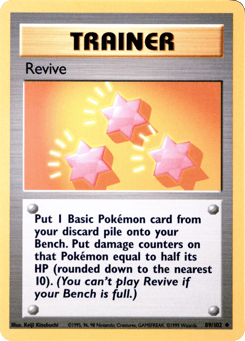
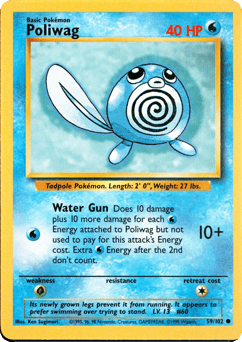
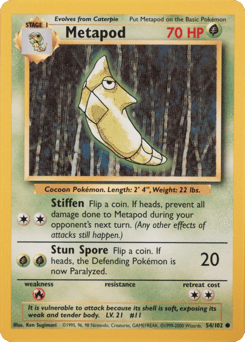
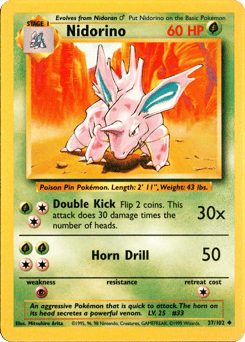
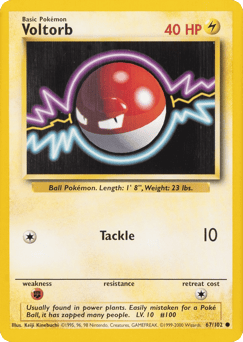
Holos fill the top of the list, as you'd expect. For Machamp (Base Set) and the other holos, the Shadowless, 1st Edition and Unlimited copies each keep their own price history. For the whole set with Unlimited prices, see the most valuable Base Set cards ranking or the full Base Set card list. If a stack of 1999 cards is what brought you here, our guide to old Pokémon cards worth money covers Jungle, Fossil and the rest of that era.
Mewtwo (Base Set) and Chansey (Base Set) are two more holos where the printing makes a real difference to the price, so check which one you have before you sell.
Fake and misidentified Shadowless cards
Two problems show up in Shadowless listings, and only one of them is deliberate.
Unlimited cards listed as Shadowless. This is the common one. A seller looks at a card from 1999, sees a faint shadow in a dim photo or none at all, and lists it as Shadowless. The copyright line settles it. If the 99 is missing, the card is Unlimited.
Altered and counterfeit cards. Fakers print whole cards from scanned images, or doctor genuine Unlimited cards. Watch for:
- A copyright line that doesn't match the other tells. A card with no shadow but bold HP text, or no shadow and no 99, is not a genuine Shadowless card.
- A blurred or uneven border along the right edge of the art box where a shadow might have been removed.
- Wrong card stock, color or font. Genuine cards pass the light test and have a consistent black layer. Our guide on how to tell if Pokémon cards are fake covers the full checklist.
- Foreign-language cards described as Shadowless. Per Beckett, they were printed with the shadow from the start.
For anything expensive, the safest route is a copy already graded by PSA or CGC. Graders record Shadowless as its own variant (CGC grades it as a separate category), so the label on the slab does the identification for you.
Is a Shadowless card worth grading?
Grading pays off when the gap between a raw card and a high grade is bigger than the fee. That's usually true for Shadowless holos in clean condition, where even mid grades carry a premium over Unlimited. It's often not true for Shadowless commons with worn corners. Check the card's Shadowless printing page for graded prices, then weigh them against current fees in our PSA grading cost guide. Our PSA 10 Pokémon cards guide shows how much the top grade adds, is it worth grading Pokémon cards walks through the decision, and the Pokémon card price checker finds any other card quickly. When you're ready to sell, how to sell Pokémon cards covers the photos that prove the printing to a buyer.