What an AI grading app actually does
You take a photo of the front and back, usually on a plain background. The app finds the card's edges, measures the borders to work out centering, and runs an image model over the corners, edges and surface looking for whitening, dings, scratches and print lines. Most then give you sub-grades for those four areas and an overall number on the familiar 1 to 10 scale. Many also identify the card and show a market price.
Those four areas are the same ones human graders look at, which is why the output feels credible. Our explainer on how Pokémon card grading works walks through them in detail, and the PSA grading scale explained covers what separates a 9 from a 10.
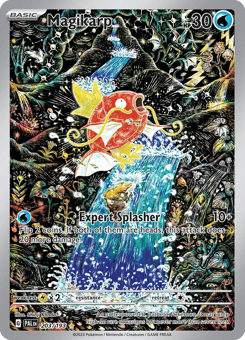
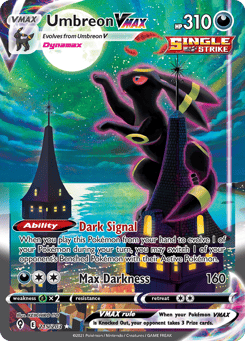
The number that matters most is usually the one between those two. Take the illustration rare Magikarp (Paldea Evolved) from Paldea Evolved: it sells for about $375 ungraded and about $4,125 as a PSA 10. Or the alternate-art Umbreon VMAX (Evolving Skies), about $2,200 raw against $4,050 in a PSA 10. On cards like these, a tool that helps you guess which side of that line your copy falls on is worth something.
Why a photo can't give you a PSA grade
Centering is the part apps handle best. Borders are straight lines, and measuring them from a flat, square photo is simple geometry. PSA's published guidance for a 10 is centering within about 55/45 on the front and 75/25 on the back, so an app that reports 62/38 on the front is telling you something real.
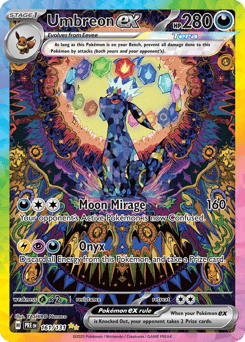
Surface is where photos fall down. A light scratch across the holo on a card like Umbreon ex (Prismatic Evolutions) shows up at one angle under one light and vanishes at every other. Graders tilt the card under strong light and look with magnification. A phone photo is one angle, one light, and whatever glare the foil throws back. Textured modern cards make it harder still, because the texture itself reads as surface noise.
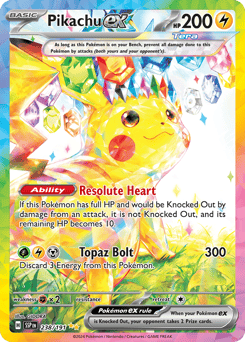
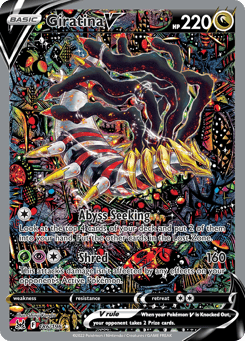
The special illustration rares and alternate arts that people most want to grade are exactly these cards. Pikachu ex (Surging Sparks) from Surging Sparks sells for about $285 raw and $908 as a PSA 10, and Giratina V (Lost Origin) from Lost Origin for about $1,003 raw and $3,750 graded 10. Both are full of etched texture and foil that a phone camera flattens into one bright smear.
A few other limits worth knowing:
- Resolution. Faint whitening on a back corner is a handful of pixels in a phone photo. The difference between a 9 and a 10 is often exactly that.
- Authenticity. An app can't confirm a card is real or that it hasn't been trimmed or recolored. Grading companies reject altered cards outright. If you have any doubt, read how to tell if Pokémon cards are fake first.
- Human judgment. A real grade includes eye appeal and a grader's call on borderline cards. Two submissions of the same card can come back a grade apart. A model trained to predict that has a moving target.
- Your photo. Crooked, blurry or glary pictures produce confident nonsense. Every app says so in its own instructions.
So treat an AI pre-grade as a sorting tool. It's good at telling you a card is clearly off-center or has obvious edge wear, which saves you a grading fee. It's much weaker at telling a 9 from a 10, which is the call you most want made.
What to look for in an AI grading app
"Best" depends on what you want from it, but these are the things we'd check before trusting any of them:
- Sub-grades, not just one number. You want to see centering, corners, edges and surface separately, ideally with the measured centering ratio. One overall grade with no reasoning can't be checked against your own eyes.
- Front and back. Backs lose grades too. An app that only asks for the front is guessing about half the card.
- Plain language about accuracy. Some apps publish accuracy figures. So far those numbers come from the companies themselves, not from an independent audit. Treat a published figure as a claim, and treat a big claim with no explanation of how it was measured as a warning sign.
- Free tries before you pay. Most of the apps below give you a few free grades. Run cards you've already had graded through them and see how close they land. That's the only accuracy test that means anything for your photos.
- Clear pricing. Credits, subscriptions and daily limits vary a lot. Check what a grade actually costs you before you upload a binder's worth.
- Price data you can check. Many apps show a value next to the grade. Compare it with recorded sales on the card's page here before you act on it.
The apps, and what each one says it does
These are the tools that come up most when collectors ask about grading apps. Everything in the table is taken from each company's own website or app store listing as of September 2026. We haven't tested them, and we have no relationship with any of them.
| App | What it says it does | Price (as listed, September 2026) |
|---|---|---|
| PSA app | Scans cards to identify and price them, tracks graded and raw cards, builds PSA submissions, sells through the PSA Vault and eBay | Free |
| CardGrader.AI | "Live Grade" from your phone camera, PSA grade predictions, market values | 3 free grades a day |
| CardGrading.app | AI grade and market value from a photo in about 35 seconds | 2 free grades; plans from $59.88 a year |
| TCGrader | PSA-style sub-grades and defect notes for Pokémon, Magic, Yu-Gi-Oh! and sports cards | 1 free credit; subscriptions listed in pounds, from £9.99 a month |
| CardGrade | A "pre-screen" of centering, corners, edges and surface; says plainly it is not an official grade | Free to start |
| SnapGrade AI | Pre-grades with sub-grades and per-area confidence | 2 free credits, then $1 to $2 per card |
| PokeGrade.org | Free AI pre-grade from uploaded photos, with front and back sub-grades and a value estimate | Free |
A few notes the table can't hold.
The PSA app is not a grade predictor. Despite "grading" in its name, its store listing describes a scanner, a collection tracker and a way to submit to PSA and sell afterward. It doesn't claim to predict what your card will get. It's useful once you've decided to submit, and for checking a slab's certification.
SnapGrade publishes an accuracy figure. It says 87% of its predictions landed within half a grade of the PSA result across 412 comparisons. That's the company's own number, measured on its own terms. We can't verify it, and nobody else has published a comparable independent test of any of these apps that we know of.
Scanners aren't graders. Apps like Ludex are built to identify cards and pull prices. They're handy for cataloguing a collection, but that's a different job from predicting a grade.
TAG is a grading company, not an app. People mention it in the same breath because TAG grades with imaging technology and gives each card a 1,000-point score alongside the usual 1 to 10 grade. You still send the card in and get a slab back, just as with PSA.
How to use a pre-grade without fooling yourself
Here's the order we'd work in:
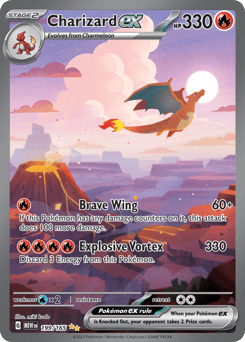
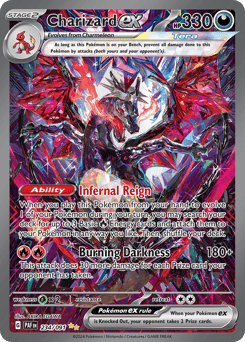
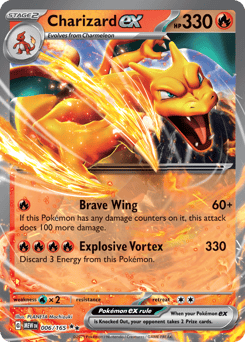
- Check the price gap first. Search the card on Ultraball and look at the raw price against the PSA 9 and PSA 10 prices. Our price checker guide shows how to find the exact printing. If a PSA 10 barely beats raw, no app result will make grading pay. The three Charizard ex cards below show how much that gap swings within one Pokémon: Charizard ex (151) is about $414 raw and $1,425 in a PSA 10, Charizard ex (Paldean Fates) about $276 and $808, and the plain double rare Charizard ex (151) about $10.02 and $145.
- Photograph properly. Card out of the sleeve, flat on a dark mat, phone held square above it, soft even light, no flash on holos. Shoot the back too.
- Run the pre-grade and read the sub-grades. A low centering or edge score is the useful signal. A predicted 10 is a maybe, not a promise.
- Look yourself. Tilt the card under a bright lamp and check every corner with a loupe. Anything the app missed, a grader will find.
- Do the maths. Our PSA grading cost guide has current fees and a grading-upside table. Is it worth grading Pokémon cards covers the judgment calls, and how to get a Pokémon card graded covers the submission itself.
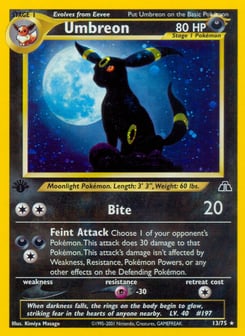
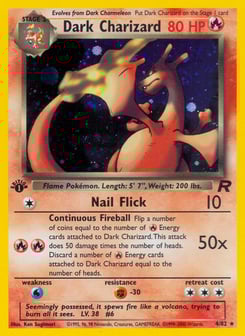
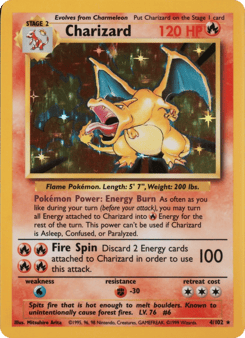
Vintage cards show why step 1 comes first. Umbreon (Neo Discovery) from Neo Discovery sells for about $669 raw and about $26,099 as a PSA 10, but clean 20-year-old holos are rare, and most copies you'll find are nowhere near a 10. The first-edition Dark Charizard (Team Rocket) tells a similar story: about $327 raw, about $10,800 in a PSA 10. An app that flags soft corners on a card like that has saved you a fee. One that tells you it's a 10 has given you a reason to look harder, nothing more.
If you're sorting a big pile, track the keepers as you go. Our collection tracker values every card at the condition or grade you actually hold, so you can see which raw cards are worth a second look and which ones already sit well above their raw price as slabs. And if you're pre-grading because you want to sell, how to sell Pokémon cards covers when a raw sale beats grading.