What counts as a trainer card
A trainer card is any card that isn't a Pokémon or an energy. The official rulebook splits them into a few kinds:
- Items, like Ultra Ball or Rare Candy. You can play as many as you like in a turn.
- Supporters, like Professor's Research or Iono. One per turn, and usually named after a character from the games.
- Stadiums, which stay in play and affect both players.
- Pokémon Tools, which attach to a Pokémon.
For value, the split that matters is between Supporters and everything else. Supporters show people, and people are what collectors pay for. Most of the valuable modern trainer cards are full-art Supporters of well-loved characters.
Two other kinds of card get called "trainer cards" all the time, and they aren't. Cards like Blaine's Charizard (Gym Challenge) are Pokémon cards that belong to a character; so are modern Trainer's Pokémon such as Team Rocket's Mewtwo ex (Destined Rivals). And the Trainer Gallery subsets from Sword & Shield are mostly Pokémon cards that show a trainer in the art. We cover both near the end, because they're often what people are really asking about.
Why some trainer cards are worth money
The same forces that move any Pokémon card's price apply to trainers, just with a different twist.
The character. Lillie, Cynthia, Marnie, Iono, Misty and N are the Charizard and Umbreon of the trainer world. A full-art card of one of them sells for many times the price of a full-art Supporter of a character nobody remembers.
The artwork. A full-art Supporter, where the character fills the whole card, is the trainer equivalent of an alt art. Regular versions of the same card are almost always bulk.
Scarcity. Full-art and secret-rare trainers were pulled at the same odds as the best Pokémon cards in their sets. Gold items and the secret-rare trainers of older sets were rarer still.
Condition. For vintage trainers especially, condition is nearly everything. A Base Set trainer is bulk in played condition and a real card in a PSA 10.
Full-art Supporters
Full-art Supporters arrived in the Black & White era, and they've been in almost every set since. They're the heart of the trainer-card market.
Black & White and XY
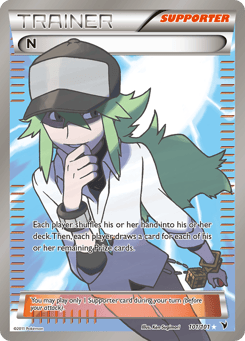
The early full-art trainers are well over a decade old, most of them were played hard, and it shows in the prices. The full-art N (Noble Victories) from Noble Victories sells for about $207 and about $2,200 in a PSA 10. From Boundaries Crossed, Skyla (Boundaries Crossed) sells for about $219 and Bianca (Boundaries Crossed) for about $217.
The late Black & White sets added more: Professor Juniper (Plasma Freeze) sells for about $93.38, Iris (Plasma Blast) for about $98.89, and Colress (Plasma Storm) for about $86.35 raw. These cards were often played in their day, so clean copies are scarce, and the gap between raw and graded prices is large.
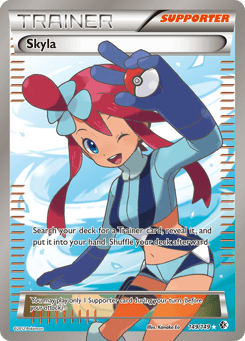
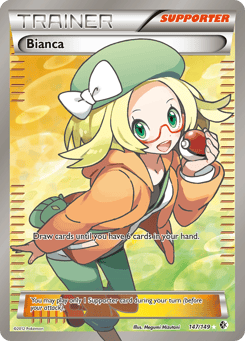
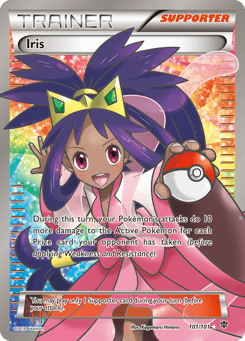
XY had fewer standout trainers, but Hex Maniac (Ancient Origins) from Ancient Origins is a favorite: about $155 raw and about $2,750 in a PSA 10.
Sun & Moon
Sun & Moon is where full-art trainers became a collecting category of their own. The top card is Lillie (Ultra Prism) from Ultra Prism, which sells for about $462 ungraded and about $1,475 in a PSA 10. It's one of the most valuable modern trainer cards in English, full stop. From the same set, Cynthia (Ultra Prism) sells for about $245.
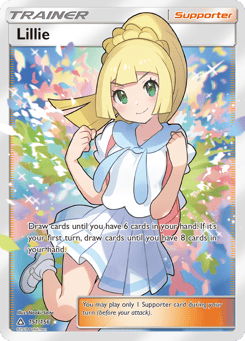
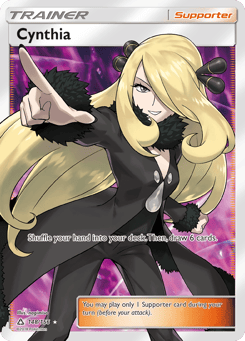
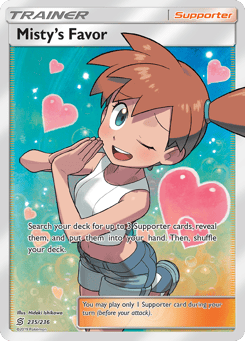
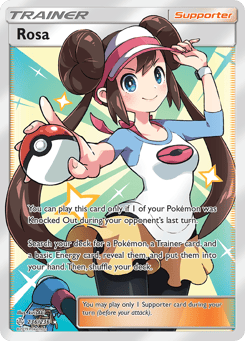
Later in the era, Misty's Favor (Unified Minds) from Unified Minds sells for about $386, and Cosmic Eclipse had a run of good ones: Rosa (Cosmic Eclipse) at about $281 and Red & Blue (Cosmic Eclipse) at about $246. Sabrina's Suggestion (Team Up) sells for about $217, and Professor Elm's Lecture (Lost Thunder) for about $197. The shiny-style Cynthia (Hidden Fates Shiny Vault) from the Hidden Fates Shiny Vault sells for about $200.
If you have Sun & Moon full-art trainers in a binder, they're worth pulling out and checking one by one. This era is the sweet spot.
Sword & Shield
Sword & Shield printed a lot of full-art Supporters, and most sell for modest amounts. The standout is Marnie: Marnie (Sword & Shield) from the first Sword & Shield set sells for about $38.52. Boss's Orders (Rebel Clash) sells for about $54.70, and the Galarian Gallery Cynthia's Ambition (Crown Zenith Galarian Gallery) from Crown Zenith sells for about $25.10.
Rainbow versions of Supporters exist in this era too, and they usually sell for less than the full-art versions. Collectors prefer the full-color art.
Scarlet & Violet and Mega Evolution
Modern Supporters now get Special Illustration Rares, with painted art in place of the old full-art photos. These are hard pulls, but they usually sell for less than the Pokémon SIRs in the same set. The exceptions are, again, the characters people love.
Perrin (Twilight Masquerade) from Twilight Masquerade sells for about $160. Morty's Conviction (Temporal Forces) sells for about $70.93, N's Plan (Black Bolt) for about $69.25, and Iono (Paldea Evolved) from Paldea Evolved for about $60.18. In the Mega Evolution era, Lillie's Determination (Mega Evolution) sells for about $62.79 and Hilda (White Flare) from White Flare for about $48.60.
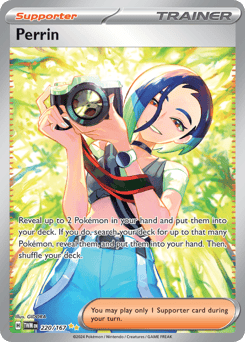
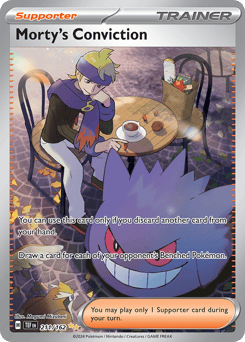
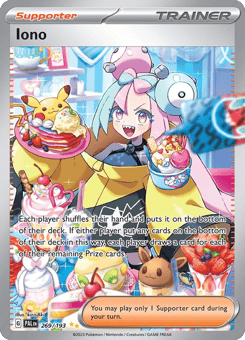
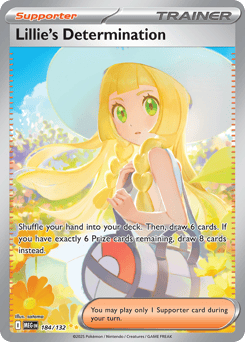
These are the trainer cards most likely to turn up in a pack you open this year. They're worth sleeving the moment you see them.
Gold and secret-rare trainers
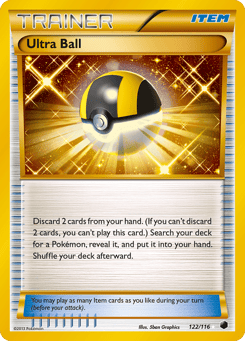
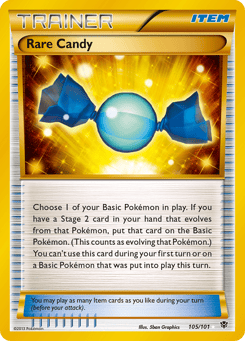
Gold item cards are rarer than full-art Supporters, and some are worth more. The gold Ultra Ball (Plasma Freeze) from Plasma Freeze sells for about $889, and the gold Rare Candy (Plasma Blast) from Plasma Blast for about $182. Both were playable staples in their day, which helps.
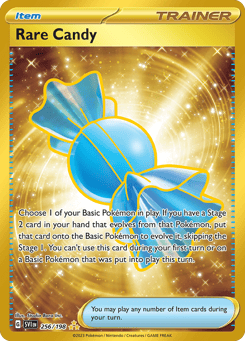
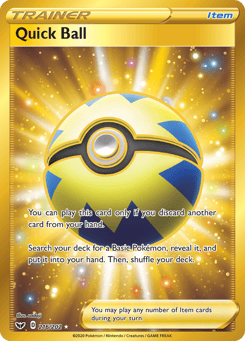
Modern gold items are a different story. A gold Rare Candy (Scarlet & Violet) from Scarlet & Violet sells for about $4.97, and a gold Quick Ball (Sword & Shield) for about $14.86. They're rare pulls, but collectors in this era chase painted art over gold, and items don't have a character to carry them. Our guide to gold Pokémon cards goes through the whole gold question.
Older secret-rare trainers are worth a look too. Here Comes Team Rocket! (Team Rocket Returns), the secret rare from Team Rocket Returns, sells for about $416. The HeartGold & SoulSilver sets each hid an Alph Lithograph secret rare: Alph Lithograph (HeartGold & SoulSilver) sells for about $120, and Alph Lithograph (HS—Triumphant) for about $109 raw and about $2,470 in a PSA 10. See our secret rare page for the rest.
Vintage trainer cards
This is the part of the question most people are really asking: are the trainer cards in an old 1999 binder worth anything?
Base Set trainers
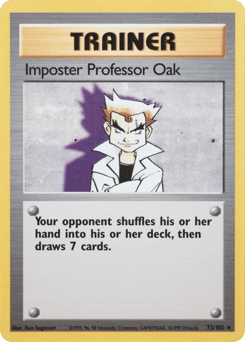
Raw, mostly no. Base Set trainers were printed in huge numbers and played hard, and a typical copy sells for a couple of dollars. Professor Oak (Base Set) sells for about $1.92, and even the rare Impostor Professor Oak (Base Set) only sells for about $14.02 ungraded.
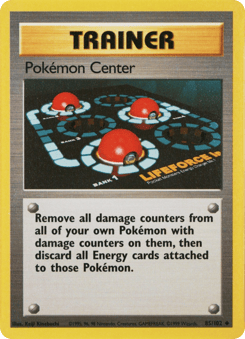
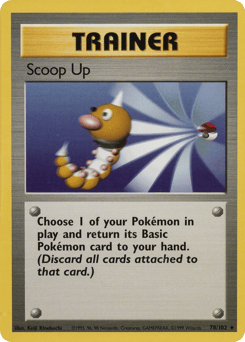
In a PSA 10 it's a different card. Pokémon Center (Base Set) sells for about $500 in a PSA 10, Pokémon Flute (Base Set) for about $337, and Defender (Base Set) for about $350. Scoop Up (Base Set) goes for about $9.09 raw and about $225 in a PSA 10. The gap is the whole story: these cards are common, but gem-mint copies aren't.
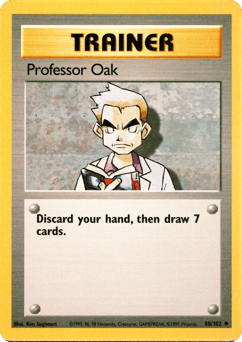
Printing matters too. A 1st Edition Professor Oak sells for far more than an unlimited one, and there's a Shadowless version in between. Our guides to 1st Edition and Shadowless cards explain how to tell them apart, and 1st Edition vs Shadowless vs Unlimited puts them side by side. The same applies to Jungle, Fossil and Team Rocket trainers: Here Comes Team Rocket! (Team Rocket) sells for about $404 in a PSA 10.
Gym Heroes and Gym Challenge
The two Gym sets gave the Gym Leaders their own holo trainer cards, and these are the vintage trainers with the most collector interest. Misty (Gym Heroes) sells for about $71.83 raw and about $1,830 in a PSA 10. Sabrina (Gym Challenge) sells for about $75.02, Erika (Gym Heroes) for about $44.64, and Lt. Surge (Gym Heroes) for about $39.78. From Gym Challenge, Blaine (Gym Challenge) and Giovanni (Gym Challenge) sell for about $43.13 and $45.10. The two leaders people forget, Brock (Gym Heroes) and Koga (Gym Challenge), sell for about $42.74 and $40.31. Every Gym Leader got a holo, so a complete run of all eight is a nice small project for a vintage collector, and a cheaper one than chasing the leaders' Pokémon.
Even the uncommon Misty's Tears (Gym Challenge) sells for about $950 in a PSA 10. Gym Heroes and Gym Challenge are both worth sorting carefully, and 1st Edition copies carry a premium throughout.
Later Wizards sets
The e-Card sets at the end of the Wizards era turn up far less often in old collections than Base Set does, and some of their trainers are worth more than you'd guess. Weakness Guard (Aquapolis) from Aquapolis sells for about $77.93 raw, and Relic Hunter (Skyridge) from Skyridge sells for about $450 in a PSA 10. The Wizards era page shows those sets in context.
Promo and event trainers
A handful of the most expensive trainer cards are promos. Two Wizards Black Star promos, Lucky Stadium (Wizards Black Star Promos) and Pokémon Center (Wizards Black Star Promos), are among the priciest trainers in our guide: Lucky Stadium sells for about $2,131 ungraded.
World Championships promos are the other group. Champions Festival was handed out at Worlds for years, with stamped versions for staff and top finishers, and Paradise Resort took over from 2023. Examples include Champions Festival (SWSH Black Star Promos) and Paradise Resort (Scarlet & Violet Black Star Promos). These cards come in several stamped variants that sell for very different prices, so check the exact stamp on yours against sold listings before you trust any single number.
Cards people call trainer cards
Trainer's Pokémon
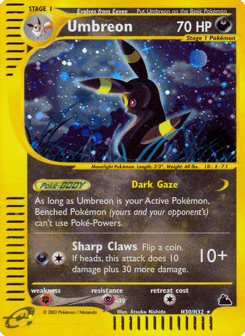
The Gym sets introduced Pokémon that belong to a character, and these are some of the most valuable Wizards-era cards of all. Blaine's Charizard (Gym Challenge) sells for about $582 ungraded, Rocket's Mewtwo (Gym Challenge) for about $269, and Misty's Gyarados (Gym Challenge) for about $144. They're Pokémon cards, but they're often what people mean by "the trainer cards from Gym Challenge."
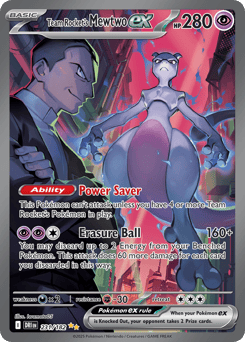
Modern sets brought the idea back. Team Rocket's Mewtwo ex (Destined Rivals) from Destined Rivals sells for about $545, the top card in its set.
Trainer Gallery
The Trainer Gallery subsets in Brilliant Stars, Astral Radiance, Lost Origin and Silver Tempest show Pokémon alongside their trainers. Rayquaza VMAX (Silver Tempest Trainer Gallery) sells for about $212 and Pikachu V (Lost Origin Trainer Gallery) for about $131. Each subset has its own ranking: Brilliant Stars, Astral Radiance, Lost Origin and Silver Tempest.
Trainer cards worth pulling out of a bulk box
If you're sorting a big pile, you don't need to look up every Potion. These are the trainer cards worth setting aside for a second look:
- Anything with a 1st Edition stamp. Even commons. The stamp alone can multiply the price of a Wizards-era trainer.
- Gym Leader holos. Misty, Erika, Sabrina, Lt. Surge, Blaine, Giovanni, Koga and Brock from the two Gym sets.
- Full-art Supporters. If a character fills the card from edge to edge, check it. The ribbed, textured surface on Black & White through Sword & Shield full arts is easy to feel.
- Gold cards. Any trainer printed entirely in gold.
- Numbers above the set total. A card numbered 151/156 isn't special; 166/156 is.
- Stamps. Worlds promos, prerelease stamps, staff stamps and league stamps all mean the card was handed out, not pulled, and some are scarce.
- Anything that looks unusual. Odd borders, miscuts and misprints are their own market; our guide to Pokémon error cards covers them.
Everything else, the regular Items, Supporters and Stadiums from any set after the Wizards era, can go back in the box. They're great for decks and not much else.
How to value a trainer card
- Check what kind it is. A regular Item or Supporter from any modern set is almost certainly bulk. A full-art Supporter, a Special Illustration Rare, a gold card or a secret rare is worth looking up.
- Find the number. A number above the set total means it's one of the special cards. On vintage cards, look for the 1st Edition stamp on the left under the art box.
- Look up the exact card. Search the name and number on Ultraball, or follow our price checker guide. There are often several versions of the same Supporter with very different prices.
- Grade the condition honestly. Our prices are for near-mint copies, and how we price explains what that means. Whitening on the back edges is the usual problem with full-art trainers, which were often played.
Should you grade trainer cards?
Only the right ones. A full-art Supporter from the Sun & Moon or Black & White eras in clean condition is often worth grading, because clean copies are scarce and the PSA 10 premium is big. A modern Supporter SIR can be worth it if it's a popular character.
Vintage trainers are the tricky case. The raw card is bulk, but a PSA 10 can sell for real money. The catch is that most old trainers won't come back a 10, and a mid-grade slab of a common trainer often sells for little more than it cost to grade. Check centering and the back edges under good light before you send anything. Our guide to whether it's worth grading Pokémon cards and the PSA grading cost guide walk through the numbers.