Rare is not the same as valuable
Rarity on a Pokémon card describes how often it was put in packs. Value is what somebody will pay for it today. The two are related, but loosely.
Here's a clean example. Hyper rares, the gold cards with three gold stars in the corner, are among the hardest pulls in a modern Scarlet & Violet set. Pikachu ex (Surging Sparks) from Surging Sparks sells for about $90.28. The gold Artazon (Obsidian Flames) from Obsidian Flames, the same rarity, is a Stadium card nobody collects, and it sells for pocket change.
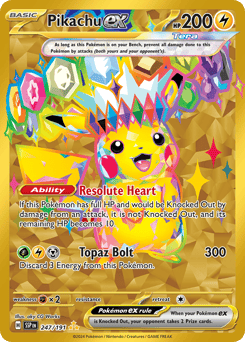
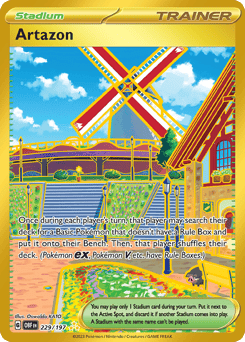
The difference is demand. A rarity symbol limits supply; it doesn't create buyers. (Gold cards have their own quirks, covered in are gold Pokémon cards worth anything.) Collectors want Pikachu, not a gold stadium. The same pattern repeats in every era, which is why what makes a Pokémon card valuable puts demand next to rarity rather than below it.
How often each rarity is actually worth money
We track sold prices for most English cards. Grouping every card with solid sales data by its printed rarity gives a rough answer to "is this rarity worth anything". Prices are for near-mint ungraded copies.
| Rarity | Where you'll see it | Share selling for $100+ | Share selling under $5 |
|---|---|---|---|
| Gold Star | EX sets, 2004 to 2007 | All of them | None |
| Holo rare, Wizards era | 1999 to 2003 | About half | None |
| Secret rare | Numbered above the set total | About 1 in 4 | About 1 in 5 |
| Special illustration rare | Scarlet & Violet onward | About 1 in 5 | Very few |
| Rainbow rare | Sun & Moon, Sword & Shield | About 1 in 8 | About 1 in 10 |
| Illustration rare | Scarlet & Violet onward | About 1 in 100 | About 1 in 5 |
| Hyper rare (gold) | Scarlet & Violet | None | About 1 in 4 |
| Ultra rare (full art ex) | Scarlet & Violet onward | None | About 4 in 5 |
| Double rare (regular ex) | Scarlet & Violet onward | None | About 19 in 20 |
| Holo rare, modern | Sword & Shield, Scarlet & Violet | None | Nearly all |
A few things stand out. Old rarities beat new ones: a Wizards-era holo is far more likely to be worth $100 than a modern gold hyper rare. The top modern rarities are lotteries, where a small number of cards carry the value and most sell for modest amounts. And the lower modern "rare" tiers, which is what most people pull, are almost all under $5. Our Pokémon card rarity guide explains every symbol if you're not sure which row your card belongs in.
Rare cards worth looking for
These are the rarities and cards where rare and valuable line up. If you find one of these, look it up before anything else.
Gold Stars
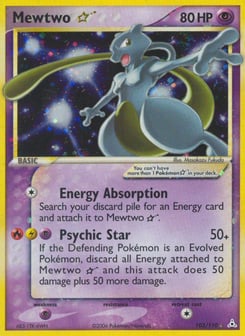
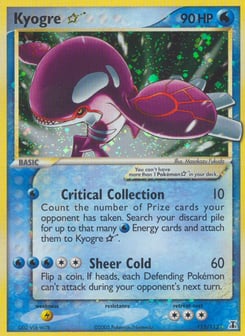
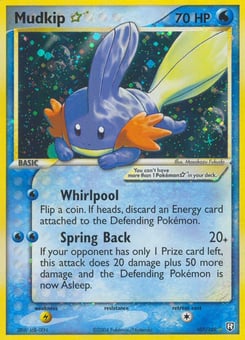
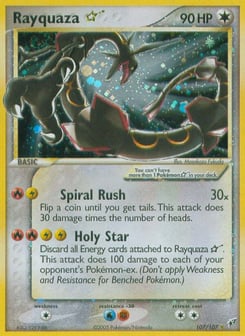
Gold Star cards have a small star after the Pokémon's name and shiny-colored art. They ran in the EX sets from Team Rocket Returns in 2004 to Power Keepers in 2007. CGC gives the pull rate in EX Deoxys as about one Gold Star per 72 packs. Every one we track sells for $100 or more near mint, and most for far more.
Mewtwo ☆ (Holon Phantoms) from Holon Phantoms sells for about $3,597, Kyogre ☆ (Delta Species) from Delta Species for about $2,612, and Mudkip ☆ (Team Rocket Returns) for about $4,891. The best known is Rayquaza ☆ (Deoxys). A CGC Pristine 10 copy sold for $1,020,000 in August 2026, the first English Pokémon card to pass a million dollars. CGC says more than 250 copies have been through its grading, and only 12 earned a Gem Mint 10.
Shining Pokémon
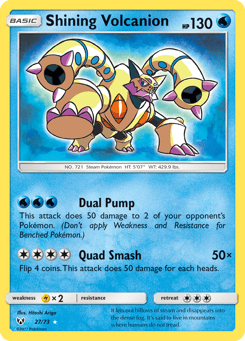
The Shining cards from Neo Revelation and Neo Destiny (2001 and 2002) are shiny-colored Pokémon numbered above the set total. Shining Gyarados (Neo Revelation) sells for about $1,126 ungraded.
Here's the catch: the name came back in 2017 with Shining Legends, and those later Shining cards are a different story. Shining Volcanion (Shining Legends) sells for about $8.67. Same word on the rarity, fifteen years apart, very different money. Check the set symbol before you celebrate.
Skyridge and Aquapolis holos
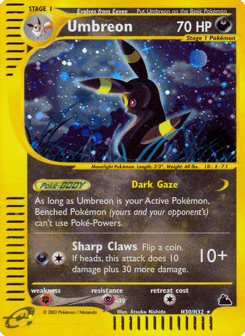
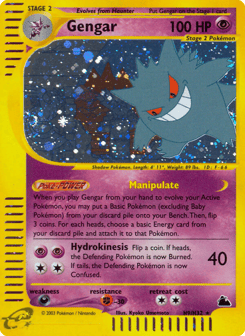
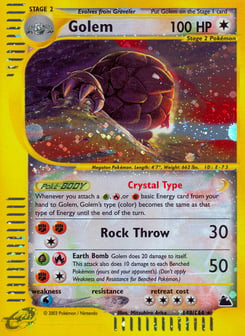
The last two Wizards sets, Aquapolis and Skyridge, had a separate run of holo rares numbered with an "H", and they're among the most valuable holos of any era. Gengar (Skyridge) from Skyridge sells for about $4,440 ungraded and about $160,000 as a PSA 10. Skyridge also had secret rares: Golem (Skyridge) sells for about $1,715. Old Pokémon cards worth money covers the rest of the vintage sets.
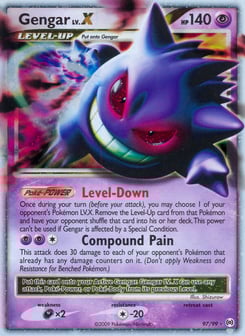
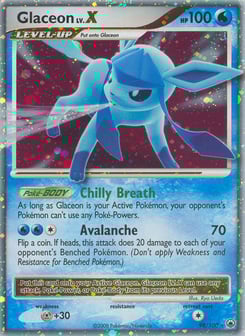
LV.X
LV.X cards were the chase in the Diamond & Pearl and Platinum sets from 2007 to 2009, printed as a separate card that sat on top of the Pokémon. Roughly half of the ones we track sell for about $100 or more. Gengar LV.X (Arceus) from Arceus sells for about $590, and Glaceon LV.X (Majestic Dawn) from Majestic Dawn for about $625.
Secret rares
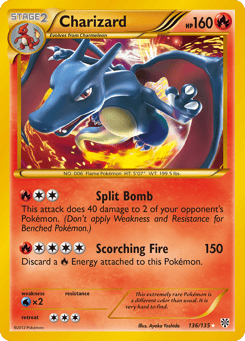
A secret rare is any card numbered above the printed set total, such as 136/135. They go back to the Wizards era, and the older ones tend to be the valuable ones. Charizard (Plasma Storm) from Plasma Storm sells for about $1,295.
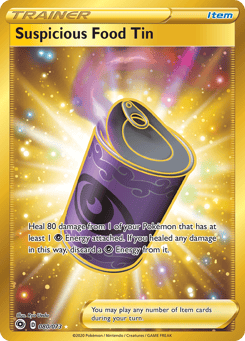
Later secret rares include a lot of gold Trainer and item cards that nobody chases. Suspicious Food Tin (Champion's Path) from Champion's Path is a gold secret rare, and it sells for pocket change. About one in five secret rares we track sells for under $5.
Alternate arts and special illustration rares
Since about 2021, the modern chase has been artwork. The alternate-art cards in Sword & Shield sets and the special illustration rares of Scarlet & Violet show the Pokémon in a full scene, and the best of them are the most valuable modern cards. What is an SIR explains how they differ from ordinary illustration rares.
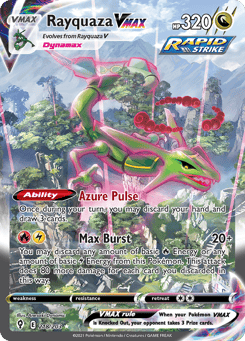
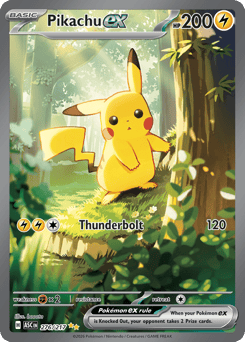
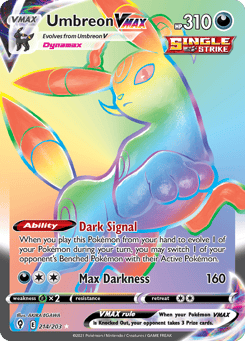
Umbreon VMAX (Evolving Skies) from Evolving Skies sells for about $2,200. Rayquaza VMAX (Evolving Skies) from the same set sells for about $1,132. Among special illustration rares, Pikachu ex (Ascended Heroes) from Ascended Heroes sells for about $1,051.
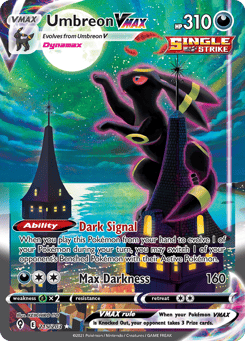
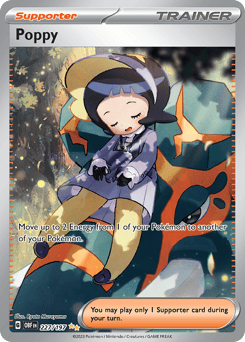
The lottery point from the table applies here too. The special illustration rares of Trainer characters are often the cheap end of a set: Poppy (Obsidian Flames) from Obsidian Flames sells for a few dollars. And a rarity tier isn't the whole story within a single Pokémon either. Evolving Skies has two secret rare Umbreon VMAX cards, and Umbreon VMAX (Evolving Skies) sells for about $76.46, a fraction of the alternate art.
Shiny Vault cards
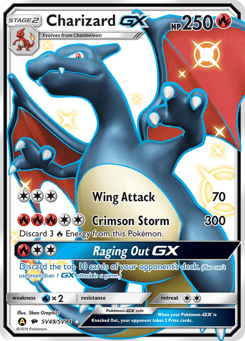
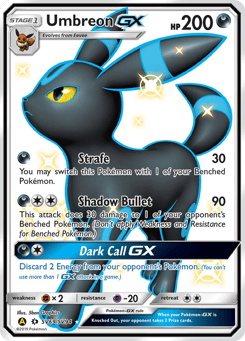
Hidden Fates in 2019 came with a subset of shiny-colored cards, the Hidden Fates Shiny Vault, numbered with "SV". The GX cards in it are the valuable ones. Charizard-GX (Hidden Fates Shiny Vault) sells for about $707 and Umbreon-GX (Hidden Fates Shiny Vault) for about $301. About half of the shiny GX cards we track sell for $20 or more, and a handful for $100 or more.
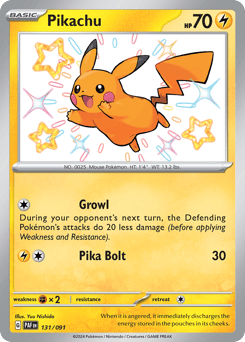
Later shiny subsets were much bigger and much cheaper. The shiny rares of Paldean Fates number over a hundred cards, and more than half sell for under $5. Pikachu (Paldean Fates) is the exception people look for, at about $89.69.
Commons that beat most rares
To prove the point from the other side: some commons are worth more than almost any modern rare. Darkness Energy (Call of Legends) from Call of Legends, an Energy card marked common, sells for about $150. Commons from the e-Card sets and the small POP Series can do the same. Rarity symbol is where you start looking, not where you stop.
Rare-looking cards that rarely pay
Some rarities look spectacular and still sell for small amounts, usually because each set had lots of them. Don't sell these for bulk, but don't plan a holiday either.
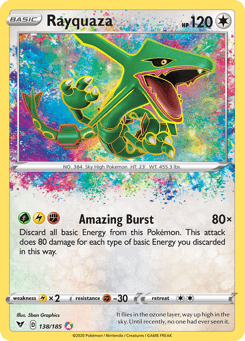
- Amazing rares from 2020 and 2021 have a rainbow splash across the art. Nearly all sell for under $20; Rayquaza (Vivid Voltage), the most valuable of them, sells for about $28.93.
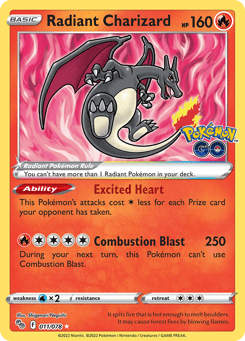
- Radiant rares from 2022 and 2023 are shiny Pokémon with a textured, sparkly finish. Most sell for a few dollars. Radiant Charizard (Pokémon GO) is near the top at about $21.90.
- Prism Star cards from Sun & Moon sets, marked with a ◇ after the name. About half sell for under $5, and even Giratina ◇ (Ultra Prism) only reaches about $20.88.
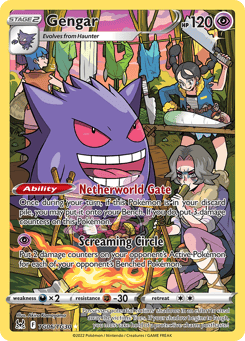
- Trainer Gallery cards from late Sword & Shield, which mostly show a Pokémon alongside its Trainer. Popular Pokémon do well, such as Gengar (Lost Origin Trainer Gallery) at about $59.99, but nearly half sell for under $5.
Reading rarity on your card
Every card from Base Set onward has a rarity symbol in a bottom corner, next to the card number.
- Circle, diamond, star: common, uncommon, rare. On older sets, a star with a shiny picture is a holo rare.
- Two black stars: double rare (Scarlet & Violet onward).
- Two silver stars: ultra rare.
- One, two or three gold stars: illustration rare, special illustration rare, hyper rare.
- A number above the set total: a secret rare, whatever the symbol.
- A star after the Pokémon's name: a Gold Star, from the 2004 to 2007 EX sets.
- "Shining" in the name, "LV.X", "Prime" or "LEGEND": the special rarities of their eras.
The rarity guide has the full chart, and how to tell if a Pokémon card is rare goes through spotting each one. Our rarity pages list every card of a rarity with prices, for example illustration rares, hyper rares, rainbow rares and amazing rares.
Why two cards of the same rarity sell so differently
If you've got this far, you've seen it over and over: the same rarity, very different prices. It comes down to four things.
The Pokémon. Charizard, Pikachu, Umbreon and the other Eeveelutions, Gengar, Rayquaza, Lugia and Mew sell for more than other Pokémon at the same rarity, set after set.
The art. Collectors pay for scenes and illustrations they love, which is why two special illustration rares from the same set can be worlds apart.
Condition. A rare card only fetches top money in near-mint shape, and the best copies are worth grading. The gap between a PSA 9 and a PSA 10 is often several times, as PSA 10 Pokémon cards explains.
The set. Some sets are simply harder to find today than others, and their cards cost more at every rarity. The e-Card sets are the clearest case among vintage cards.
The language and the printing. Everything on this page is about English cards, which is all we price. Japanese and other-language versions of the same card are separate markets with their own prices; are Japanese Pokémon cards worth more covers when they beat the English card and when they don't. Within English cards, a 1st Edition stamp, a Shadowless Base Set holo or a stamped promo version can change the price of a card without changing its rarity symbol at all.
Mistakes. A handful of misprinted cards sell for more than the correct version because collectors want the error. Most printing flaws make a card worth less, not more, so check before you get excited; Pokémon error cards worth money lists the ones that count.
Value yours
If you have a rare card and want to know what it's worth, look it up by name and number in the search box on any page, check you're on the right printing, and read the ungraded price with its confidence mark. How much are my Pokémon cards worth walks through reading that price, and how to tell if Pokémon cards are worth money has a quick checklist for sorting a stack first. If the card is a Gold Star, a Shining card or a Skyridge holo in clean condition, read PSA grading cost and is it worth grading Pokémon cards before selling it raw. Those are rarities where a graded copy in a high grade sells for many times the raw price, as the PSA 10 figures on their card pages show.
For lists rather than lookups, the most valuable Pokémon cards ranking orders every card by ungraded value, the market page shows what's selling now, and top sales lists the biggest recent sales.