What makes a Pokémon card rare
People use the word three ways, and each one points at a different set of cards.
- How many copies exist. Prize and gift cards were made in tiny runs, sometimes with an exact count. Nothing beats them for scarcity.
- How hard the card is to pull. Inside a set, the rarity symbol tells you how scarce a card is against the rest of that set. Our Pokémon card rarity chart goes through every symbol. The card at the top of a set's ladder might show up once in several boxes.
- How many copies survive in top condition. Some cards were printed in the millions, and only a sliver of them grade 10. The 1st Edition Base Set Charizard is common by print-run standards. In a PSA 10 it's rare.
None of those is the same thing as value. A one-of-a-kind card can sell for less than a mass-printed Charizard in a perfect grade, because demand counts as much as supply does. If you want the record prices, our list of the most expensive Pokémon cards ever sold ranks them. This page ranks scarcity. For the quick version of how to judge your own cards, see how to tell if a Pokémon card is rare.
The rarest Pokémon cards at a glance
Here are the cards covered below, scarcest first. Copy counts are the best public figures from the grading company or auction house that handled each card. Where nobody has a firm count, the table says so.
| Card | Year | How it was distributed | Known copies |
|---|---|---|---|
| Post Malone V, Katy Perry V, J Balvin V | 2021 | Gifts to the artists | 1 each |
| Blastoise presentation card | 1998 | Wizards of the Coast test print | 2 |
| Prerelease Raichu | 1999 | Stamping error, given to staff | 2 certified |
| No. 2 Trainer, 2006 World Championships | 2006 | Top three at Worlds | 3 (all places) |
| No. 1 Trainer, Super Secret Battle | 1999 | First place at nine events | 9 |
| No. 3 Trainer, Tropical Mega Battle | 1999 | Third place at nine events | 9 |
| Kangaskhan Parent-Child promo | 1998 | Tag-team event winners | About 10 |
| Silver No. 2 Trainer Pikachu | 1997 to 1998 | Second place at early tournaments | About 14 |
| Master's Key | 2010 | Japan national finalists | 36 |
| Pikachu Illustrator | 1998 | CoroCoro Comic contest prize | 39 to 41 |
| Ishihara GX | 2017 | Staff gift | 30 to 60 |
| Tropical Wind | 1999 | Regional finalists and a lottery | 74 |
| Gold Star Rayquaza, CGC Pristine 10 | 2005 | Booster packs | 1 at that grade |
| 1st Edition Charizard, PSA 10 | 1999 | Booster packs | 121 at that grade (2022) |
The bottom two rows are a different animal. Plenty of those cards were printed. What's scarce is a perfect one.
Cards that were never sold in packs
These are the real rarities. None were sold in stores, most are Japanese, and we don't carry them because they hardly ever trade. The copy counts come from the grading companies and auction houses that have handled them.
Pikachu Illustrator (1998)
The Illustrator was the prize in illustration contests that the Japanese magazine CoroCoro Comic ran in 1997 and 1998. Win the contest, get the card. Counts run from 39 to 41, depending on how you treat the few copies that came out some other way.
PSA has graded exactly one at Gem Mint 10 and 15 at Mint 9. That PSA 10 is the copy Logan Paul picked up in 2021 in a private deal Guinness World Records logged at $5,275,000. He sold it at Goldin on February 16, 2026 for $16,492,000, the most anyone has paid at auction for a trading card of any kind. A PSA 9 went through Heritage Auctions a month later, in March 2026, for $1.4 million.
It isn't the rarest card on this page. It's the rarest one with a real market, meaning enough copies have sold in public that you can put a number on it. That's a big part of why it gets the headlines. If you want the full story of the big sales, the most valuable Pikachu cards ranking covers the English Pikachus we track, and the Japanese side of the hobby gets its own treatment in are Japanese Pokémon cards worth more.
Post Malone V, Katy Perry V and J Balvin V (2021)
For the 25th anniversary in 2021, three artists from Pokémon 25: The Album each got a personalized promo showing them with the Pokémon from their song. CGC reports that The Pokémon Company confirmed these were gifts for the artists alone and would never be released. Each one is a one-of-one.
None has come to auction. If one ever does, the buyer gets the only copy there is, which is about as clean a definition of rare as the hobby offers.
Blastoise presentation card (1998)
Before the English game launched, Wizards of the Coast printed Blastoise presentation cards to show Nintendo what English Pokémon cards would look like. Two are known to have been made. One, graded CGC 8.5, sold at Heritage Auctions on January 14, 2021 for $360,000. Nobody knows publicly where the second one is.
It has a galaxy-star holo pattern and a layout slightly off from the Base Set cards that came after. You can own the retail version, Blastoise (Base Set), and it's still one of the three starter holos every vintage binder seems to be built around. Blastoise collectors who want the full run can check the most valuable Blastoise cards.

Prerelease Raichu (1999)
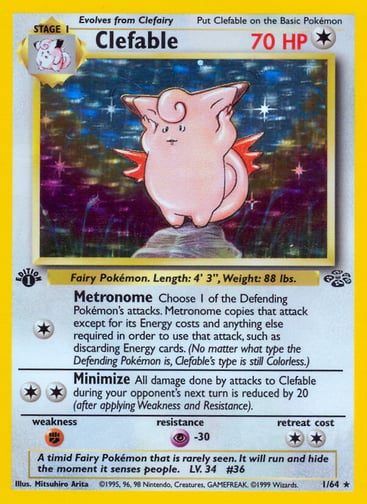
In 1999 Wizards promoted new sets with prerelease events, where players got a holo stamped "PRERELEASE". The Jungle Clefable is the familiar one; its regular version is Clefable (Jungle). According to CGC, a small number of Raichu holos were stamped by mistake and handed to Wizards staff as keepsakes. For years the hobby treated the card as a rumor.
That changed on November 1, 2023, when CGC announced it had certified two Prerelease Raichu cards using forensic imaging and XRF scanning. One graded CGC 5.5 and the other CGC 8. Two confirmed copies put it among the rarest English cards ever printed, and it was never supposed to leave the building. It's also the most extreme example of a mistake turning into money; our guide to Pokémon error cards worth money covers the more ordinary ones you might actually find.
No. 2 Trainer, 2006 World Championships
The 2006 Pokémon World Championships in Anaheim, California gave Trainer promo cards to its top three finishers and nobody else. CGC says only three 2006 Trainer promos exist, one each for first, second and third. The No. 2 Trainer shows Pikachu holding a silver trophy, and CGC lists a sale at $110,000.
Pikachu Trainer trophy cards (1997 and 1998)
The first Japanese tournaments gave gold, silver and bronze Pikachu Trainer cards to their top three players. They were awarded at the first official tournament in 1997 and through the Lizardon (Charizard) Mega Battle series, which ran from November 1997 to February 1998.
Goldin said only 14 copies of the Silver No. 2 Trainer are believed to exist, and a PSA 10 sold there on September 7, 2023 for $444,000. Bronze is thinner still on the certified side: only four Bronze No. 3 Trainers from the first tournament had been through PSA when one sold at Heritage in April 2023 for $300,000. A Gold No. 1 Trainer sold at Heritage in December 2025 for $450,000.
No. 1 Trainer, 1999 Super Secret Battle
While kids played the 1999 Tropical Mega Battle, older Japanese players met in a separate tournament called the Super Secret Battle. First place at each of nine events took home a No. 1 Trainer card with a holofoil silhouette of Mewtwo. CGC says nine exist, one per event. It's one of the very few cards in the game that shows its Pokémon only as a silhouette.
Tropical Mega Battle No. 3 Trainer and Tropical Wind (1999)
CGC describes the 1999 Tropical Mega Battle as the first tournament built on the structure that became today's World Championships. Its Japanese qualifiers awarded personalized No. 1 to No. 3 Trainer cards showing an Exeggutor. Nine tournaments means, by CGC's count, nine No. 3 Trainers.
Players who made the final stage of a regional event also got a Tropical Wind promo. CGC counts 64 handed out that way and 10 more through a mail-in lottery, 74 in all. Heritage's December 2025 auction also sold a complete English Tropical Mega Battle deck for $275,000, which tells you how seldom any of this material comes up.
Kangaskhan Parent-Child promo (1998)
At the 1998 Kamex Mega Battle tournaments in Japan, a side event teamed a child with a player aged 16 or over. Each winning pair got two copies of a special Kangaskhan promo, one per player. CGC counts five venues with two winners each, so about 10 copies exist.
Master's Key (2010)
The Master's Key went to finalists at Japan's 2010 World Championship representative tournament. CGC counts 36 winners across the card game and video game divisions, which means 36 cards, each mounted in an acrylic plaque. One sold at Heritage for $30,000. Thirty-six copies and a five-figure price: that gap between scarcity and value comes up again and again on this list.
Ishihara GX (2017)
For his 60th birthday in 2017, The Pokémon Company president Tsunekazu Ishihara gave staff a signed promo showing himself with a Rotom and a Master Ball. Its GX attack does 1060 damage. CGC estimates 30 to 60 copies exist, and a signed one sold at Goldin in 2021 for $247,230.
Topsun blue back Charizard (1995)
Topsun cards were Japanese Pokémon cards sold with chewing gum. They aren't part of the trading card game, but collectors treat them as part of the same hobby. The blue-back Charizard is the scarce version, and only one has graded PSA 10. It sold at Goldin on January 31, 2021 for $493,230.
Gold Pikachu (2016)
For the 20th anniversary, the jeweler Ginza Tanaka made a Pikachu card in solid 24-karat gold. You had to win a lottery just for the right to buy one, at 216,000 yen. CGC reports Goldin sales at $29,500 in 2022 and $30,700 after CGC graded another copy in 2024. It's a collectible, not a playable card. Most people asking about gold cards mean something far more common, and are gold Pokémon cards worth anything deals with those.
Other Japanese prize cards
Japanese organized play turned out dozens of other prize cards in small numbers. CGC has written up several:
- No. 1 to No. 3 Trainer, 2002 Battle Road. The last prize cards personalized with the winner's name and region. Working from results printed in Japan's Trainers Magazine, CGC estimates at least 109 were handed out across the three placings.
- Victory Orb (Mew), 2005 and 2006 Battle Road. Given in a glass plaque to the top finishers in each age bracket. CGC estimates at least 21 exist, and one sold at Heritage in March 2022 for $40,000.
- Master's Scroll, 2010. The final promo offered by the Pokémon Daisuke Club, a Japanese fan club that gave members points for playing in events. It cost 8,600 points, and few members ever got there before the program closed in June 2010.
None of these is as scarce as the one-of-ones near the top of the page. Each is still far scarcer than anything that was ever sold in a booster pack.
Why so many of the rarest cards are Japanese
The game launched in Japan in 1996, close to three years before the English Base Set arrived in January 1999, and Japanese organized play grew up first. Early Japanese tournaments, magazine contests and fan clubs handed out cards printed in tiny numbers: personalized trainer cards, trophy Pikachus, event promos with exact counts. English organized play came later, and its promos were usually printed in the thousands.
So the English collector's idea of a rare card tends to be a hard pack pull or a top-grade copy, while the rarest cards in the world are nearly all Japanese prizes. We track English cards only, which is why the Japanese cards above are named without price pages.
Rare variants and printing errors
Some of the scarcest English cards are versions of ordinary ones. The Wizards era is where most of them live:
- 1st Edition. The first print run of the early Wizards sets carries a 1st Edition stamp on the left, just under the artwork. Any 1st Edition holo from Base Set, Jungle, Fossil, Team Rocket or the Neo sets is scarcer than its unlimited twin. Our 1st Edition guide goes through them.
- Shadowless. An early Base Set run without the drop shadow on the right edge of the art box. Look at the border to the right of the picture: no dark line, no shadow. See shadowless Pokémon cards, and 1st Edition vs Shadowless vs Unlimited if the three printings still blur together.
- Prerelease and event stamps. Stamped copies of normal cards given out at events. The stamp is the only difference from the regular card, so buy these graded. A stamp is easy to fake on a raw card.
- Japanese "No Rarity" Base Set. CGC notes that the first Japanese Base Set printing has no rarity symbol at all, and those copies are much scarcer than English 1st Edition.
How rare are modern pulls?
The Pokémon Company publishes how many commons, uncommons and rares go in a pack, but not the odds for anything above that. Collectors work them out by opening lots of packs and counting. TCGplayer reported that, by its own count, the odds of pulling one specific Hyper Rare in a Scarlet & Violet set ran from about one in 300 to one in 1,000 packs depending on the set, and that Mega Hyper Rares sit firmly around one in 1,000. CGC puts some Mega Hyper Rares at one in 1,260 packs.
Odds like that make the top card of a modern set hard to pull. They don't make it scarce in the vintage sense, because modern sets are printed in far larger numbers. A card found in one pack out of a thousand can still exist in the tens of thousands. Modern rarity shows up in the price at release and wears off as more packs get opened, which is why so many modern chase cards slide after launch. If you're sitting on recent pulls, are new Pokémon cards worth anything is the honest read on where they tend to go.
The rarest English cards you can actually buy
The cards above almost never come up for sale. The ones below were released to the public in English, trade often enough to price, and still count as rare. They were short-printed, came from a small or awkward release, or survive in top grade in tiny numbers.
Gold Star Pokémon (2004 to 2007)
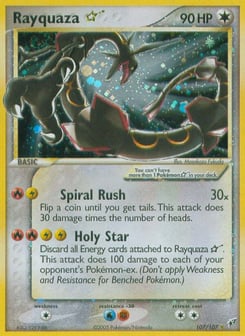
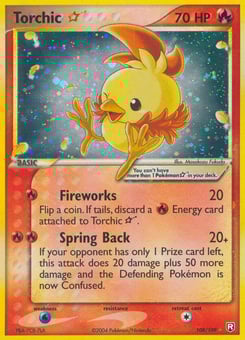
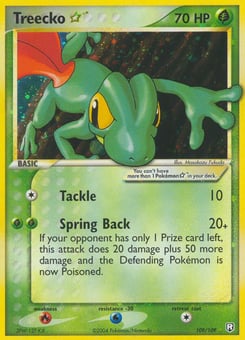
Gold Star cards are the hardest pack pulls in the English game. Each shows a shiny-colored Pokémon with a small star (☆) after its name. Nine EX era expansions, from Team Rocket Returns in 2004 to Power Keepers in 2007, had just two or three each. CGC puts the odds of pulling the Team Rocket Returns Torchic Gold Star at about one in every two booster boxes.
The Gold Star Rayquaza from Deoxys, Rayquaza ☆ (Deoxys), is the famous one. CGC has graded more than 250 copies, only 12 at Gem Mint 10 and one at Pristine 10. That Pristine copy sold at Fanatics Collect on August 28, 2026 for $1,020,000, the first English Pokémon card past $1 million. The most valuable Rayquaza cards ranking puts it in context against the Pokémon's many other chase cards.
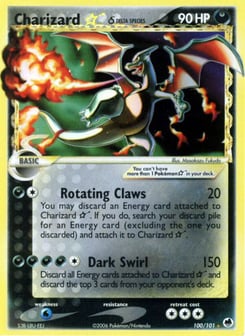
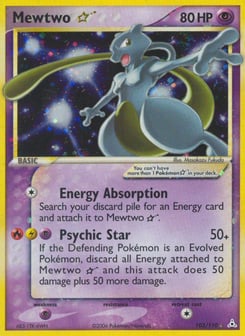
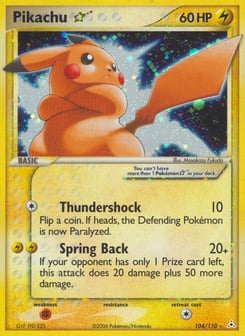
The rest of the Gold Stars aren't far behind on scarcity. Charizard ☆ δ (Dragon Frontiers) from Dragon Frontiers sells for about $6,351 ungraded. Mewtwo ☆ (Holon Phantoms) from Holon Phantoms goes for about $3,597, and Pikachu ☆ (Holon Phantoms) is the only Gold Star Pikachu ever printed.
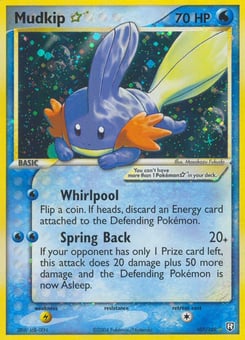
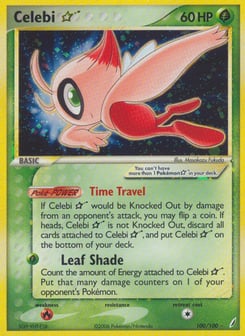
The Team Rocket Returns starters, Mudkip ☆ (Team Rocket Returns), Torchic ☆ (Team Rocket Returns) and Treecko ☆ (Team Rocket Returns), were the first Gold Stars printed. The Mudkip alone sells for about $4,891 raw, and the Torchic is the one CGC's two-box estimate refers to. Over in Crystal Guardians, the Gold Star Celebi ☆ (Crystal Guardians) is worth about $78,000 in a PSA 10.
Gold Star Espeon and Umbreon, POP Series 5 (2007)
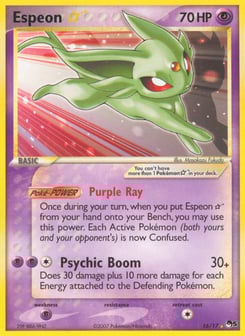
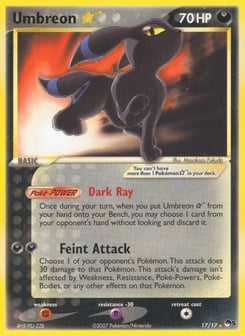
The POP Series sets were small promotional sets handed out through Pokémon Organized Play events instead of sold in shops. POP Series 5 had two Gold Stars: Espeon ☆ (POP Series 5) and Umbreon ☆ (POP Series 5). Because you could only get the packs at events, fewer circulated, and both cards sit near the top of every want list for the era. A PSA 10 Espeon Gold Star runs about $127,500.
It helps that both are Eevee evolutions, which never lack buyers. The most valuable Umbreon cards list shows how far ahead of the pack the Gold Star sits, and the most valuable Espeon cards tell the same story for its partner.
1st Edition Base Set Charizard (1999)
1st Edition Charizard (Base Set) isn't rare the way a trophy card is. Thousands exist. What's rare is a clean one. In March 2022, PWCC put the count at about 3,000 copies, with only 121 graded PSA 10. Most of them were handled, shuffled and traded on playgrounds as the toys they were meant to be, so very few came through perfect.
That's why a PSA 10 sold for $954,800 at Goldin in February 2026, and why lower grades trade for a small slice of that. The unlimited Charizard (Base Set) is far more common. The 1st Edition Pokémon cards guide explains how to tell the printings apart, including the early shadowless run, and the most valuable Charizard cards ranking lists every version we price.

1st Edition Neo Genesis Lugia (2000)
Lugia (Neo Genesis) was Lugia's first appearance in the English card game, and CGC singles out the 1st Edition printing as the version collectors want most. CGC reports a top-graded copy sold at PWCC in May 2021 for $144,300. It also notes that Lugia is often compared with Charizard for popularity, which keeps the card near the top of every rarity list. The most valuable Lugia cards ranking has every version side by side, and Neo Genesis has the rest of the set.
Shining Pokémon (2001 to 2002)
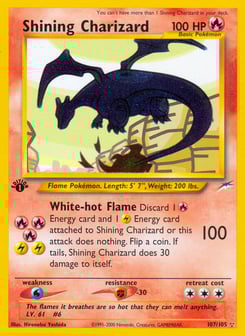
Shining cards were among the first English cards to show Pokémon in their shiny colors, and they were printed as secret rares. Shining Gyarados (Neo Revelation) and Shining Magikarp (Neo Revelation) from Neo Revelation were numbered above the set total, and Neo Destiny added eight more. Shining Gyarados sells for about $1,126 ungraded, and Shining Magikarp for about $536.
The one everyone wants is Shining Charizard (Neo Destiny), about $23,950 in a PSA 10. Neo Destiny had a 1st Edition run too, and 1st Edition Shining cards in top grade are some of the scarcest cards Wizards ever put out.
Crystal cards, Aquapolis and Skyridge (2003)
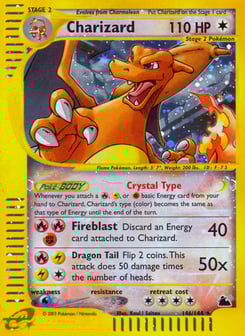
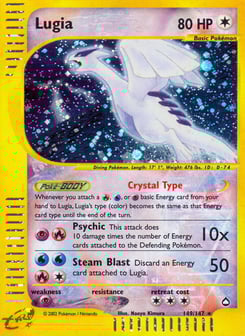
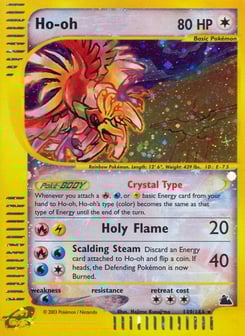
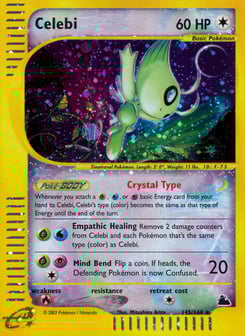
The e-Card sets were the last English sets Wizards of the Coast published, and Aquapolis and Skyridge added Crystal-type secret rares. Charizard (Skyridge) is the most valuable, at about $102,000 in a PSA 10. Lugia (Aquapolis), Ho-oh (Skyridge) and Celebi (Skyridge) come next, with the Skyridge Celebi reaching about $31,268 graded. You'll find all four in our ranking of the most valuable cards of 2003, next to the rest of that year's e-Card holos.
Pikachu with Grey Felt Hat (2023)
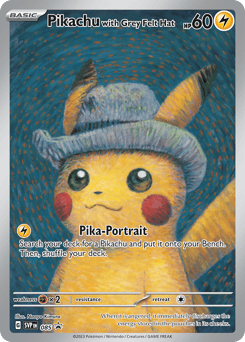
Pikachu with Grey Felt Hat (Scarlet & Violet Black Star Promos) shows Pikachu in the style of a Van Gogh self-portrait. It was given out at the Van Gogh Museum in Amsterdam during its Pokémon exhibition, which opened on September 28, 2023. Scalpers overran the museum shop, and the museum pulled the card from the exhibition on October 13, 2023. Few modern promos come with a story like that. It sells for about $1,238 ungraded, and it sits in the Scarlet & Violet promos with the rest of the era's giveaways.
Celebratory Fanfare, Ace Trainer promo (2026)
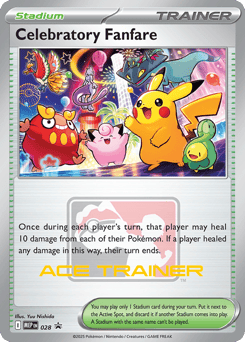
Celebratory Fanfare (Mega Evolution Black Star Promos) was sent in January 2026 to players in North America, Europe and Oceania who earned at least 200 Championship Points in the 2025 competitive season. Nobody below the threshold got one, which makes it one of the scarcer English promos of the Mega Evolution era. It sells for about $684. The rest of the set is in the Mega Evolution promos.
The rarest modern pack pulls
Modern sets are printed in huge numbers, so no modern card is rare the way a trophy card is. The top rarity in each set can still be brutally hard to pull, and that's the rarity most people opening packs today are chasing.
Mega Hyper Rares (2025 onward)
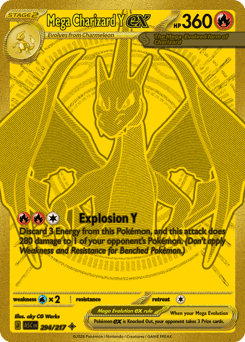
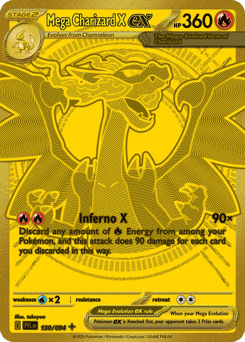
The Mega Hyper Rare replaced the Hyper Rare at the top of the ladder in the Mega Evolution era. Each set has one or two, and CGC reports pull rates as low as one in 1,260 packs. Mega Charizard Y ex (Ascended Heroes) from Ascended Heroes sells for about $405, and Mega Charizard X ex (Phantasmal Flames) from Phantasmal Flames reaches about $2,397 in a PSA 10. Both are Charizards. Nobody who has watched this hobby for long will be surprised, and the Charizard ex page lists every one we price.
Special Illustration Rares
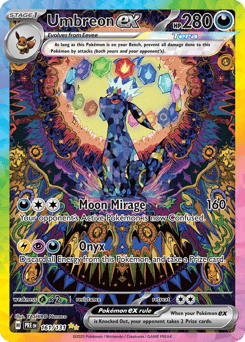
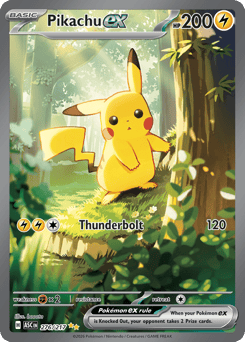
Special Illustration Rares are the chase cards of most Scarlet & Violet and Mega Evolution sets. Pull rates aren't published, and big sets make any one card hard to find. Umbreon ex (Prismatic Evolutions) from Prismatic Evolutions sells for about $1,528, and Pikachu ex (Ascended Heroes) from Ascended Heroes for about $1,051. If the SIR label is new to you, what is an SIR Pokémon card covers how it differs from a plain Illustration Rare.
Alternate-art Umbreon VMAX (2021)
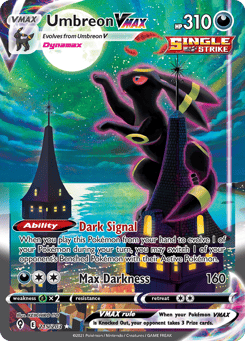
Umbreon VMAX (Evolving Skies), known to everyone as "Moonbreon", is the Sword & Shield card collectors measure the rest against. It's a secret rare from Evolving Skies and sells for about $2,200 ungraded. The Umbreon VMAX page shows how the alternate art compares with the regular printings, and the gap is wide.
The rarest card from every era
Every era of the English game has its own hardest cards. Some are secret rares, some are promos from small releases, and some are plain holos that almost never show up in top condition. Here's the short list for each, with today's prices where our data is solid enough to show them. The eras overview lays out where each one starts and ends.
Wizards of the Coast (1999 to 2003)
Past the 1st Edition Base Set holos, the scarcest Wizards cards come from the last two sets. Skyridge and Aquapolis numbered their holo rares separately with an "H" prefix, and those holos now sell for more than most Wizards-era cards. The Skyridge Gengar, Gengar (Skyridge), is worth about $160,000 in a PSA 10, and Umbreon (Skyridge) about $100,000. Among the early promos, Lucky Stadium (Wizards Black Star Promos) from the Wizards Black Star Promos sells for about $2,131 ungraded. If you're going through a box of cards from those years, old Pokémon cards worth money is the place to start.
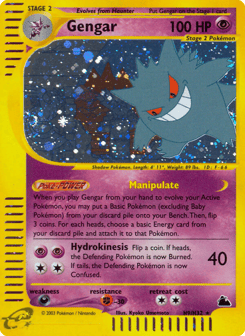
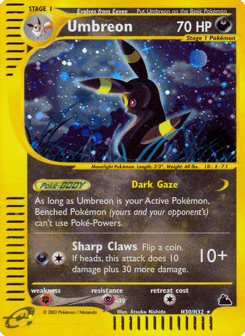
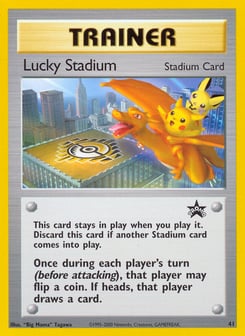
EX (2003 to 2007)
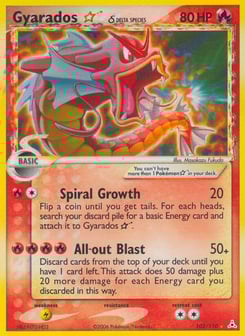
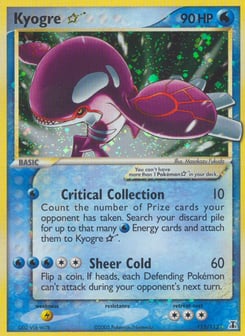
The Gold Stars above are the answer here, but they aren't equal. Raikou ☆ (Unseen Forces) from Unseen Forces is one of the more affordable, at about $2,099 ungraded. The delta species Gold Stars, such as Gyarados ☆ δ (Holon Phantoms) and the Kyogre from Delta Species, Kyogre ☆ (Delta Species), trade for several thousand dollars each. The 2005 ranking puts them against everything else from that year.
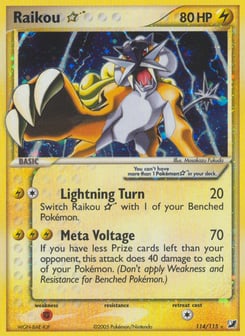
Diamond & Pearl, Platinum and HeartGold SoulSilver (2007 to 2011)
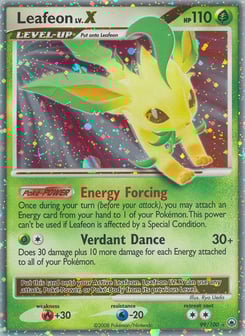
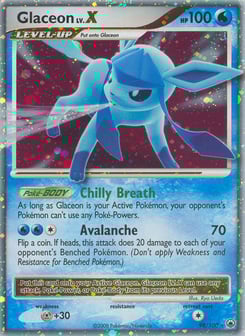
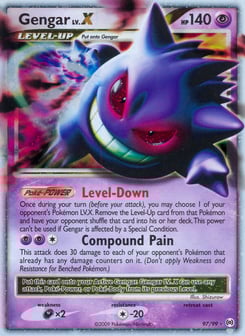
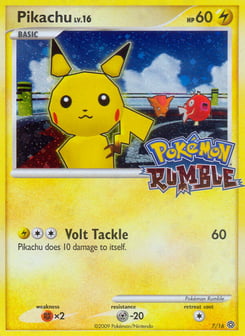
LV.X cards are the chase cards of the Diamond & Pearl and Platinum sets. Leafeon LV.X (Majestic Dawn) and Glaceon LV.X (Majestic Dawn) from Majestic Dawn lead the era ungraded, at about $781 and $625. Eeveelutions again, you'll notice. Gengar LV.X (Arceus) from Arceus is close behind. The little Pokémon Rumble set, just 16 cards, also holds some of the era's priciest cards, led by Pikachu (Pokémon Rumble) at about $839.
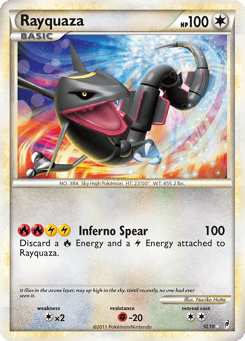
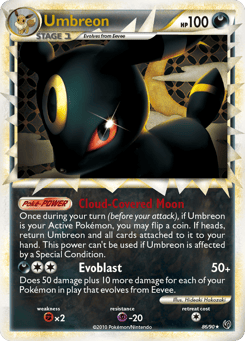
In the HeartGold SoulSilver era, the standouts are the Prime cards and the shiny legendary subset in Call of Legends, numbered with an "SL" prefix. Rayquaza (Call of Legends) sells for about $1,201. Umbreon (HS—Undaunted) from HS—Undaunted is the most wanted Prime, at about $586 raw.
Black & White (2011 to 2013)
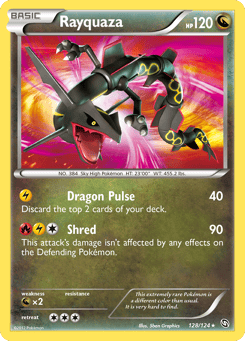
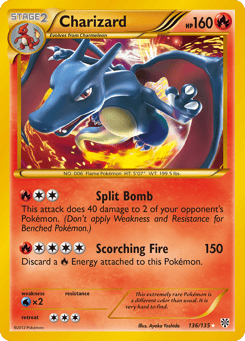
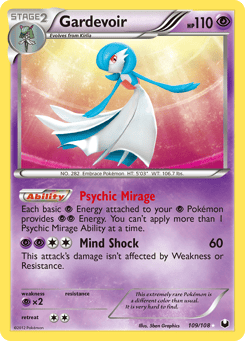
A lot of Black & White secret rares got a gold or shiny full-art finish and a number above the set total. Rayquaza (Dragons Exalted) from Dragons Exalted is the most valuable, at about $1,437 ungraded and $40,123 in a PSA 10. Charizard (Plasma Storm) from Plasma Storm and the Gardevoir from Dark Explorers, Gardevoir (Dark Explorers), follow.
XY (2013 to 2016)
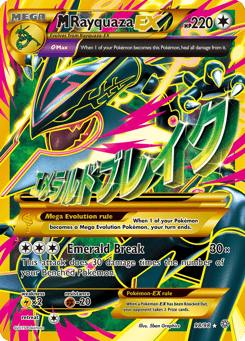
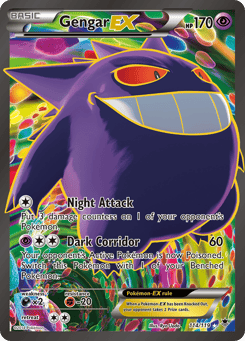
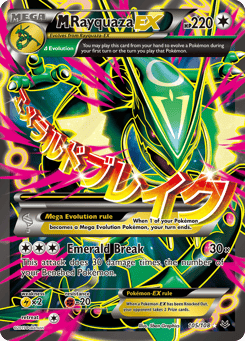
The top XY cards are Mega Evolution secret rares and full arts. M Rayquaza-EX (Ancient Origins) from Ancient Origins reaches about $10,101 in a PSA 10. Gengar-EX (Phantom Forces) from Phantom Forces and M Rayquaza-EX (Roaring Skies) from Roaring Skies are among the most valuable full arts of the era. Two of those three are Mega Rayquaza, and the Rayquaza EX cards page has the rest of them.
Sun & Moon (2017 to 2019)
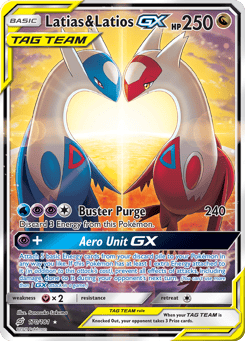
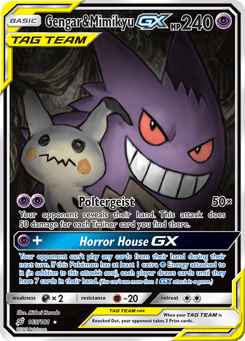
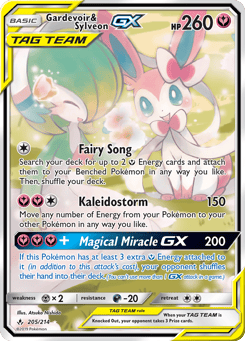
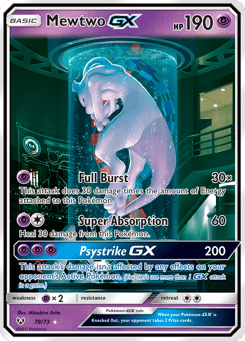
Alternate-art Tag Team GX cards are the Sun & Moon cards collectors chase hardest. Latias & Latios-GX (Team Up) from Team Up sells for about $3,224 ungraded and $15,750 graded. Gengar & Mimikyu-GX (Team Up) and the Unbroken Bonds card Gardevoir & Sylveon-GX (Unbroken Bonds) come next. From Shining Legends, the secret rare Mewtwo-GX (Shining Legends) is worth about $905; there are more in the Mewtwo GX lineup if you collect the Pokémon.
Sword & Shield (2020 to 2023)
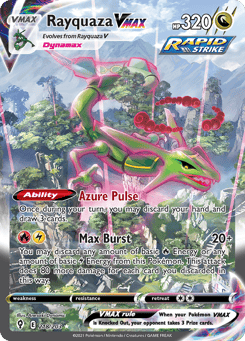
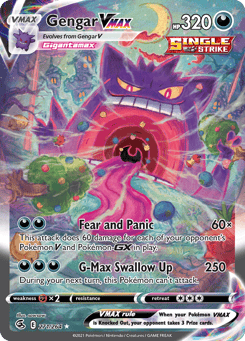
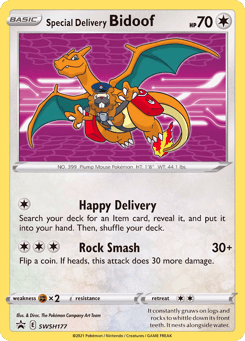
Alternate-art V and VMAX cards lead the Sword & Shield era. Moonbreon is covered above; behind it sit Rayquaza VMAX (Evolving Skies) and the Fusion Strike card Gengar VMAX (Fusion Strike). Promos can be scarce too. TCGplayer notes that only a few thousand copies of the Bidoof Day promo, Special Delivery Bidoof (SWSH Black Star Promos), were printed, and it now sells for about $720. A joke card about Bidoof turning into a real rarity is about as Pokémon as it gets.
Scarlet & Violet (2023 to 2025)
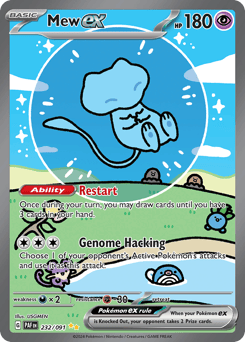
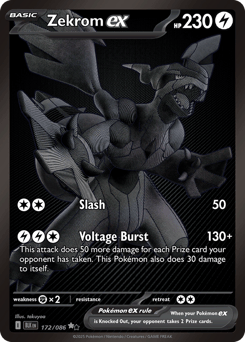
Special Illustration Rares are the rarest standard pulls, and the Prismatic Evolutions Umbreon ex (see the Umbreon ex page) sits on top. Mew ex (Paldean Fates) from Paldean Fates sells for about $976. Black Bolt and White Flare swapped the Hyper Rare for a Black White Rare, and Zekrom ex (Black Bolt) from Black Bolt is worth about $637.
The rarest cards by Pokémon
Plenty of collectors chase a Pokémon rather than a set. A handful of Pokémon account for most of the cards on this page, and each one is rare for a different reason.
- Pikachu. The winner by this measure. The Illustrator, the trophy Pikachus, the Gold Pikachu and the Van Gogh promo all feature it. Pikachu was the face of the game from day one, so the company picked it for contest prizes and special releases, and collectors pay the most for it.
- Charizard. Its rarest cards are the Topsun blue back and top-grade copies of the 1st Edition Base Set holo. Charizard has been printed in every era and in large numbers, so most of its value comes from condition and early printings, not tiny print runs.
- Blastoise. The only Pokémon with a presentation card, and only two copies of that card are known.
- Rayquaza. The Gold Star from Deoxys holds the record for a card from an English set, and its Pristine 10 copy is the only one at that grade.
- Umbreon and Espeon. Both have POP Series 5 Gold Stars, handed out through Organized Play rather than sold in packs, and the alternate-art Umbreon VMAX is one of the most sought-after modern cards.
- Lugia. Its 1st Edition Neo Genesis holo is the Lugia card collectors want most, and CGC notes Lugia is often compared with Charizard for popularity.
- Mew. Mew is the Pokémon on the Victory Orb prize cards from the 2005 and 2006 Battle Road events, with at least 21 copies by CGC's estimate. In English, the Paldean Fates card in the Scarlet & Violet list above is one of several Mew ex cards we price.
Each Pokémon page lists every English card we track for it with a current price, so you can put the rare versions next to the common ones and see the gap for yourself.
Five kinds of rare card
Most rare cards fall into one of five groups. Knowing which group a card belongs to tells you what to check before you believe the word "rare" on a listing.
- Prize and trophy cards. Printed for contest or tournament winners, often in single or double digits. Check provenance and certification first; these are the most faked cards in the hobby.
- Unreleased and test cards. Presentation cards, prerelease test prints and similar items never meant for the public. The numbers are small and usually documented by the grading companies.
- Limited promos. Event, fan-club and lottery promos with a fixed distribution. The number made is often known, and it can be anything from a handful to tens of thousands.
- Hard pack pulls. Gold Stars, Shining cards and modern top rarities. Every copy came out of a pack, so supply is bigger and spread across a lot of collectors.
- Top grades. Any popular card in a perfect grade. This is the group most of us can actually take part in, and the population reports tell you exactly how rare each grade is.
Grade rarity: when a perfect copy is the rare card
For most vintage and modern cards, the rare thing isn't the card, it's the grade. Population reports make that plain. The grading companies publish how many copies of each card they've graded at each level, and for popular cards the top grade is a small slice of the total.
- Gold Star Rayquaza. More than 250 copies graded by CGC, 12 at Gem Mint 10, one at Pristine 10. That single Pristine copy sold for $1,020,000, and a Gem Mint 10 had sold for $168,000 the month before.
- 1st Edition Base Set Charizard. About 3,000 copies, and only 121 PSA 10s as of March 2022.
- Pikachu Illustrator. One PSA 10 and 15 PSA 9s.
That's how the same card can be worth a few hundred dollars raw and hundreds of thousands in a perfect grade. If you own an older card in excellent shape, grading can show that it belongs to a very small group. It can also show that it doesn't, and the fee is the same either way. Our PSA grading cost guide breaks down the fees, is it worth grading Pokémon cards helps you decide which cards clear the bar, and PSA 10 Pokémon cards shows where the biggest grade premiums are. The PSA grading scale explained covers what separates a 9 from a 10.
Buying and selling a rare card
Rare cards pull in fakes, altered cards and resealed slabs, so the usual care applies with more force.
- Buy graded, from a known seller. For trophy cards and high-end vintage, use established auction houses or long-standing dealers. Check the certificate number on the grader's website before money moves.
- Ask for the provenance. Prize cards often came with plaques, letters or tournament records. That paper trail adds confidence and value.
- Look at recent sales, not asking prices. Asking prices on rare cards can sit far above what they actually sell for. Our top sales list shows real results across the market.
- Protect it before anything else. A rare card in poor condition is worth a fraction of the same card in good condition. Sleeve it, put it in a rigid holder, and keep it away from light and damp until you decide what to do with it.
When you're ready to sell, how to sell Pokémon cards walks through the process, and where to sell Pokémon cards compares the options. For a card at trophy level, the auction houses named on this page are the usual route.
How to tell how rare your card is
For a card from a normal set, three things tell you most of what you need to know:
- The rarity symbol and collector number. A number above the set total means a secret rare. The rarity chart decodes the symbols.
- The population report. PSA and CGC publish how many copies of each card they've graded, and at which grade. A card with a few hundred PSA 10s is far rarer in top condition than one with tens of thousands.
- Recorded sales. How often a card changes hands is a decent proxy for how many are out there. Cards that sell every day are common enough to price precisely; cards that sell a few times a year are scarce. Our most traded list shows the busiest cards.
For promos and prize cards, look for a stamp, a plaque or a documented distribution. Plenty of "rare" promos listed online are reprints or fakes, so read how to tell if Pokémon cards are fake before you pay a rarity premium. And if you just want a number for a stack of cards, the Pokémon card price checker guide shows how to look them up quickly.
Rare is not always valuable
Scarcity only matters if people want the card. A one-of-ten Japanese event promo can sell for less than a PSA 10 of a popular Charizard with thousands of copies, because the Charizard has far more buyers. The Pokémon on the card, the era and the grade matter as much as the print count. What makes a Pokémon card valuable goes into that balance, and rare Pokémon cards worth money lists the rare English cards that also command real prices. For the broader picture, see Pokémon cards worth money and the most valuable Pokémon cards ranking.