The honest answer
A modern set is built like a pyramid. The bottom is huge, the top is tiny, and nearly all the money sits in the top few cards.
Most of every set is bulk
The Pokémon Company says it has produced over 85 billion cards in 16 languages, sold in more than 90 countries and regions. That's the context for every modern card. Commons and uncommons are printed in enormous numbers, every booster has several of them, and very few collectors need more than one copy. Most of them sell for less than the cost of shipping them.
The same goes for most reverse holos, regular holo rares, and the basic Pokémon ex cards that come a couple per box. They're nice to pull. They're not money. If you want the long version of why, our guide to reverse holo Pokémon cards covers it.
The few cards that carry the value
At the top of each set sit a few cards that are rare by design: the full-art and alternate-art cards numbered above the set total. These are the cards collectors open packs for, and they're where the prices on this page come from.
The clearest way to see it is to look at one Pokémon at every rarity in the same set. In Pitch Black, Mega Darkrai ex comes in four versions. The regular Mega Darkrai ex (Pitch Black) sells for about $0.68. The full-art Mega Darkrai ex (Pitch Black) sells for about $12.26. The painted Mega Darkrai ex (Pitch Black) sells for about $238, and the gold Mega Darkrai ex (Pitch Black) for about $190. Same Pokémon, same set, same attacks. The rarity and the artwork are the entire difference.
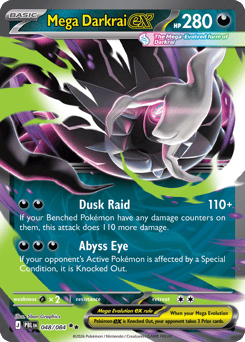
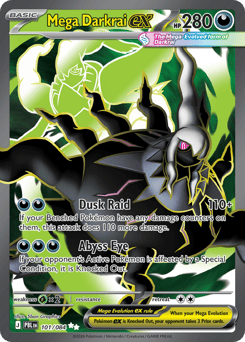
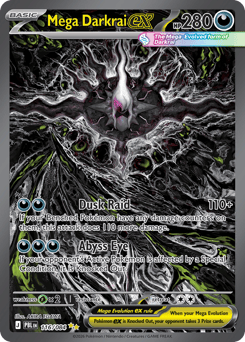
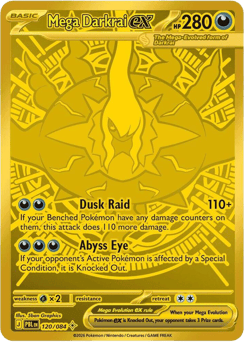
That's the pattern in almost every modern set, and it's the thing to understand before you sort a stack of new pulls.
What in a new set is usually worth money
Here's roughly how the rarities rank in Scarlet & Violet and Mega Evolution sets, from most to least likely to be worth something. Our Pokémon card rarity guide shows every symbol if you need to check yours.
Special Illustration Rares
The Special Illustration Rare, or SIR, is the card that sets the price ceiling in most modern sets. It's a full painted illustration, usually of a Pokémon ex or a Supporter, numbered well above the set total. Each set has only a handful, and the SIR of a popular Pokémon is almost always the most expensive card in the set. If you want the full story on the rarity, our SIR explainer has it.
Not every SIR is valuable, though. Supporter SIRs and SIRs of Pokémon nobody chases often sell for a fraction of the top card. The Pokémon matters as much as the rarity.
Gold cards: Hyper Rares and Mega Hyper Rares
Gold cards are the rarest pulls in most sets. In Scarlet & Violet they're called Hyper Rares; the Mega Evolution sets have a Mega Hyper Rare as their gold card. They're rarer than SIRs, but they don't always sell for more, because collectors in this era prefer painted art to gold foil. A gold card of a popular Pokémon does well. A gold item or energy often doesn't. Our guide to gold Pokémon cards goes deeper.
Illustration Rares
The Illustration Rare is a full-art card of a regular Pokémon, not an ex, with the illustration running edge to edge. Most sell for a few dollars. A few, drawn by fan-favorite artists or showing a Pokémon people love, sell for real money and grade well. They're the cards that surprise people most, because they look like ordinary Pokémon rather than chase cards.
Ultra Rares and Double Rares
The full-art Ultra Rare versions of ex cards sell for a few dollars to a few tens of dollars, depending on the Pokémon. The regular Double Rare ex cards, the ones with the plain frame and two black stars, are the most common "good" pull and usually sell for very little. They're great for playing. They're not a reason to open packs.
Special rarities in special sets
Some sets add a rarity of their own. White Flare and Black Bolt have a Black White Rare at the top. Ascended Heroes added Mega Attack Rares. The 30th Celebration set has Futuristic Rares. These are always small groups of cards, and they often sit near the top of their set's price list.
What usually isn't worth much
If you've just opened a booster box, here's what you can sort into the bulk box without much worry:
- Commons and uncommons, unless it's a promo or a special printing.
- Regular non-holo and holo rares.
- Most reverse holos. There are exceptions in special sets, but they're rare.
- Regular Double Rare ex cards.
- Basic energy and code cards.
Keep an eye out for stamped promos, and don't throw anything out before you've checked it. But if you're sorting a big pile, those are the categories that almost never repay the time. Our guide to whether Pokémon cards are worth anything has more on sorting bulk.
How to spot the valuable card in a fresh pack
You don't need a price guide open to find the card that matters in a modern booster. The pack is built so the good stuff comes last, and the card tells you what it is.
- Check the number. A number higher than the set total, like 276/217, means the card is one of the special cards at the top of the set. That's the fastest single check.
- Look at the frame. A plain ex card with a normal border is a Double Rare. If the art runs to the edges of the card, it's an Illustration Rare, Ultra Rare or better. If the whole card is gold, it's the gold card.
- Feel the surface. Full-art cards from recent sets have an etched texture you can feel with a fingertip. Regular holos are smooth.
- Read the rarity symbol. Two gold stars means Special Illustration Rare. Three gold stars means the gold card. One gold star is an Illustration Rare.
Once you've found the card, sleeve it before you do anything else. Fresh pulls get scratched on tabletops more often than you'd think, and a scuffed SIR loses a lot of its value.
Supporter cards in new sets
Trainer cards get their own SIRs in most modern sets, and they're worth knowing about because they sit in an odd spot on the price list. A Supporter SIR is as hard to pull as a Pokémon SIR, but it usually sells for less, since fewer collectors chase trainers. There are exceptions. Perrin (Twilight Masquerade) from Twilight Masquerade sells for about $160, and Lillie's Determination (Mega Evolution) for about $62.79. Popular characters sell; obscure ones don't. Our guide to trainer cards worth money covers the whole category.
Mistakes people make with new pulls
Most of the money lost on modern cards is lost in the first hour after opening. These are the usual ones:
- Binning Illustration Rares. A full-art regular Pokémon looks less exciting than an ex, so it ends up in the bulk box. Some of them are worth more than the ex.
- Trusting asking prices. Listings on marketplaces show what sellers hope to get. Sold prices show what cards actually sell for, and that's what our prices are built from.
- Grading everything. Paying to grade a card worth a few dollars loses money even if it comes back a 10.
- Handling cards bare. Fingerprints and edge dings are permanent. Sleeve anything with a number above the set total straight away.
- Selling the week a set comes out without checking. Prices on brand-new sets swing fast in both directions. Check the day you sell, not the day you pulled it.
The most valuable cards in recent sets
Here are the top cards in the most recent English sets, newest first. Prices are for near-mint ungraded copies unless we say otherwise, and they update every day. Newly released sets move fast, so treat the newest ones as a snapshot. For the full list of each set, click through to its set page; for the year as a whole, see the most valuable Pokémon cards of 2026 and 2025.
30th Celebration (September 2026)
The anniversary set is only days old, so these prices are still settling. The two Futuristic Rares lead so far: Mew ex (30th Celebration) at about $149 and Mewtwo ex (30th Celebration) at about $108. The Special Illustration Rare Jirachi ex (30th Celebration) is next at about $85.47.
The companion Classic Collection reprints older favorites, and it's already producing oddities like a common Pikachu (30th Celebration: Classic Collection) selling for about $31.35, which tells you how much Pikachu nostalgia is floating around right now. Give the whole 30th Celebration set a couple of months before deciding what anything is worth.


Pitch Black (July 2026)
Mega Darkrai ex owns this set, as shown above. After the two Darkrai chase cards, Morpeko ex (Pitch Black) is the next best SIR at about $95.06, then Mega Zeraora ex (Pitch Black) at about $58.99. The Supporter SIRs sit well below. The Darkrai ex page collects every version.
Chaos Rising (May 2026)
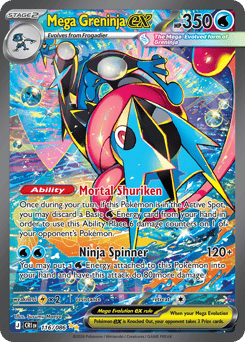
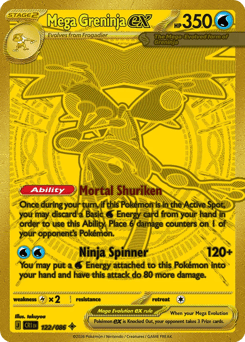
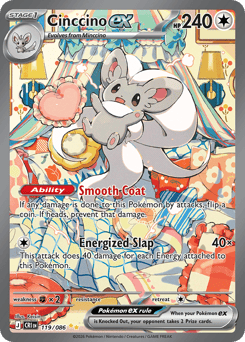
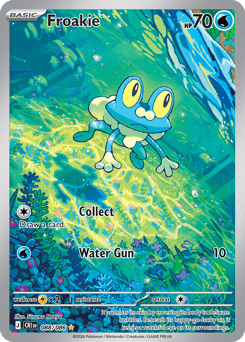
Chaos Rising is a Mega Greninja set. The SIR Mega Greninja ex (Chaos Rising) sells for about $205 and the gold Mega Greninja ex (Chaos Rising) for about $180. After those two, prices drop quickly: Cinccino ex (Chaos Rising) sells for about $58.78. The Illustration Rares here are mostly cheap, though Froakie (Chaos Rising) shows up in a lot of Greninja binders at about $10.21.
Perfect Order (March 2026)
Perfect Order is a good example of a set where the gold card beats the SIR of the same Pokémon. The gold Mega Zygarde ex (Perfect Order) sells for about $138, while its SIR, Mega Zygarde ex (Perfect Order), sells for about $59.98. The surprise of the set is Meowth ex (Perfect Order) at about $127. Never underestimate Meowth.
Ascended Heroes (January 2026)
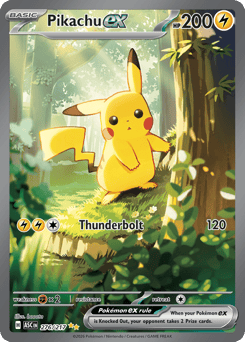
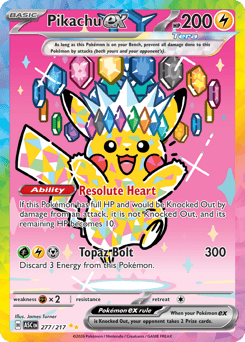
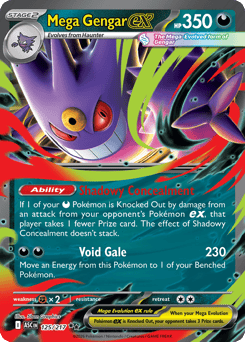
The big one. Over the last 90 days Ascended Heroes sold more cards than any other set on our market page, and our most traded list is full of it. The Pikachu ex SIR Pikachu ex (Ascended Heroes) sells for about $1,051, Mega Gengar ex (Ascended Heroes) for about $993, and Mega Dragonite ex (Ascended Heroes) for about $674. The gold Mega Charizard Y ex (Ascended Heroes) sells for about $405.
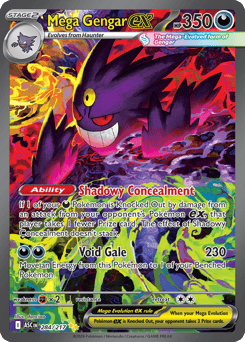
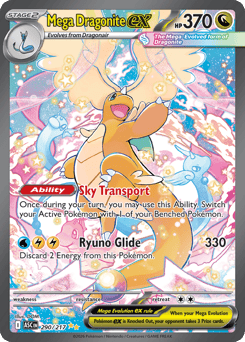
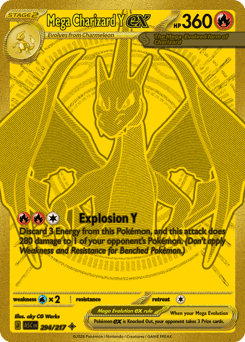
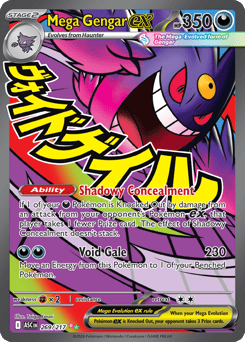
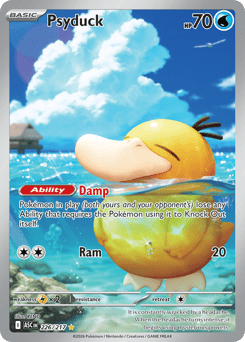
Below the top tier, this set rewards careful sorting. The Mega Attack Rare Mega Gengar ex (Ascended Heroes) sells for about $58.18, the second Pikachu SIR Pikachu ex (Ascended Heroes) for about $374, and the Illustration Rare Psyduck (Ascended Heroes) for about $70.31. That Psyduck is exactly the kind of card that ends up in a bulk box by mistake. Compare them with the regular Mega Gengar ex (Ascended Heroes) at about $2.60 and you can see the spread inside one set.
Phantasmal Flames (November 2025)
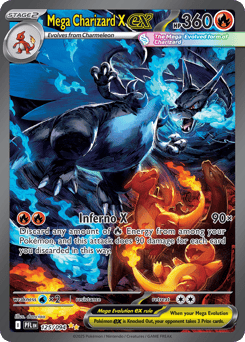
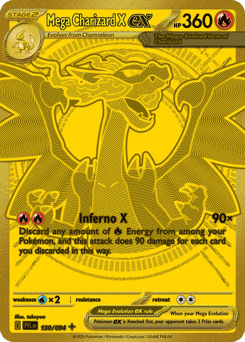
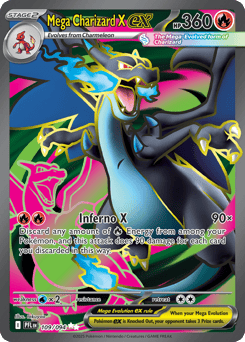
Phantasmal Flames is a one-Pokémon set. Mega Charizard X ex (Phantasmal Flames) sells for about $790 ungraded, the gold Mega Charizard X ex (Phantasmal Flames) for about $324, and the full-art Ultra Rare Mega Charizard X ex (Phantasmal Flames) for about $28.56. Everything else is far behind. It's also a good grading case study, which we'll come back to. Every version is on the Charizard ex page.
Mega Evolution (September 2025)
The first set of the Mega Evolution era has aged into a steady set rather than a spectacular one. The gold Mega Lucario ex (Mega Evolution) sells for about $253 and the gold Mega Gardevoir ex (Mega Evolution) for about $210. Their SIRs, Mega Lucario ex (Mega Evolution) and Mega Gardevoir ex (Mega Evolution), sell for about $202 and $190. The Mega Evolution set page has the rest.
White Flare and Black Bolt (July 2025)
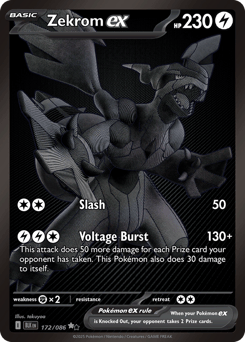
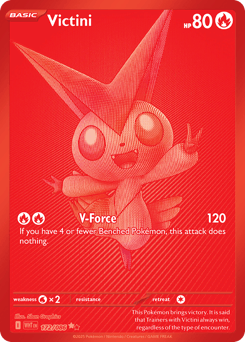
These twin sets are built around the Pokémon of the Unova region, and each carries a Black White Rare at the top. From Black Bolt, Zekrom ex (Black Bolt) sells for about $637 and Victini (Black Bolt) for about $635. From White Flare, Victini (White Flare) sells for about $586 and Reshiram ex (White Flare) for about $500.
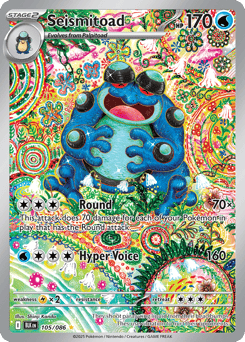
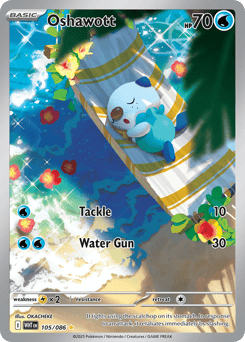
The Illustration Rares here are some of the best in recent memory. Seismitoad (Black Bolt) sells for about $249 raw and about $1,800 in a PSA 10, and Oshawott (White Flare) for about $92.31. Seismitoad and Oshawott aren't anyone's idea of chase Pokémon. The art did that.
Destined Rivals (May 2025)
Destined Rivals leaned hard into Trainer's Pokémon, and Team Rocket took the top spot. Team Rocket's Mewtwo ex (Destined Rivals) sells for about $545, well clear of Cynthia's Garchomp ex (Destined Rivals) at about $231 and Ethan's Ho-Oh ex (Destined Rivals) at about $170. The Mewtwo ex page has every version of that card.
Journey Together (March 2025)
A cheaper set overall. Lillie's Clefairy ex (Journey Together) is the top card at about $113, and the other SIRs sell for much less, like N's Zoroark ex (Journey Together) at about $47.79. Salamence ex (Journey Together) sits in between at about $60.58. If you're opening this set for value, you're mostly opening it for one card. It's also the set where Trainer's Pokémon returned, and those cards have been a theme of every set since.
Prismatic Evolutions (January 2025)
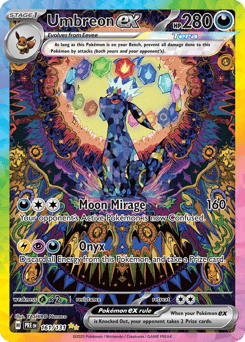
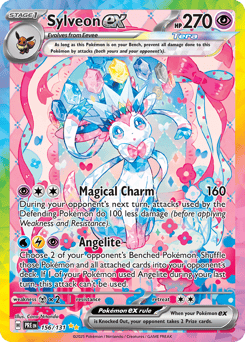
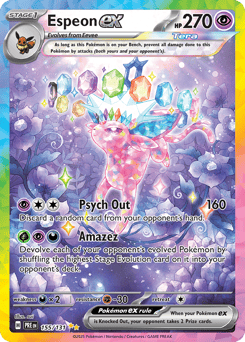
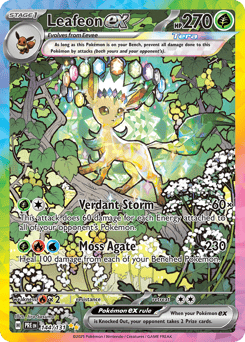
The Eevee set, and the best example of how much one Pokémon can drive a modern market. Umbreon ex (Prismatic Evolutions) sells for about $1,528 ungraded and about $5,575 in a PSA 10. Every other Eeveelution SIR sells for real money too: Sylveon ex (Prismatic Evolutions) at about $486, Espeon ex (Prismatic Evolutions) at about $306 and Leafeon ex (Prismatic Evolutions) at about $320. The Prismatic Evolutions set page and the most valuable Umbreon cards ranking show the rest.
Surging Sparks (November 2024)
Surging Sparks is almost two years old now, which makes it a useful look at how a set settles. Pikachu ex (Surging Sparks) sells for about $285, Latias ex (Surging Sparks) for about $185, and the gold Pikachu ex (Surging Sparks) for about $90.28. Pikachu again, twice. The Pikachu ex page has every version.
Stellar Crown (September 2024)
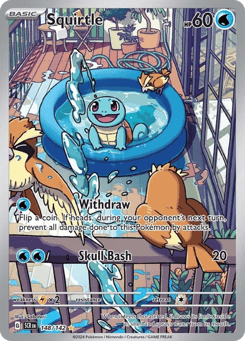
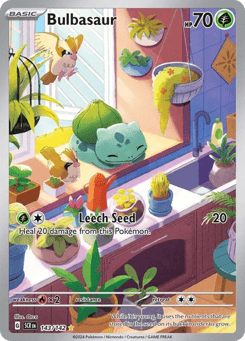
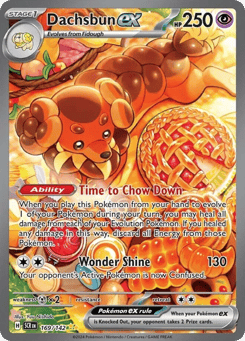
Stellar Crown is the clearest case of Illustration Rares beating the SIRs. Squirtle (Stellar Crown) sells for about $115 and Bulbasaur (Stellar Crown) for about $108, both above the set's best SIR, Dachsbun ex (Stellar Crown), at about $70.69. Kanto starters with good art will always find buyers.
Twilight Masquerade (May 2024)
Greninja ex (Twilight Masquerade) leads Twilight Masquerade at about $344. The Supporter SIR Perrin, mentioned above, is second, and the Illustration Rare Eevee (Twilight Masquerade) sells for about $87.16. Eevee again. Every version of the Greninja card is on the Greninja ex page.
Do new cards go up in value?
Some do. Most don't, at least not soon, and it's worth being clear-eyed about that before you buy anything as an investment. This isn't financial advice, just what the sales data tends to show.
New sets are usually at their most expensive in the first weeks after release, when supply is short and everyone wants the chase cards at once. Then more product gets opened, more copies hit the market, and prices usually drift down for months. At the time of writing, most of this year's top SIRs were selling for less than they were a month earlier. That isn't a crash. It's what new sets normally do.
The cards that go up later tend to share a few traits:
- A Pokémon people love. Umbreon, Charizard, Pikachu, Gengar, Rayquaza, the Eeveelutions. The yearly rankings are full of the same names.
- Art collectors talk about. Alt arts and SIRs with memorable illustrations hold up better than generic ones.
- A set that stops being printed. Once a set is out of print, the supply of fresh copies dries up and the good cards have room to climb.
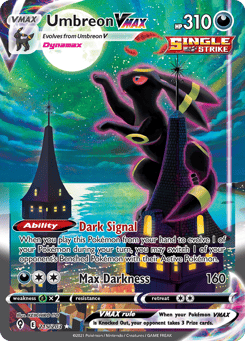
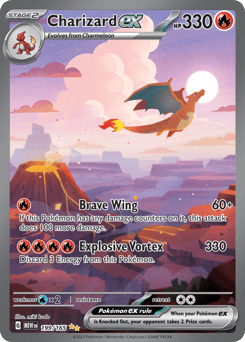
The best-known examples are from the Sword & Shield era. Umbreon VMAX (Evolving Skies) from Evolving Skies sells for about $2,200 years after release, and Charizard ex (151) from 151 sells for about $414. Plenty of cards from those same sets went nowhere, though. Picking the winners in advance is much harder than it looks in hindsight.
What pushes a new card down
It helps to know what works against a modern card's price, too, because the list is longer than people expect.
- More printing. Popular sets get reprinted while they're current. Every new wave of product adds copies of the chase cards to the market.
- Special collections. A premium box that includes a popular card as a guaranteed promo, or a reprint of a favorite illustration, can pull buyers away from the pack version.
- The format moving on. Cards that players need carry extra demand while they're legal in the Standard format. When they rotate out, that demand goes with them, and playable ex cards and trainers feel it most.
- The next set. Attention is finite. When a big new set lands, money moves to it, and last season's chase cards often soften.
None of that applies to the very top cards of the most popular Pokémon in quite the same way. Collectors want those regardless of the format or the next release. But it's why the middle of every set, the cards worth a few dollars to a few tens of dollars on release, so often ends up worth less a year later.
If you want to watch what's moving, our market page shows the most traded cards and the biggest recent sales, and the top sales page lists the highest individual sales. Both update daily.
Should you grade new cards?
Sometimes. Modern cards are printed well, and a lot of them come out of the pack in PSA 10 condition, so the grade premium is smaller than it is for vintage cards. Grading costs real money per card too; our PSA grading cost guide has the current fees and a table of where grading pays.
Phantasmal Flames shows both sides. Mega Charizard X ex (Phantasmal Flames) sells for about $790 raw and about $1,920 in a PSA 10. The gold Mega Charizard X ex (Phantasmal Flames) sells for about $324 raw but about $2,397 in a PSA 10. Gold cards scratch easily, so clean copies are harder to find and graders reward them.
For most modern cards, though, the math is simple. If a card sells for a few dollars raw, don't grade it. If it's a top SIR and the corners, edges and centering look clean under a loupe, it might be worth it. For the full decision, read is it worth grading Pokémon cards, and our PSA 10 Pokémon cards guide explains why the top grade carries such a premium.
Opening packs vs buying singles
If you want a specific card, buy the card. It's almost always cheaper than chasing it in packs, because you're paying for all the bulk that comes with every pull.
Open packs because you enjoy opening packs. That's a perfectly good reason, and most of us do it. There's a reason the hobby runs on pack openings, and the moment you see a textured corner peeking out from behind a reverse holo is most of the fun. Budget for it the way you'd budget for any other hobby, though, and decide in advance how many packs you're opening. Just don't expect a booster box to pay for itself; the top cards are rare on purpose, and most boxes won't hit them.
If you're keeping sealed product as an investment, the same caution applies. Some sealed sets have risen a lot. Some haven't. Nobody can tell you in advance which is which.
How to check what your new cards are worth
- Sort out the obvious bulk first. Commons, uncommons, regular holos and most reverse holos can go in one pile.
- Find the card number. It's printed at the bottom of the card. A number above the set total, like 116/84, means it's one of the special cards at the top of the set.
- Identify the set. Modern cards print a small set code at the bottom. Our set release dates guide lists every English set in order.
- Search the card. Type the name and number into the search box on any Ultraball page, or follow our price checker guide.
- Check the condition. Our prices are for near-mint copies. A card with whitening, scratches or a bend sells for less. How we price explains exactly what the number means.
For a broader walkthrough, see how much are my Pokémon cards worth. If you're planning to sell, our guide on how to sell Pokémon cards covers the options.