
Raw cards · graded upside
Slab Hunter
Find raw Pokémon cards with hidden grading potential.
The aim: raw copies that still make a profit if they come back a PSA 8. Every pick clears a PSA 8.5; a 9 or a 10 is upside.
UltraBall scans active Pokémon listings, analyses the seller’s photographs, generates a condition report and highlights cards where the potential graded value may justify the asking price. Every card on this board links to its full scan report: every corner, every edge, both surfaces and the centering, front and back.
Deals
Cards priced below market.
The average copy, for less than it sells for.
Slab Hunter
Copies better than average.
Raw cards that may justify a premium because of how they could grade.
No copy has passed every check right now. That happens: most raw listings are ordinary near mint, or their photos can’t show enough. Meanwhile, see the deals or auctions ending soon.
Recently scanned
Every copy Slab Hunter has scanned lately, on the board or not. Grades are our estimates from the seller’s photos, not PSA grades. Open any one for its full scan report: the seller’s photos with every corner, edge and surface scored, what each grade would pay, and why it was or wasn’t picked.
 Turned awayCharmeleon 99/97Dragon74/100PSA 6–8Not near mint$149recently
 Turned awayEspeon 81/90HS—Undaunted51/100PSA 2–5Photos too weak$299recently
 Turned awayFlygon ex 94/108Power Keepers52/100PSA 3–5Not near mint$150recently
 Turned awayBlaine's Moltres 1/132Gym Heroes · 1st Edition75/100PSA 6–8Not near mint$470recently
 Turned awayCharizard 20/149Boundaries Crossed77/100PSA 6–8Doesn't pay at this price$49.99recently
 EndedPikachu δ 93/92Legend Maker80/100PSA 5–8Pays off even at PSA 8$350recently
 Turned awayWigglytuff ex 101/101Hidden Legends64/100PSA 5–7Not near mint$145recently
 Turned awayCharmander 46/102Base Set · 1st Edition76/100PSA 6–8Not near mint$140recently
 Turned awayCharmeleon 99/97Dragon66/100PSA 5–7Not near mint$140recently
 Turned awayPichu 12/111Neo Genesis · 1st Edition70/100PSA 5–7Not near mint$492recently
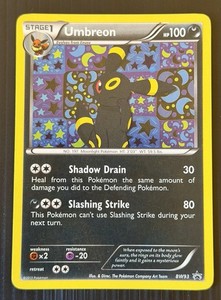 Turned awayUmbreon BW93BW Black Star Promos78/100PSA 6–8Not near mint$200recently
 Turned awayRayquaza 11/20Dragon Vault73/100PSA 5–7Not near mint$66.08recently
How Slab Hunter picks a card
A funnel, cheapest check first, so the full scan is only spent on copies that have earned it. Every listing that falls out is kept with its reason, so we can check later how the ones we passed on actually graded.
Step 1
The watchlist
Our own prices, grading data and PSA population pick the cards worth hunting: ones where a copy bought at raw NM money would still leave a profit as a PSA 8.5. About 600 cards, not the 20,000 in the catalogue.
Step 2
Every raw listing of those cards
Live eBay listings, each already matched to its exact card and printing by the same matcher behind our prices.
Step 3
Raw copies only
Slabs are turned away, including ones from smaller graders a title slips past, and so are titles that admit wear, proxies and lots.
Step 4
The money screen
Priced under the card's Buy Ceiling: still a profit if it comes back a PSA 8.5. Auctions ending within a day that the bidding already treats as special; Buy It Now copies around raw NM.
Step 5
The photo check
The whole gallery is pulled from eBay. It needs a clear front and a clear back, big enough and in focus, and not a stock scan.
Step 6
Identity check
The front photo is read by our card recognition: a slab, a different card or a Japanese copy is stopped here.
Step 7
Full scan report
The same scan our AI card grader runs on your own cards: centering front and back, all eight corners, all eight edges and both surfaces.
Step 8
Condition Score and Opportunity
How clean the copy looks, then how good a buy it is at today's price against PSA 7, 8, 9 and 10 values, grading fees and selling fees.
Result
On the board
The scan says near mint or better (PSA 7+), the photos can be trusted, and across every grade it could come back as, grading still clears the minimum profit. Kept up to date until it sells or ends.
Condition Score vs Opportunity Score
Condition Score is the copy itself: centering, corners, edges and surface from the scan report, pulled towards its weakest part and anchored to the scan’s own grade estimate, because a slab is held back by its worst corner, not its average.
Opportunity Score is the buy: first whether it still makes a profit as a PSA 8 (the aim) or 8.5 (the bar), then the Condition Score, how far the photos can be trusted, the modelled result after grading and selling, the room under the Buy Ceiling, how often PSA 9s and 10s of the card actually sell, the seller’s record and the bidding. A near-perfect copy already priced at PSA 10 money scores low here, and every risk flag costs points.
What the Opportunity Score weighs
- Profit at PSA 8 or 8.530%
- Condition Score20%
- Photo confidence10%
- Modelled result after grading and fees10%
- Room under the Buy Ceiling10%
- Graded and raw liquidity10%
- Seller record5%
- Bidding, or Best Offer5%
Then reduced for each risk flag: a serious flag takes off 15%, one worth checking 6%.
Slab Hunter questions
What is the difference between Slab Hunter and Deals?
Does a high Condition Score mean the card will get a PSA 10?
What is the Buy Ceiling?
Why are there so few picks?
How often is Slab Hunter updated?
Grading your own raw cards? Try the AI card grader, the same scan Slab Hunter runs, or the grading calculator.